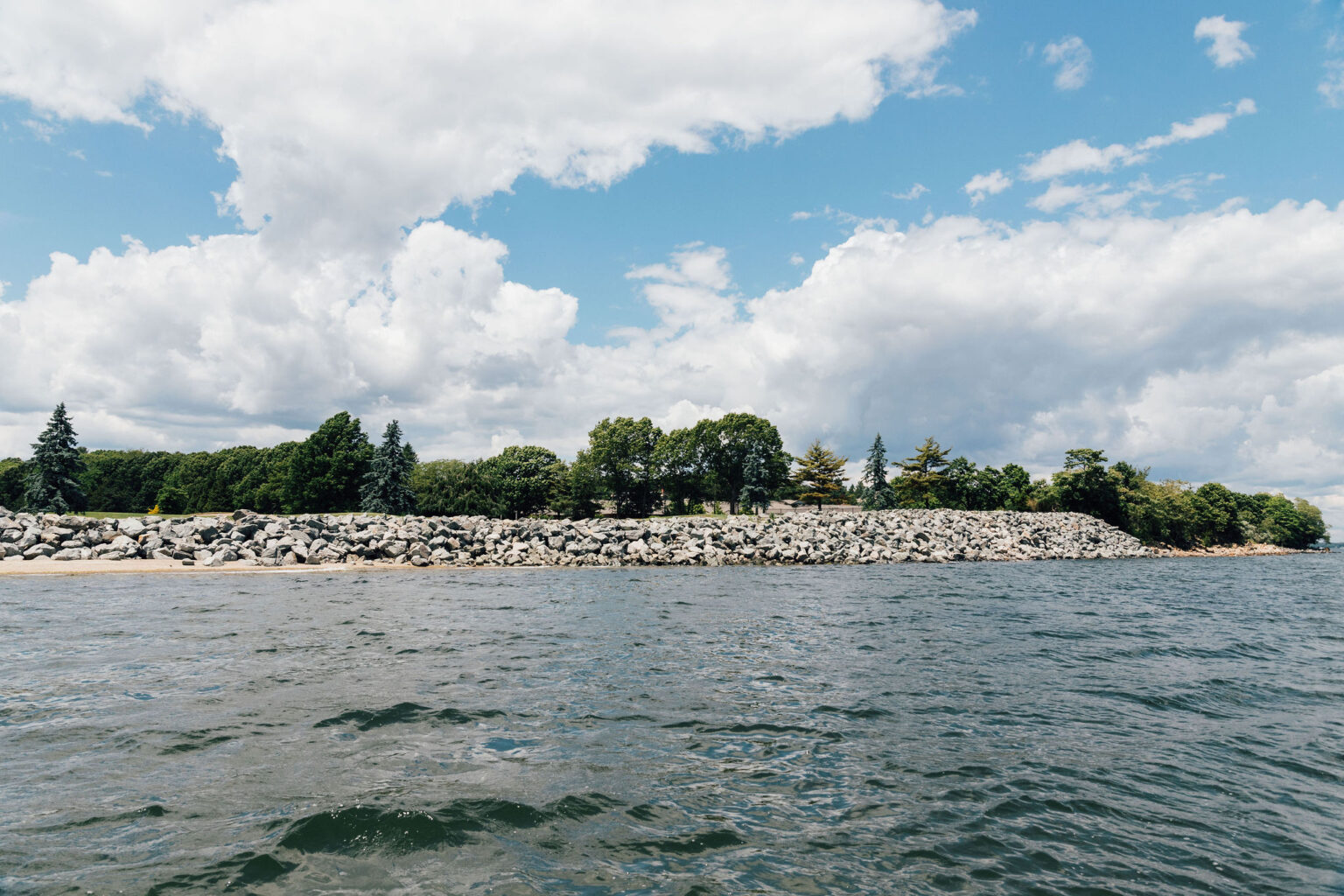
Some state leaders and one of Rhode Island's largest environmental groups have failed in recent years to dismantle the embattled R.I. Coastal Resources Management Council, but they're confident the council's recent handling of an illegally built seawall at a North Kingstown country club will finally tip the scales in their favor.
The CRMC voted unanimously in January to deny a proposal that would have allowed Quidnessett Country Club to keep the large, unauthorized wall along Narragansett Bay, a decision that came after months of delays by the council.
The CRMC – which oversees the protection, management and development of the state's coastline – has irked some groups with its decisions for years, in many cases taking votes that run counter to CRMC staff recommendations.
While the final vote in the Quidnessett case was generally applauded, it didn't stop CRMC critics earlier this month from submitting legislation for the second year in a row that would disband the board of appointed volunteers and replace them with a new state agency that would take over the oversight role.
Supporters of the House measure have said the reason it died last year was the General Assembly leadership and Gov. Daniel J. McKee weren't motivated to push for passage. Senate President Dominick J. Ruggerio had signed on as a sponsor of the Senate companion bill, but it, too, failed to make it out of committee.
The environmental group Save the Bay says it expects the situation to be different this year.
“Many legislators across the state, especially northern Rhode Island [and far from the coast], might not have been too familiar with the CRMC,” said Jed Thorp, Save the Bay director of advocacy. “But with all this news regarding the council’s recent shortcomings, they’re getting it now.”
Still, House Speaker K. Joseph Shekarchi sounded noncommittal when asked in early February about his support of legislation to do away with the CRMC, saying only that he's "keeping an open mind."
"It is an issue that has generated a great deal of interest," he said.
McKee's office did not immediately respond to a message seeking comment. The CRMC also did not return a request for comment.
Also under consideration again this year: A separate, less-drastic Senate bill introduced on Feb. 7 that would keep the CRMC's board, but would require a "super majority" vote of three-fifths of the 10 council members to override a CRMC staff recommendation.
The same legislation was introduced in the Senate last year but was held for further study.
Advocates for changes at the CRMC say the Senate bill is, at most, only a fallback option if the creation of a new state agency can't garner enough support. Indeed, Sen. Victoria Gu, D-South Kingstown, a sponsor of the "super majority" measure, says she supports the House bill, too.
Thorp says the Senate legislation doesn't go far enough to change things at the CRMC. "My understanding is that if we can’t get the House bill passed this year, the Senate bill would sort of be a stopgap,” Thorp said.
Nevertheless, Attorney General Peter F. Neronha continues to push for the CRMC board to be abolished, in part because his office filed a legal challenge in 2021 to the council's decision to approve an expansion of Champlin's Marina on Block Island. Ultimately, the court sided with Neronha.
In fact, Neronha's office helped craft the House bill that eventually died in committee last year and is preparing to submit new legislation in both the House and Senate – sponsored by Terri Terri Cortvriend, D-Portsmouth, and Sen. Mark P. McKenney, D-Warwick.
Neronha's legislation is expected to differ from a House bill introduced by Rep. John G. Edwards, D-Tiverton, on Feb. 12.
While Neronha is looking to abolish the CRMC and created a new department similar to the R.I. Department of Environment Management to oversee coastal management, Edwards' bill would fold those duties into a "division of coastal resources management" within the DEM.
A new department "would bring careful attention to important issues affecting Rhode Island’s coastal resources," Neronha said in a statement. "And we would no longer be forced to rely on a politically appointed council to make decisions that frankly they have no business making. It’s the right thing for our environment and for our people, and we must get it done.”
Neronha and other critics had been angered that the council had been slow to act when the illegal 600-foot-long stone wall along the Quidnessett Country Club waterfront came to light and then considered the country club's request for retroactive permission to allow it.
“It’s just been a series of bad decisions over the last five years that have eroded Rhode Island’s trust in the CRMC. The Quidnessett situation was just the latest one,” Thorp said. “Rhode Islanders and legislators across the state are seeing all these negative stories about terrible coastline decisions, and they are starting to understand we have bad governance in that area."
Edwards shared Save the Bay’s sentiments.
“These news cycles are only helping our legislation," he said. "They’re certainly not helping the CRMC.”
(UPDATE: Changes Jim Thorp's title to director of advocacy for Save The Bay Inc. in paragraph 7.)