After five years of lobbying the General Assembly to phase out cesspools in Rhode Island, environmental advocates have scored a victory: the passage of a law requiring the elimination of all cesspools within 200 feet of the shoreline and water supplies by 2013.
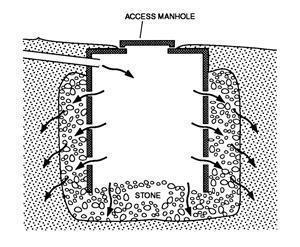
Cesspools are buried chambers with perforated walls that take sewage discharges, retain the solids and release the liquids into the surrounding soil. The R.I. Department of Environmental Management estimates that there are as many as 50,000 cesspools in the state, though construction of new ones hasn’t been allowed since 1968.
Building a Strong Data Foundation in the Age of AI
Artificial intelligence (AI) has become a key priority in the boardroom and across management —…
Learn More
The legislation will eliminate only 3,000 to 4,000, however.
“Save The Bay considers this bill no more than a first step. It has a very limited reach,” said executive director Curt Spalding. “It is certainly not sufficient in the long run to protect public health and safety and [avoid] the impact of discharging raw sewage into the groundwater.”
But Spalding added that the legislation is still a good start.
Originally introduced by Rep. Donna M. Walsh, D-Charlestown, in 2002 (when she was a state senator), the measure has been reintroduced year after year, but it never quite made it through the Assembly – last year it missed passage by only three votes.
This session, Walsh tried again, and after some revisions, it was passed by both the House and the Senate on June 23 and signed by Gov. Donald L. Carcieri on June 27. The original version had called for the elimination of cesspools within 200 feet of inland water bodies with a public beach as well, but that part was cut in an effort to gain passage.
Walsh issued a statement celebrating the victory.
“Cesspools are an outdated, unsafe method of sewage disposal that just dumps untreated sewage into the ground,” she said. “That’s not good for the environment in any location, but it’s particularly dangerous near the water, especially drinking water supplies. This bill is as much about protecting public health as it is about preserving the environment, and I’m very pleased that it has finally passed.”
Spalding said the reason the legislation faced so much resistance was the cost of replacing cesspools.
“If cesspools were like roofs and they leaked people would replace them, but sewage doesn’t fall on people’s heads,” Spalding said. “It doesn’t affect the polluter directly – it affects their neighbors, their ground water and the beaches, but all people saw was potential cost.”
He said that depending on the location, replacing a cesspool with a septic system, which treats waste before it leeches into the soil, can cost between $5,000 and $20,000.
As Spalding saw it, that shouldn’t get in the way of eliminating cesspools.
“People were concerned about the cost, but what wasn’t accounted for was the cost to the community in terms of the environment and the risk to human health,” he said. “Too often those things aren’t addressed. Save the Bay’s view is that people are not allowed to discharge raw sewage from their boats, so why should they be able to do it from their homes? Part of being a member of our community is that you’ll deal with your … waste responsibly.”
He said that if need be, low-interest loans should be made available, but there is no question that cesspools should be eliminated statewide. He noted that in Massachusetts, it is illegal to sell a home with a cesspool.
In her statement, Walsh pointed out how long homeowners have been able to keep their cesspools already.
“It’s been almost 40 years since Rhode Island stopped allowing new cesspools because they are so unsafe,” she said. “We can’t keep just grandfathering them in, especially in places where they pose a hazard to water. This legislation is crafted to phase out the most unsafe cesspools, while still being fair to homeowners and giving them time to replace them with something more modern.”