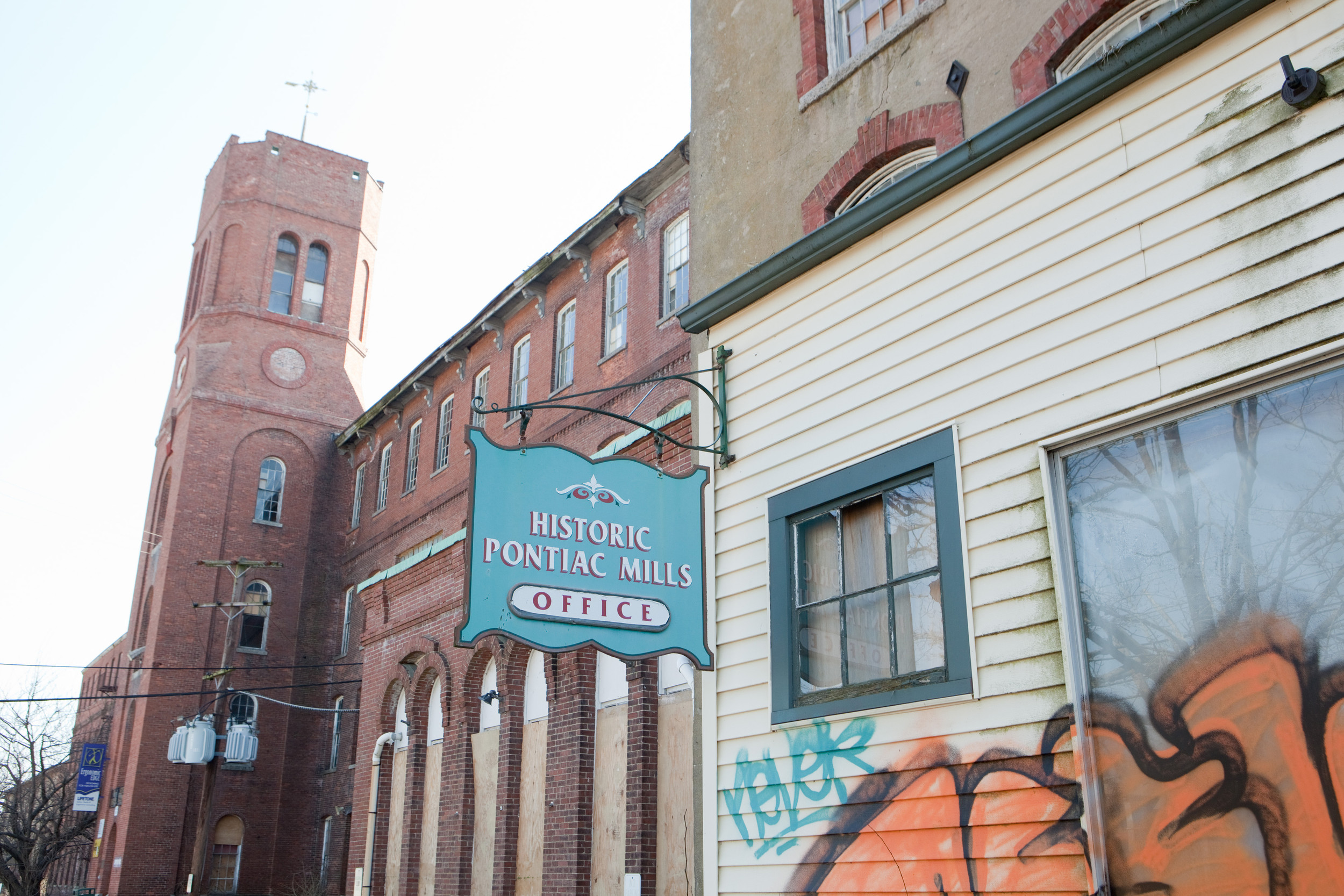
Advocates for the Rhode Island Historic Tax Credit program are applauding lawmakers for allocating $28 million for the program in the fiscal 2023 state budget, but some are arguing that the state needs to make a consistent financial commitment in the future.
State leaders have been wavering in their support for historic tax credits over the years, particularly when severe budgetary shortfalls have spurred questions about whether the state can afford to offer such generous tax incentives.
The program, which provides tax credits for historical renovation projects, was created in 2001 but additional funding was halted in 2008 when the state was grappling with a large budget deficit during the Great Recession. It had only been funded once since then – in 2013 – before it received a $20 million allocation last year.
“We have gone from no state dollars directly allocated to the program for eight years to now having $48 million allocated within the last year or so,” said Scott Wolf, executive director of Grow Smart Rhode Island. “I don't think it's enough, but it's a lot better than nothing. I think the fact that the program has had to be extended every year and only for a single year is not optimum. It would be good if there could be at least a longer sunset or no sunset on the program.”
The program offers tax credits for historical renovation projects at 20% of the project cost, with a $5 million cap per project. It is managed by the R.I. Historical Preservation & Heritage Commission and the R.I. Division of Taxation.
Supporters of historic tax credits say the provisions offer an array of economic benefits, including the reuse of historical buildings that in many cases have fallen into disrepair, the increase in property tax valuations, the creation of construction jobs and the addition of residential units at a time when housing is scarce.
Jeffrey Emidy, the interim executive director and deputy state historic preservation officer of the R.I. Historical Preservation & Heritage Commission, says the latest data shows that 6,416 units have been completed with the help of historic tax credits, 984 of them deemed affordable housing.
Supporters also argue that such renovations attract private investment and economic development in the surrounding areas.
“We've seen some really big projects that have come out fantastic,” Emidy said. “And they never would have gotten done, essentially, without tax credits.”
A total of 316 projects have been completed through the historic tax credit program as of May, representing $437.3 million in tax credits that spurred a total investment of $2.1 billion, according to the heritage commission. There are currently 22 active projects, which represent an estimated investment of $195.6 million and outstanding tax credits of $37.7 million.
The Division of Taxation says there are 39 projects on a waiting list for tax credits. Once the program receives its fiscal 2023 allocation, the credits will be awarded to the next projects on the list.
“Whether it'll come back next year, we're not going to bank on it, but we’d love to see it,” Emidy said. “The program has proven itself to be in demand and to be good for the state over the years, so we think it makes sense. And it seems like there are other people who are seeing that as well now.”
Tax credits long have been looked at with suspicion since the economic return can be hard to calculate. An example is the state's film and TV production tax credit, which gives eligible production companies an incentive to film in Rhode Island by offering tax breaks of up to 30% on production costs.
State leaders recently raised the annual cap on the film and TV tax credit to $40 million for tax years 2023 and 2024 from the $30 million allocated in tax year 2022, despite some arguing that the program has failed to break even.
But Mark Van Noppen, co-founder of development firm The Armory Revival Co., says that unlike the film tax credit, the historic tax credit program offers long-term, sustainable returns by creating buildings that can be utilized and that generate taxes and attract people for years.
“It creates new economic activity that is just ongoing,” Van Noppen said. “That credit, a one-time credit, creates life for the next 25-30 years by helping renovate that building. The return on the investment is entirely different than a lot of credits.”
Updated to correct the headline. An earlier version of the headline gave an incorrect amount of the allocation to the Rhode Island Historic Tax Credit program for fiscal 2023. The allocation was $28 million.