During April vacation, it may be hard to imagine children feeling enthusiastic about more schoolwork during what’s typically an eagerly awaited break.
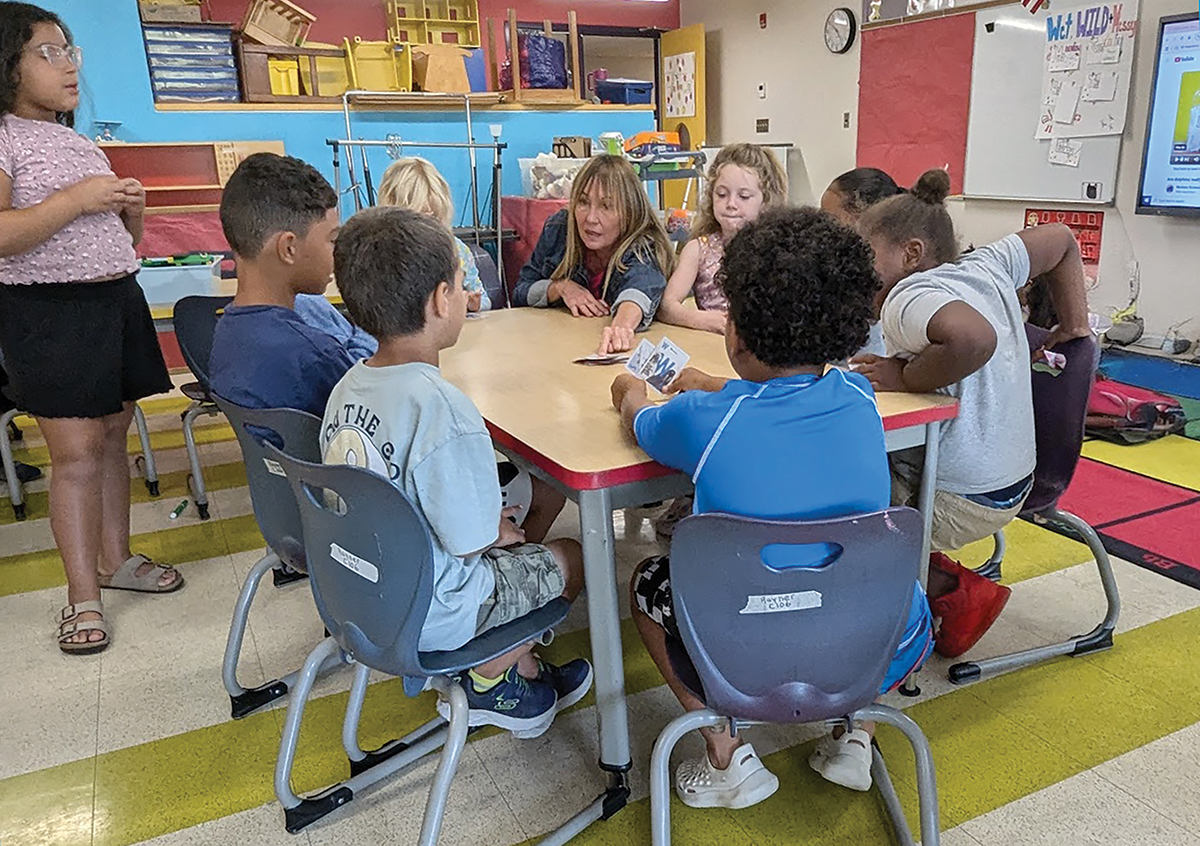
But when Warwick students entered their “vacation club” classroom at the Boys & Girls Club of Warwick this past spring, teachers didn’t greet them with textbooks and worksheets. Instead, they presented students with a toaster oven and ingredients to make their own English muffin pizzas. Using toppings such as pepperoni, students made their own culinary creations while learning about fractions.
It’s a type of learning that isn’t typical to the regular school day, says Patricia Cousineau, former director of elementary education at Warwick Public Schools, and one of the approaches that the district used to make the most of its funding from the state’s Learn365RI programming.
And by offering high hourly stipends to teachers – $60-$75 an hour, including paid travel and planning time – staffing wasn’t an issue, even as Rhode Island grapples with a teacher shortage. Cousineau set a goal of hiring eight teachers for initial programming and received interest from 32.
“The kids felt a little more that it wasn’t ‘school,’ ” said Cousineau, who recently retired. “They were with their friends, and these weren’t their classroom teachers. They had other teachers who helped them with the things they needed help with. It was more hands-on and engaging, and more catered towards what they were struggling with.”
Warwick’s three-pronged approach involves after-school tutoring during the school year, four days of two-hour learning during weeklong school vacations, and a summer learning program. It has seen glowing results, Cousineau says. Participating students were enrolled based on factors such as academic performance and absenteeism, with virtually all showing improvement after completing the programming.
It’s the type of result that Gov. Daniel J. McKee touted when he announced the Learn365RI initiative in March 2023, which calls for public school districts to expand learning time beyond traditional school days and hours.
Drawing from Biden-era federal relief funding, McKee encouraged municipalities to sign “compacts” committing to this goal in exchange for a cut of nearly $4 million in grants.
The initiative is intended to help Rhode Island schools meet or exceed Massachusetts’ academic levels by 2030. Currently, Massachusetts schools lead Rhode Island in standardized test scores, student attendance and completion rates of federal student aid applications.
The Learn365RI program met some pushback at first, with observers criticizing the directive for a lack of further guidance or plans for school districts to follow. But to date, 38 of 39 Rhode Island communities – all but Johnston – have signed compacts.
Johnston Mayor Joseph M. Polisena Jr. and Johnston Public Schools Superintendent Scott Sutherland did not respond to a request for comment.
But in fall 2023, Polisena and then-Superintendent Bernard DiLullo criticized Learn365RI as vaguely defined, with schools and municipalities tasked with the logistical burdens of forming partnerships and programming.
While Cousineau took an enthusiastic interest in the initiative, she recognizes that Learn365RI provides few guidelines alongside the funding.
“It was very vague, and it was very wide open,” Cousineau said.
In Warwick’s case, where Cousineau and Director of Curriculum Anne Siesel both had a long history in the district, an established relationship with the Boys & Girls Club, and plenty of data to draw from, Cousineau believes this lack of guidelines worked in their favor.
“Anne and I built this program because we were given the autonomy to say, ‘You do you; you figure it out,’ ” Cousineau said.
But she recognizes that not all districts might have the same preparation to come up with their own program.
“I think if a district didn’t have those [advantages], their program probably wouldn’t have been as strong as ours was,” Cousineau said.
Since the program’s launch in 2023, a new concern has emerged even among the initiative’s proponents: continuing with programming and forward momentum as the Trump administration slashes education funding and attempts to dismantle the federal Department of Education.
Xay Khamsyvoravong, a Newport city councilor, says that a lack of sustained funding stands out as a primary concern after city schools saw strong results from Learn365RI programming.
Indeed, after the initial $4 million allocation from the State Fiscal Recovery federal program, the state set aside $3 million in general revenue for the Learn365RI program in fiscal 2025 and $1.3 million in fiscal 2026.
Khamsyvoravong, who served as Newport’s mayor at the time of Learn365RI’s launch, was an early proponent of the initiative and led Newport into becoming the first community to sign a Learn365RI compact.
That move paid off, Khamsyvoravong says.
“The overwhelming majority of students who participated in the program who had been chronically absent showed substantial improvements,” he said, also noting a sustained culture shift around learning. “Kids grew to really love reading, to looking forward to that as part of their day.”
In a district survey, 59% of Newport students reported that the after-school programming helped them read more often. Another 72% said they made new friends; 77% said they felt that adults in the program cared about them; and 57% said they were able to stay positive even when frustrated.
But much of this programming is now “on standby” due to federal funding cuts, Khamsyvoravong says.
Though federal pandemic funds financed the first year of the initiative, fiscal 2025 and fiscal 2026 programming have been exclusively funded by general revenue, says Andrea Palagi, a spokesperson for McKee. But federally funded after-school and summer programs could still suffer from cuts.
While Rhode Island has yet to meet Massachusetts’ academic outcomes, Palagi points to a study by Harvard and Stanford university researchers showing that Rhode Island students have had faster post-pandemic academic recovery than their peers in other New England states.
When comparing Rhode Island Comprehensive Assessment System and Massachusetts Comprehensive Assessment System scores, Rhode Island has also narrowed its gap with Massachusetts by 34.4% in English language arts and 18.8% in math, Palagi says.
The state has also reduced chronic absenteeism by almost 10% and has added more than 1.34 million hours of student learning since launching its Attendance Matters RI campaign, Palagi says.