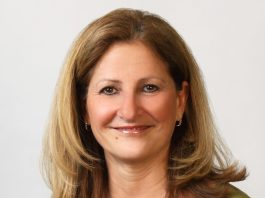
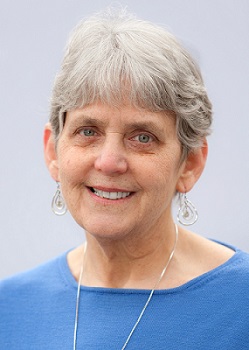
Mary Carskadon, director of chronobiology and sleep research at Bradley Hospital, discusses a new research center aimed at exploring links between sleep and mental illness in children and adolescents.
Bradley’s Center for Sleep and Circadian Rhythms in Child and Adolescent Mental Health recently received a $10 million grant from the National Institutes of Health’s Centers of Biomedical Research Excellence program.
PBN: When will the sleep center officially begin work? Will it be headquartered at Bradley Hospital?
CARSKADON: The center is headquartered at Bradley Hospital’s Sleep and Chronobiology Laboratory with team members located throughout Bradley Hospital campuses. We have already launched several new research projects and will hold our first major event – a research colloquium – on Aug. 12 and 13.
PBN: Will research focus on Bradley patients, or will some projects require partnership with other pediatric facilities?
CARSKADON: The center’s focus is pediatric mental health, sleep and circadian rhythms broadly and not restricted to Bradley Hospital patients. The hospital has a long-standing and impressive record of community outreach, and the center will build on that outreach to recruit research participants. For example, one of the center’s initial projects examines the influence of engaging in green space on sleep and mental health of young elementary school children. This project will work with schools and other community organizations to recruit participants.
Another project focuses on understanding the neurobiology controlling sleep that contributes to daytime sleepiness, behavior and cognitive functioning in children with attention deficit hyperactivity disorder. This project will recruit both children who have a history of ADHD and those who do not.
The center’s research projects will expand in coming years to explore many aspects of mental health, often to help youngsters who come through Bradley Hospital’s clinical units.
PBN: The National Institutes of Health’s COBRE program divides awards into three five-year phases. The award the sleep center just received is for the COBRE program’s first five-year phase. Are you hoping for more funding during the next two phases?
CARSKADON: Each five-year cycle includes significant scrutiny from the NIH to earn the next cycle of funding and we aim to hit the necessary benchmarks as we move ahead. These will include the center’s success in establishing the research and clinical infrastructure that pushes forward the boundaries of understanding of sleep, circadian rhythms, and pediatric mental health and achieving findings that will translate to improving child mental health.
PBN: What are some of the established links between sleep and mental illness that Bradley sleep center researchers are hoping to build on?
CARSKADON: We know that sleep, circadian timing and mental health interact dynamically across development. For example, children and [youths] who are under-slept have difficulties with attention, impulse control, emotion regulation, decision-making, and other areas key to healthy development.
What is less understood are the biological, behavioral and social mechanisms that link these two important areas across development. Our goal is to help train and support researchers who will be able to understand these mechanisms and build the foundation for novel interventions to help improve both sleep and mental health in children and [youths].
PBN: How do you foresee research findings helping patients and families in the future?
CARSKADON: Our center has a fundamental aim to provide a knowledge base that is necessary to inform policymakers, clinicians and families about practices that can best support our children and [youths] and to inform development of future interventions.
We plan to invest Bradley Hospital with expertise that will move the critical science forward to build a strong foundation here in R.I. and ultimately more broadly that supports mental health of children and adolescents.
Elizabeth Graham is a PBN contributing writer.