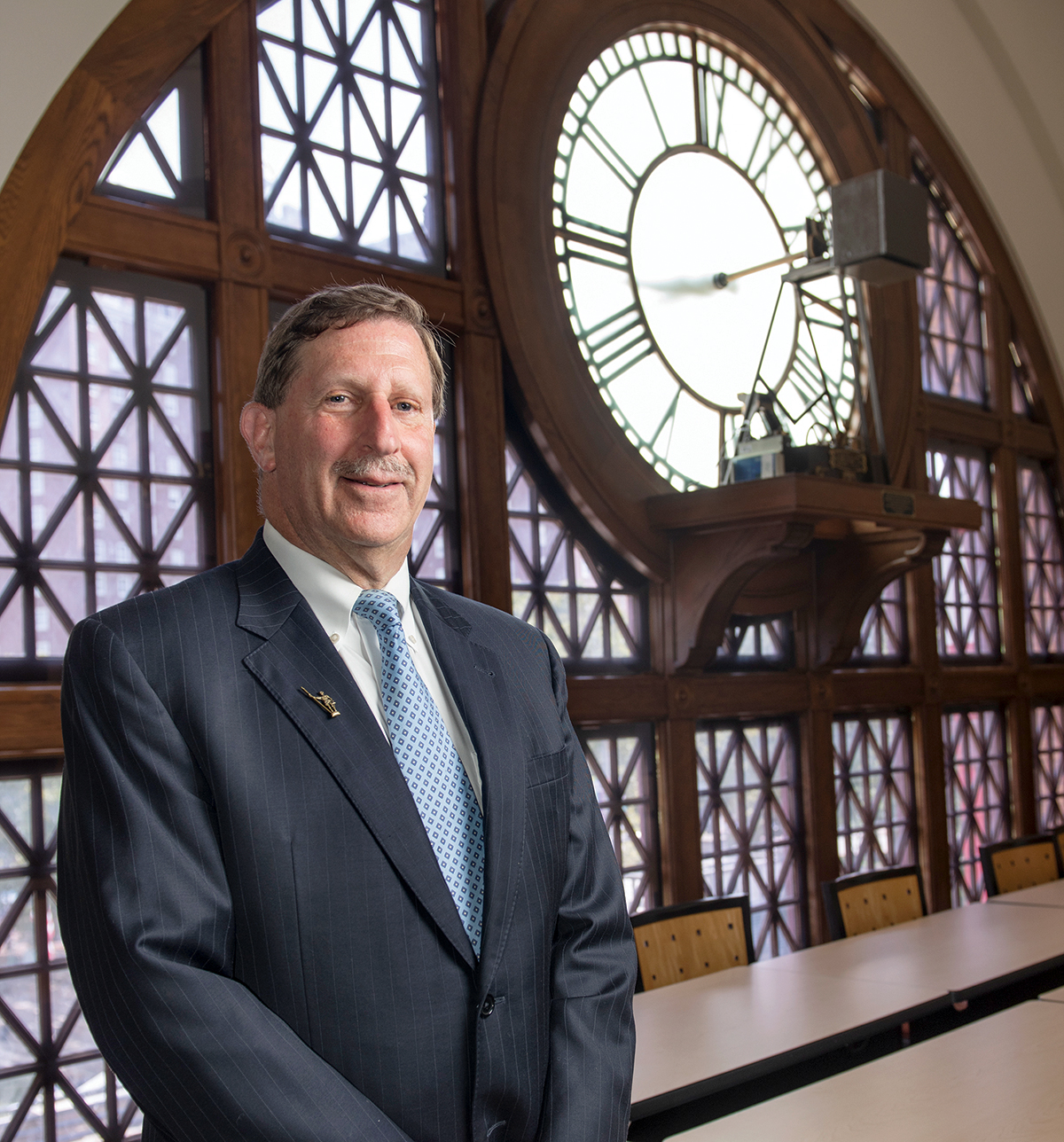
Neil D. Steinberg, CEO and president of the Rhode Island Foundation, helped introduce a 10-year long-term education plan called “Chart a Course, Stay the Course: Rhode Island’s Path to a World Class Public Education System” that offers recommendations on how to improve the public education system in the state. The foundation is also committing $1 million to support such improvements.
PBN: Who will be the beneficiary of the $1 million? The R.I. Department of Education? Individual districts?
ISO 9001:2026: A Practical Opportunity to Build for What’s Next
For Rhode Island manufacturers, ISO 9001 has been much more than a certificate on the…
Learn More
STEINBERG: I hope it will be statewide. We’re in the grant-making business, so people apply. It could be an organization that applies. It could be a school district that applies. It could be a new program that RIDE is doing, but it’s not earmarked for RIDE.
Separate from this, we established a fund with RIDE – the Fund for Rhode Island Public Education – where other companies, individuals and foundations can contribute. With RIDE, we’ll determine where it goes. We’re looking for ideas. We’re looking for new initiatives and we’re looking for support consistent with this [plan].
PBN: Which part of the education sector needs the most help? Pre-K and elementary? Middle school? High school? Across the board?
STEINBERG: Before you said “across the board,” I was going to say “D: All of the above.” What happens is we can all sit here and talk to various experts on education and the first person would say the most important thing is universal Pre-K. The next person would say all-day-K. The third person in would say “read by third grade.” The fourth person would say “absenteeism in middle schools.” The fifth person would say “STEM and STEAM [science, technology, engineering, arts and mathematics], and on and on and on.” It is really systemic. You can pick points. Read by third grade is a pretty standard benchmark to give the kids a chance, but it’s not the only thing and it needs to be in context. We really need to address systemically all of these different parts.
PBN: Can you explain what the group means in the plan by “sustain a rigorous statewide assessment system”? Is that for students, teachers and faculty, or both?
STEINBERG: Recognizing this is over a period of time, it would be probably all of those. As an example, sticking with [the Rhode Island Comprehensive Assessment System]. Massachusetts stuck with the same benchmarks and improved against those benchmarks. Historically, every three or four years we’ve changed the benchmarks. We’ve changed the testing. We need to stay the course and be consistent.
One of the things that’s interesting to me is that while we don’t compare well right now on the RICAS to the [Massachusetts Comprehensive Assessment System], what we’re told is when Massachusetts first rolled out MCAS, their performance was not that much better than our RICAS was year one. We know you have to build it up. Figuring out what the benchmarks are, they may be different in different districts. But I think the commissioner [Angélica Infante-Green] will do a lot statewide and sticking with them.
PBN: What will be the official first step to get this plan started?
STEINBERG: Step one is meeting with [government officials] and their [committee] chairs. They will look at it and get it to their people in the Statehouse to know what this is. The second thing is through RIDE. RIDE owns the education system in the state, so it’s to the extent that we get this [plan] out through RIDE to different districts to business groups.
I met with the Greater Providence Chamber Education Council this morning. I will be the keynote at the East Greenwich Chamber [event], where I will talk about all this. Same thing with other groups, like the Rhode Island Society of Certified Public Accountants and Rhode Island Manufacturers Association and get them to endorse this [plan] and embrace this.
PBN: Could Rhode Island Foundation offer additional grant funding toward this initiative if improving education efforts are progressing?
STEINBERG: Never say never. We’re open to everything. But we have our ongoing grantmaking that could support some of this. I think the more that this gets embraced and alive, the more all of this comes together and follows the plan.
James Bessette is the PBN special projects editor, and also covers the nonprofit and education sectors. You may reach him at Bessette@PBN.com. You may also follow him on Twitter at @James_Bessette.