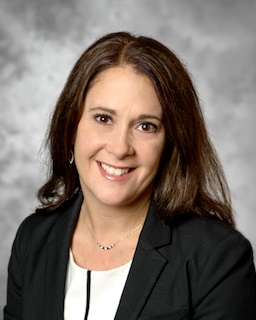
Sarah Frost took over as chief of hospital operations for Lifespan Corp. and president of both Rhode Island Hospital and Hasbro Children’s Hospital on June 3.
Frost has more than 20 years of experience working in health care leadership. Before joining Lifespan, she was CEO of two Banner Health hospitals in Arizona – Banner University Medical Center Tucson and Banner University Medical Center Tucson South. In these roles she oversaw more than 6,000 employees, 900 inpatient beds and $1.5 billion in operation revenue.
Frost spoke with Providence Business News about her new position.
PBN: What are your priorities for your new role?
FROST: I have just completed my fourth week at Lifespan and Rhode Island Hospital, so I am doing a lot of listening and learning. I’ve met so many amazing people.
Lifespan began integrating as a system in 1994, when The Miriam Hospital first joined with Rhode Island Hospital, and we continue to integrate services across the Lifespan system today. Our expectation is to be the health care system of choice – that means all Rhode Islanders and families across southern New England seek our care, both at their most vulnerable moments, and for their everyday health and wellness.
My first priorities can be summed up in four key concepts: 1. Quality; 2. People; 3. Efficiency; 4. Community. Focusing on these will create a framework to continue to provide a high level of care in our hospitals while continuing to grow and meet the needs of our community.
PBN: Why did you choose to come to Lifespan?
FROST: I am originally from New England, so this was a great chance to return to my roots. I came for the opportunity, the people and the sense of community.
As the chief of hospital operations, I am excited to lead our hospitals through the health care challenges we are facing across New England and here in Rhode Island. Those include the need to improve reimbursement, rejuvenate our campuses by investing in our infrastructure, and expand services to meet the needs of our community so they can receive state-of-the-art care close to home.
The team at Lifespan is amazing and I am proud to join them in these efforts.
PBN: What drew you to pursue a career in health care leadership?
FROST: I originally wanted to be a nurse, but after I took my first biology course, I realized that while I admired the profession, it was not my calling.
My first career step in health care was as an analyst. I knew I wanted to do something where I felt my work was meaningful and supported the greater good. The sense of community and commitment to quality in health care were a natural fit for me. I quickly learned two important lessons: 1. Organizational decisions need to be founded in data used to identify opportunities (impactful decisions need supporting data to be successful); 2. In order to serve the academic health care mission, we needed to remain strong financially.
Those two lessons were the catalyst to developing and leading my teams to success throughout my career.
PBN: What similarities and differences do you see between Rhode Island and Arizona’s heath care landscape?
FROST: Health care challenges are similar no matter what part of the country you live in. For example, all costs are rising – personnel, supply, construction; access to care is challenging; and reimbursement is complex.
Health care employees are committed and dedicated to the mission and vision of the organization.
PBN: Lifespan has continued to struggle with labor expenses. How do you plan to address this at Rhode Island Hospital and Hasbro Children’s Hospital?
FROST: Much like the rest of the country, labor shortages in health care have required health care organizations to be resourceful in staffing and creatively [pursuing] retention and recruitment strategies – our health system is no different.
Labor expenses are high due to the continued use of contract labor for hard-to-fill positions such as nurses, surgical technicians, nursing assistants, laboratory technologists and others. We are investing in programs to retain our existing employees and to grow our workforce. For example, over the last two years we have implemented a nursing assistant training program. In our most recent cohort, 18 nursing assistants graduated, all of whom signed on at a Lifespan hospital after graduation.
A few years ago, we also moved to the Vizient graduate nurse residency program to ensure our nurses had the competencies needed to be successful as new graduates.
We want Lifespan to remain the employer of choice in the region, and we’ll continue to collaborate with our community partners to build on some of the great training and workforce development programs we have implemented.
Finally, we are always looking for ways to retain our existing talented staff so we can provide the best care for our patients.
Katie Castellani is a PBN staff writer. You may contact her at Castellani@PBN.com.