Three years ago, a woman selling ornaments at a kiosk in the Providence VA Medical Center caught Raymond Sienko’s attention while he was waiting for an appointment.
The ornaments, made with three mussel shells attached to a piece of cardboard with a fake pearl in the center, were going for $6 each.
“I thought, ‘My God, I can do much better than that,’ ” said Sienko, who served in the U.S. Army Reserves during the Cold War-era Berlin Crisis.
The 89-year-old saw an opportunity to earn some cash and maybe get a small venture off the ground.
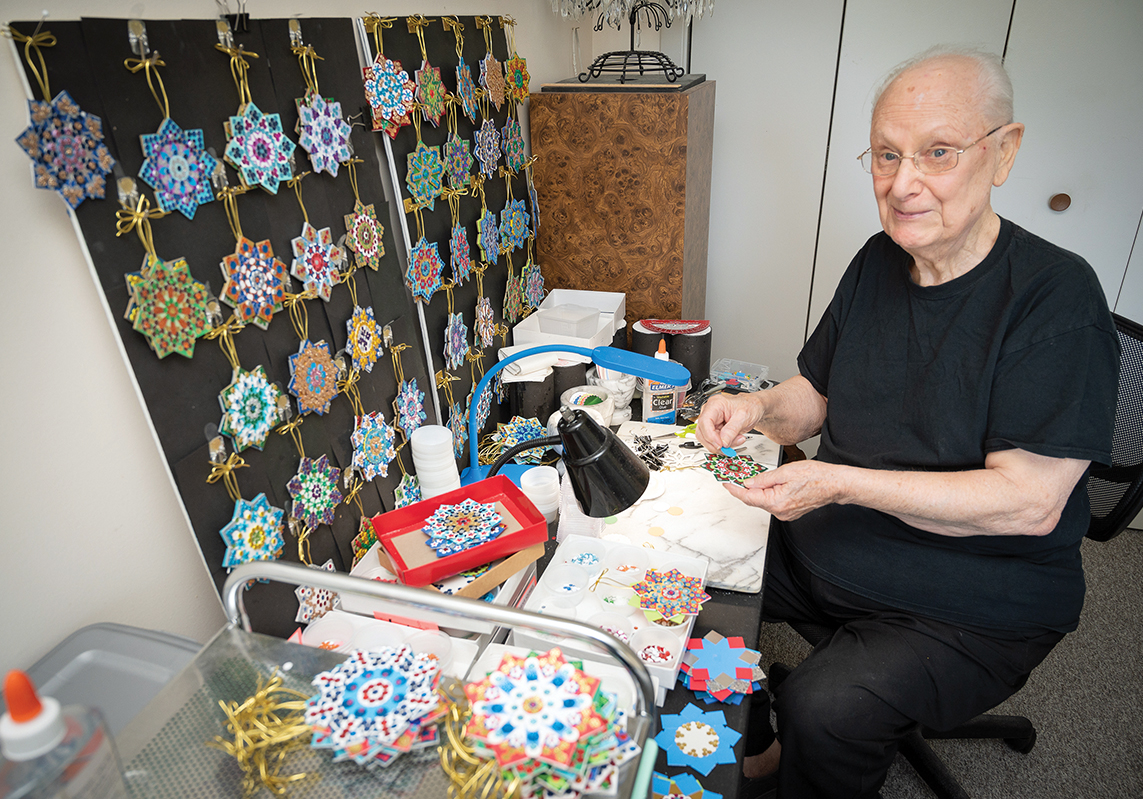
So, Sienko set off to the craft store to get materials and created his own ornaments. Though the design has evolved over the years, the ornaments are made with sparkly paper cut into various geometric shapes and topped with a magnetic hook with a gold cord. Other versions of the ornaments can be double-sided and feature a custom logo, he says.
Now Sienko says he has 2,000 ornaments ready to go, some of which he has sold at craft fairs and Operation Made, a shop in West Warwick that only sells veteran-made products. But making the side enterprise profitable has proven challenging as he’s searching for a market to break into and is in need of some funds.
Sienko is not alone. Kimberly Kralicky, program manager for the Employment Resource Center with the Veterans Affairs Providence Health Care system who works with Sienko, says many veterans struggle to start their own business.
“It’s a very hard process creating a business plan and finding a place to put it,” Kralicky said.
Funding is by far the biggest challenge that veterans face when launching their own venture, she says.
This is true for Stanley Esposito, who has been trying to open a comic book store in Richmond for years. Esposito, an avid comic collector, says he decided to open his own store after years of struggling to find a steady job.
Through working with Kralicky and the VA, Esposito says he was able to get a business plan ready and find a storefront available for lease. All he needed was a $6,000 loan to get started.
But it’s been years, and Esposito – a former U.S. Marine Corps reservist – still drives by the vacant storefront in hopes he’ll secure funding before it’s taken. Esposito says he has applied for loans but has been denied by multiple banks and lenders, including the U.S. Small Business Administration. Typically, comic book stores are a risky investment, even with the most creditworthy owner.
Kralicky says there are limited financial resources available for veteran entrepreneurs. One is Vocational Rehabilitation and Education, which offers training and can help support startups if that’s what veterans plan to do after the training.
Aside from those programs, veterans largely rely on loans or grants, she says. And often veterans such as Esposito lack a strong credit history that lenders want, as well as the ability to prove the business will be profitable, which is tricky to do without funds.
She says some veterans have come looking to start their own business but once they learn of the financial hurdles, they opt to look for a job instead. Out of the 300 to 400 veterans that the center assists each year, Kralicky estimates around 1% are looking to start a business.
“There aren’t any easy funding sources, so veterans are looking for the same funding sources that anybody else in the community would be going to,” Kralicky said. “I haven’t found any consistent ones at all, which is one of the ongoing barriers we’ve had a lot of difficulty with.”
Despite the challenges, Esposito and Kralicky plan to keep trying. Now he is working on improving his credit, saving money and even looking into selling his own collectible items and toys online.
“We’re not giving up,” Esposito said.
For Sienko, who is not looking to open a brick-and-mortar shop, limited funds have made it difficult for him to find places to sell his ornaments. But admittedly, and maybe not unsurprisingly, Sienko says the decorations don’t sell well among his fellow veterans.
Permission to sell items at events such as the Bristol Fourth of July Parade comes with fees that are too steep for him, and there are other expenses such as insurance coverage for selling at other locations.
He’s in talks with a few gift shops to sell items around the holidays, and he’s looking to add more craft shows to his schedule. But like Esposito, Sienko is not about to give up and is considering financing options with Kralicky.
Sienko’s goal is to sell around 100 to 200 items a week, an amount that will allow him to continue doing what he enjoys.
“We’re kind of in limbo with a lot of things trying to get this off the ground,” Sienko said. “We really just have to get over the hump, so to speak.”