Large chain hotels long have dominated the corporate meetings market, offering convenience and versatile spaces to accommodate a wide range of needs. But smaller inns are increasingly taking a piece of that business, offering unique experiences in more intimate settings.
The idea is to provide a real retreat in a distinctly non-corporate environment, often with gourmet food and recreational activities and excursions.
Anna Turchiano, regional manager for the Brookstone retail chain, booked a semi-annual meeting at the Francis Malbone House in Newport last winter.
“Typically we’ve gone to large hotels, and you’re just one of many companies holding an event there,” she said. “At the inn we were the only company, and it was great. It was absolutely one of our best meetings.”
The atmosphere, for one, was nothing like what the group was accustomed to, Turchiano said.
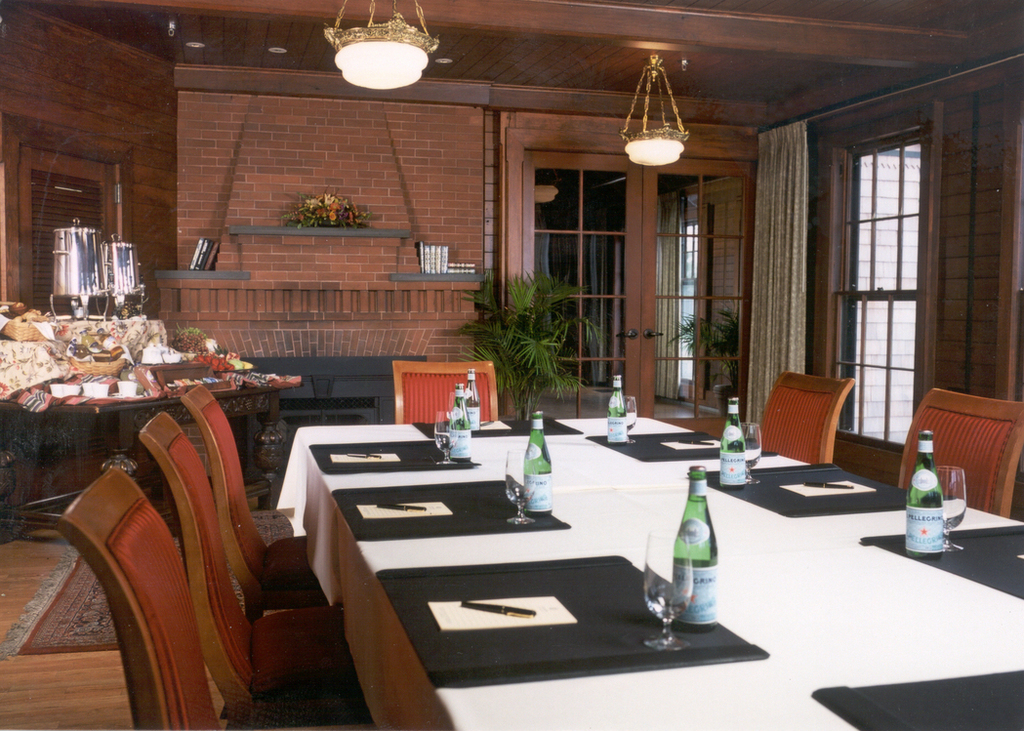
“The meeting room was right off the courtyard,” she said. “Meeting rooms are typically in a lower level or basement, but at Francis Malbone there was a fireplace and afternoon tea. There were a lot of nice little touches.”
The group also took breaks to visit the Newport Mansions, she said, “and one night we went ice-skating.”
The Francis Malbone House gets about 10 percent of its annual business from corporate clients, said innkeeper Anne Maria Howard, and while many factors are at play, the privacy is one of the biggest draws.
“The most important thing for the corporate group is that it’s small and intimate,” she said. “And we can do whatever they want, because they have the whole property.”
Sarah Carlson, director of rooms at Castle Hill Inn & Resort in Newport, offered a similar view. “You are secluded,” she said, “and you can focus on the task at hand. … You can really connect with your colleagues.”
Linda Naiss, director of marketing and sales for the Bristol Harbor Inn, which she said gets 30 to 50 percent of its annual business from corporate clients, said understanding each group’s needs is essential to marketing an inn as a corporate retreat destination.
“Depending on what the agenda is for the group, it can be very intense, with meetings, or sometimes it’s a more relaxed group,” she said. “So we customize our offerings to the organization.”
The physical space itself can be quite different from typical corporate meeting rooms. While the inn’s 1,000-square-foot Diman Room and the small Boardroom are more conventional, the 1,500-square-foot Bristol Harbor Room, built on the upper floor of a historic warehouse, features wide-plank wood floors and ceilings with exposed trusses and kingposts.
The inn also has a waterfront deck available for a range of events, and in marketing the venue to corporate groups, Naiss highlights the beauty and distinctiveness of the place.
“We put in the forefront the location of the inn, the history and what is in the surrounding community,” Naisse said. “There’s a tremendous amount within a small radius – shopping, fine dining, beautiful architecture.”
“There’s a trend towards the smaller, boutique-style venues,” she added, “and a lot of value is being placed in history and getting out of the urban areas.”
In fact, getting a chance to stay in the historic inns is what the customers seem to want most.
“You don’t have to leave the property,” Carlson said of Castle Hill. “You can do anything from have a five-course dinner to a clam bake and enjoy our private beach. The company has an inclusive resort here.”
The Bristol Harbor Inn has an award-winning restaurant, the DeWolf Tavern, next door, and the Francis Malbone House offers wine tastings and team-building events, such as one where the team was coached through making a “top-class meal.”
Howard said that is what makes a corporate retreat at the inn special.
“It’s private, it’s secluded and it doesn’t have a corporate feeling,” Howard said. “You can sit out in a beautiful courtyard in June and have dinner. You still get business done, but it has a different feeling.”