
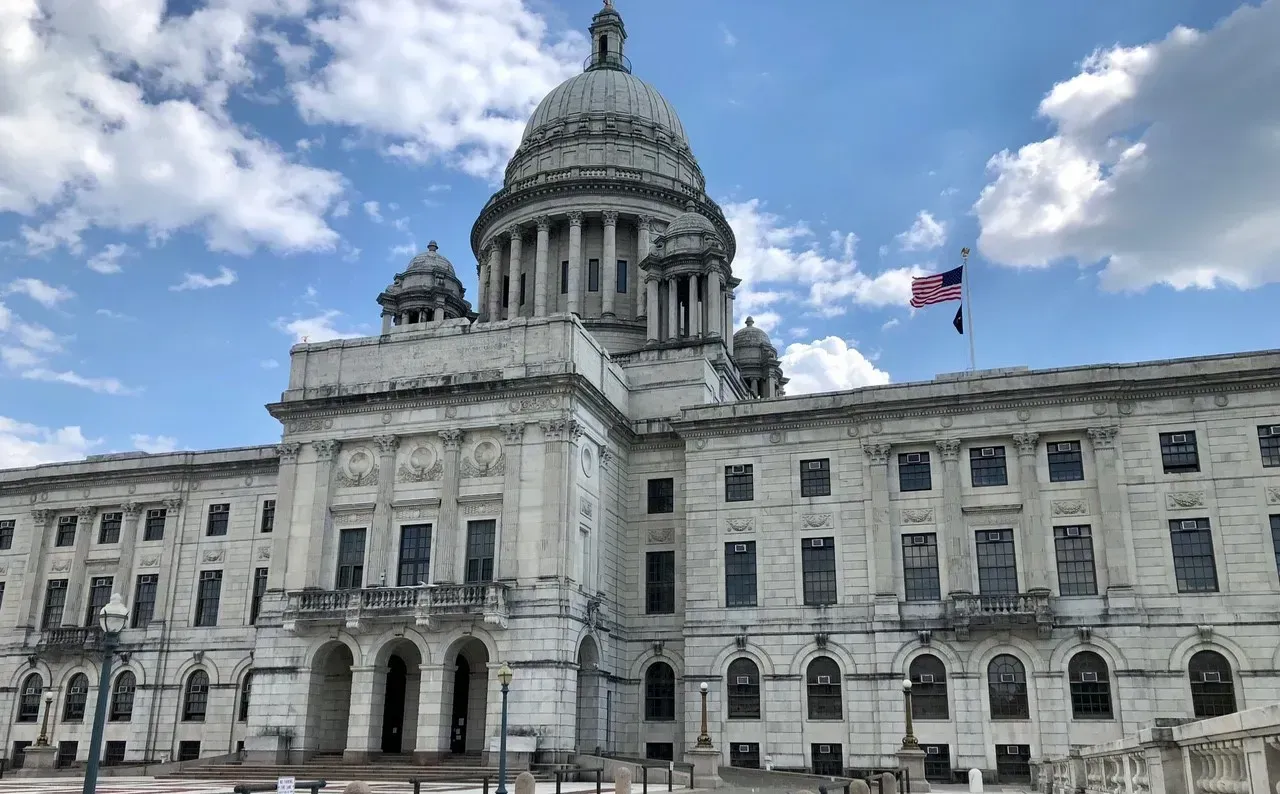
PROVIDENCE – A key House panel on Thursday approved a $13.6 billion fiscal spending plan that seeks to strike a balance between supercharging a stagnant economy while offering tax relief to hard-hit communities.
The House Committee on Finance’s version of the fiscal 2023 spending plan marks a 6.3% increase over the $12.8 billion budget proposed by Gov. Daniel J. McKee earlier this year and a 3.8% bump over the $13.1 billion current fiscal year budget. The House spending plan does not include any increases in state taxes or fees.
ISO 9001:2026: A Practical Opportunity to Build for What’s Next
For Rhode Island manufacturers, ISO 9001 has been much more than a certificate on the…
Learn More
The sweeping plan, approved by an 11-3 vote, incorporates a major chunk – $431 million – of the $1.1 billion windfall of federal American Rescue Plan Act funds. McKee has also mapped out a spending plan for the rest of the ARPA funds over the next six years, which he introduced at the same time as his fiscal 2023 budget in January.
The House panel’s version keeps intact the $250 million chunk of ARPA funding for affordable housing and homeownership programs set forth by McKee. Lawmakers also tacked on another $50 million in the upcoming budget year to help pay for school infrastructure, in addition to the $250 million school construction bond.
Meanwhile, lawmakers have eliminated two programs McKee sought to start in his budget proposal: an $11 million request for municipal education centers aimed at closing the education gap outside of the traditional school system and $20 million for a “Higher Ed Academy” to help residents impacted by the pandemic start or finish college.
House Speaker K. Joseph Shekarchi, D-Warwick, called McKee’s spending plan a “good roadmap” and stressed the emphasis on one-time funding over new long-term programs that might not be sustainable when state coffers aren’t as flush.
The House budget relies not only on the windfall of federal stimulus money, but also a nearly $900 million budget surplus, a large chunk of which will be spent on temporary taxpayer relief programs and an earlier-than-expected end to the state car tax.
Lawmakers also maintained McKee’s proposal to use $108 million of the surplus money to build a new state-run hospital facility to replace the aging building on the Eleanor Slater Hospital’s Burrillville campus.
The amended budget calls for a combined $400 million in new state bonds – $50 million more than McKee’s borrowing plan – for K-12 school construction, public higher education projects and “green economy” programs.
Absent from the spending plan are any earmarks for the Tidewater Landing soccer stadium redevelopment in Pawtucket, which has sought additional state support in the form of tax-increment financing amid rising project costs. Shekarchi said he was never formally asked for a contribution from the state budget for the project.
Despite the recently approved recreational marijuana law that allows retail pot shops to begin selling in December, the spending plan assumes minimal revenue from recreational marijuana in the upcoming budget year, since the program will be in its infancy.
The finance panel’s approval will send the budget to the House floor for a full chamber vote, likely on June 16, Shekarchi said.
(UPDATES throughout with panel vote.)
Nancy Lavin is a PBN staff writer. Contact her at Lavin@PBN.com.










Excuse my ignorance if this has been discussed, though in light of budget surplus/anticipated future revenue from recreational marijuana sales, has there been thought given to equalizing our sales tax with our neighboring states? Seem to me this would be a great way to keep more revenue within our borders and give consumers a break.