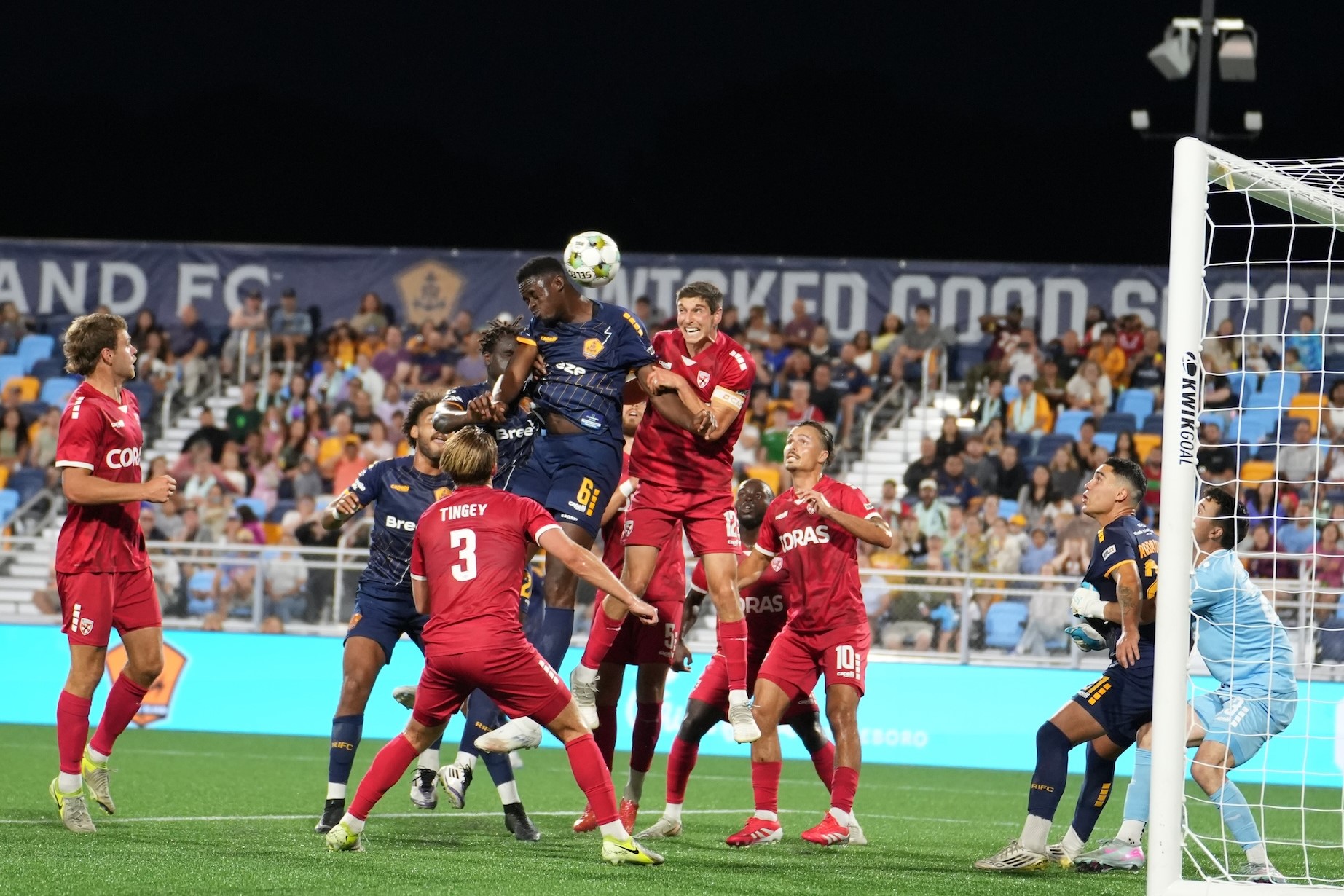
With seven FIFA World Cup matches coming to Gillette Stadium next summer in nearby Foxborough, Mass., Rhode Island is eyeing an estimated tourism windfall of $330 million, with as many as 1 million soccer fans expected to pass through the Providence metropolitan area.
At the center of the state’s effort to draw in those visitors is Ocean State 2026, a nonprofit launched in June to turn the global soccer spotlight into economic gains, partly through its community grant program.
But with the World Cup – running from June 13 to July 9, 2026 – less than a year away, questions remain about the state’s readiness, including how much funding will be available and who will be granted money.
As of mid-September, Ocean State 2026 started accepting “pre-applications” for its community grant program, touting amounts of between $1,000 and $500,000, even though the size and sources of the funding pool remain undetermined.
Organizers have acknowledged that no private or public funds have been secured yet, and they’re in discussion with prospective corporate sponsors. They have not sought state funding, either.
For Elizabeth M. Tanner, executive director of Ocean State 2026 and former R.I. commerce secretary, the size of the World Cup has posed a quick and steep learning curve.
“This is the largest event to come to Rhode Island. It’s the largest to happen in New England,” Tanner said. “So we’re doing something that hasn’t been done before.”
The “pre-application” for grants caught some by surprise. David Dadekian, founder and president of marketing and event company Eat Drink RI LLC, says he applied for a grant on Sept. 22.
“My concern is there is an Oct. 5 deadline,” Dadekian said. “I wasn’t aware these grants were even out there until I was speaking with [Tanner] about something unrelated, who then told me I should apply.”
Recipients are expected to be announced in March 2026.
But the looming deadline underscores a larger issue: Rhode Island’s World Cup preparations are still limited by unclear funding and question marks around state support.
In Massachusetts, preparations by the nonprofit Boston 26 are already underway, and Mass. Gov. Maura T. Healey has filed a supplemental budget that includes $20 million for World Cup activities.
Ocean State 2026 has set a fundraising goal of at least $500,000.
R.I. General Treasurer James A. Diossa, Ocean State 2026 chairman, has estimated that Rhode Island will need roughly $4 million to $5 million in public and private contributions.
But, in a statement to Providence Business News, Diossa did not directly address money questions. “We have incredible momentum to welcome visitors, showcase our diverse culture, and create unforgettable experiences,” he said.
Gov. Daniel J. McKee also did not address funding, saying his office is “continuing to work with partners like Ocean State 2026 to ensure Rhode Island is ready to welcome the world.”
Farouk Rajab, president of the Rhode Island Hospitality Association, says Tanner contacted his organization about a week ago, informing him of the grant pre-application. He has sent notifications to RIHA’s nearly 900 members.
But without money ready to distribute, Rajab said, the initiative feels far from a sure thing.
“The money is not there,” Rajab said. “It still feels like just a concept for now.”
Rajab, whose organization hasn’t applied for a grant itself, says those in charge need to act fast to capitalize on the World Cup opportunity.
“This moment is critical for [the hospitality] industry,” Rajab said. “To the people in charge, please support and fund this initiative. We need to pay in and invest up front now to reap next summer’s potential economic benefits.”