
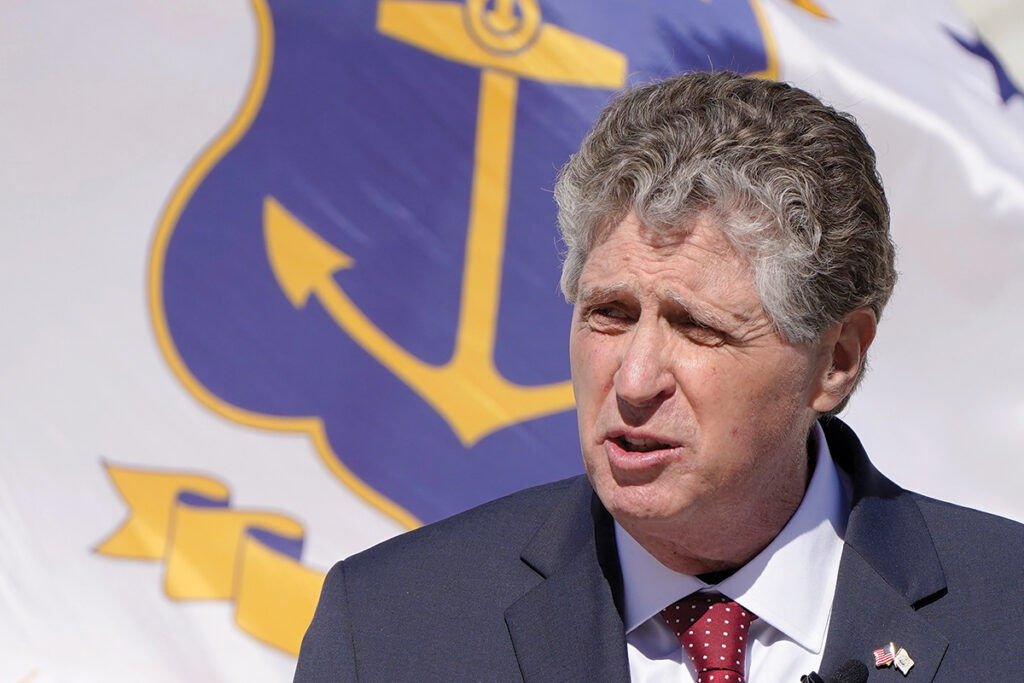
PROVIDENCE – Gov. Daniel J. McKee unveiled plans Tuesday for a “higher ed academy” that would enroll more than 1,000 Rhode Islanders during a three-year program to gain skills need to earn either a degree or credential as a workforce development initiative.
The academy proposal was expected to be mentioned in McKee’s State of the State on Tuesday night, and his administration said it would be part of his 2023 state budget proposal scheduled to be submitted to the General Assembly later this week.
Building a Strong Data Foundation in the Age of AI
Artificial intelligence (AI) has become a key priority in the boardroom and across management —…
Learn More
McKee’s Rhode Island Higher Ed Academy, if kept in the budget approved by state legislators this session would by administered by the R.I. Office of the Postsecondary Commissioner would administer the academy and would be a statewide effort to support Rhode Islanders who either haven’t entered college or unable to finish their postsecondary education due to the COVID-19 pandemic, the governor said.
McKee said nearly half of Rhode Island’s adult population lack degrees or credentials needed to enter the workforce in well-paying jobs – he said he wants that figure to be 70% by 2025. Low-income individuals and those who identify as Black, Indigenous and persons of color are “disproportionately represented in that figure,” the governor said. The proposed academy, McKee said, will be positioned to directly address systemic inequalities.
“In our Rhode Island 2030 plan, we pledged to build a dynamic and integrated workforce development and postsecondary education system that drives job creation, economic growth, and innovation over the long term. The Higher Ed Academy is the type of innovative and forward-thinking program we need to help us meet our goal,” McKee said. “We must meet Rhode Islanders where they are, and help give them the personalized, hands-on help they need to earn their credentials from our colleges and universities.”
R.I. Postsecondary Commissioner Shannon Gilkey told Providence Business News Tuesday that the state’s return on investing in this new academy is “great” economically because various industries, including hospitals, are currently struggling with workforce shortages.
“Hospitals are struggling with [finding] frontline nurses and other health care workers,” Gilkey said. “We know that [General Dynamics] Electric Boat needs more folks working at Electric Boat. We know there’s a huge economic upside, but you have to invest in people in this way.”
Recruitment for the academy will begin immediately, if funding is secured, with the plans to offer the first program this summer, Gilkey said.
The academy will be funded from the state’s American Rescue Plan Act funds, McKee said. Alana O’Hare, the governor’s spokesperson, told PBN in an email that the governor will announce as part of his fiscal budget proposal how much the academy will cost. Gilkey said the academy will be funded for three years via ARPA dollars.
If the academy is successful in creating workers around the state, Gilkey said the workforce pipeline will create the continued public-private investment beyond the three-year federal financial infusion for the academy.
“If we can see that return on investment and get 1,000 Rhode Islanders [employed] … we can show a sustainable business model with those economic returns,” Gilkey said.
RIOPC will partner with local colleges and universities – either public or private – K-12 schools, employers, nonprofits and human services agencies to help with the academy, Gilkey said. Recruitment for the academy would begin immediately and offer the first program this summer, if funding for the academy is secured, McKee said.
The academy, McKee said, would have programming lasting between four to eight weeks to help ready students to enroll in credit-bearing coursework. It will also give residents in the program access to various services such as credit counseling, assistance in filling out forms and course refreshers to fast-track students toward education completion.
Interested individuals ages 18 and older should contact RIOPC online.
James Bessette is the PBN special projects editor, and also covers the nonprofit and education sectors. You may reach him at Bessette@PBN.com. You may also follow him on Twitter at @James_Bessette.











Another dumb idea. Higher Ed Academy? Isn’t that a college? Why don’t we just beef up the programs at URI, RIC and CCRI? Can’t wait until Nov 2022.