PROVIDENCE – Buying textbooks, moving boxes of personal items into dorms, getting to know roommates and classmates, and administrators formally welcoming back students and staff for another academic year is a yearly tradition on local college campuses.
For the last three-plus years, welcoming students back also included having them be tested for COVID-19, require vaccinations, wear masks indoors when asked, take classes primarily online and, in some cases, be isolated from everyone after testing positive for the contagious virus. Sometimes, isolation meant being told to go home.
Your Business Has Gone Global. Has Your Insurance?
A decade ago, “doing business internationally” was mostly a large-company concern. Today, a manufacturer in…
Learn More
Last year, many college campuses had returned to a pre-pandemic way of life after the health crisis turned college life – and the entire world, for that matter – upside down starting in March 2020. Local colleges relaxed many COVID-19 requirements, including wearing masks in most indoor settings and vaccinations, at the tail end of the spring semester just before federal government officials declared the national emergency over in May.
While maintaining physical health will remain significantly important across college campuses, some local administrators are now seeing developmental gaps within students and a greater need to address their mental health. As a result, colleges, while optimistic in seeing life look more like before 2020, are expanding services to better aid students who are struggling mentally in juggling daily course stresses with constant isolation feelings and worries over becoming ill that were borne from the pandemic.
Roger Williams University Vice President for Student Life John J. King told Providence Business News the university’s rising senior class has been the most impacted by the pandemic, between having their senior years of high school upended and not having the usual campus experience once in college. As a result, RWU saw a drop in student engagement, involvement and leadership in various activities, King said. The university plans to spend “extra time” with that class of students to help “rebuild their sense of community” in their final year on campus.
Inge-Lise Ameer, Bryant University’s vice president of student affairs and dean of students, told PBN that cases of anxiety have become “incredibly high” on college campuses nationwide, Bryant notwithstanding. Anxiety comes up at “very bizarre times” for students, Ameer said, so Bryant wants to be present in the event students need to obtain help with difficult mental situations.
Colleges are also investing in more staff and additional resources to address mental health needs on campuses. At Salve Regina University in Newport, Director of Health Services Elizabeth Galvin said Salve added another mental health counselor to help with the increased need on campus for mental health services. Salve 18 months ago, Galvin says, also brought aboard a new wellness and prevention coordinator to assist students cope with increased anxiety brought on by various triggers, such as transitioning into freshman year of college and students who lost that “social practice” during the pandemic.
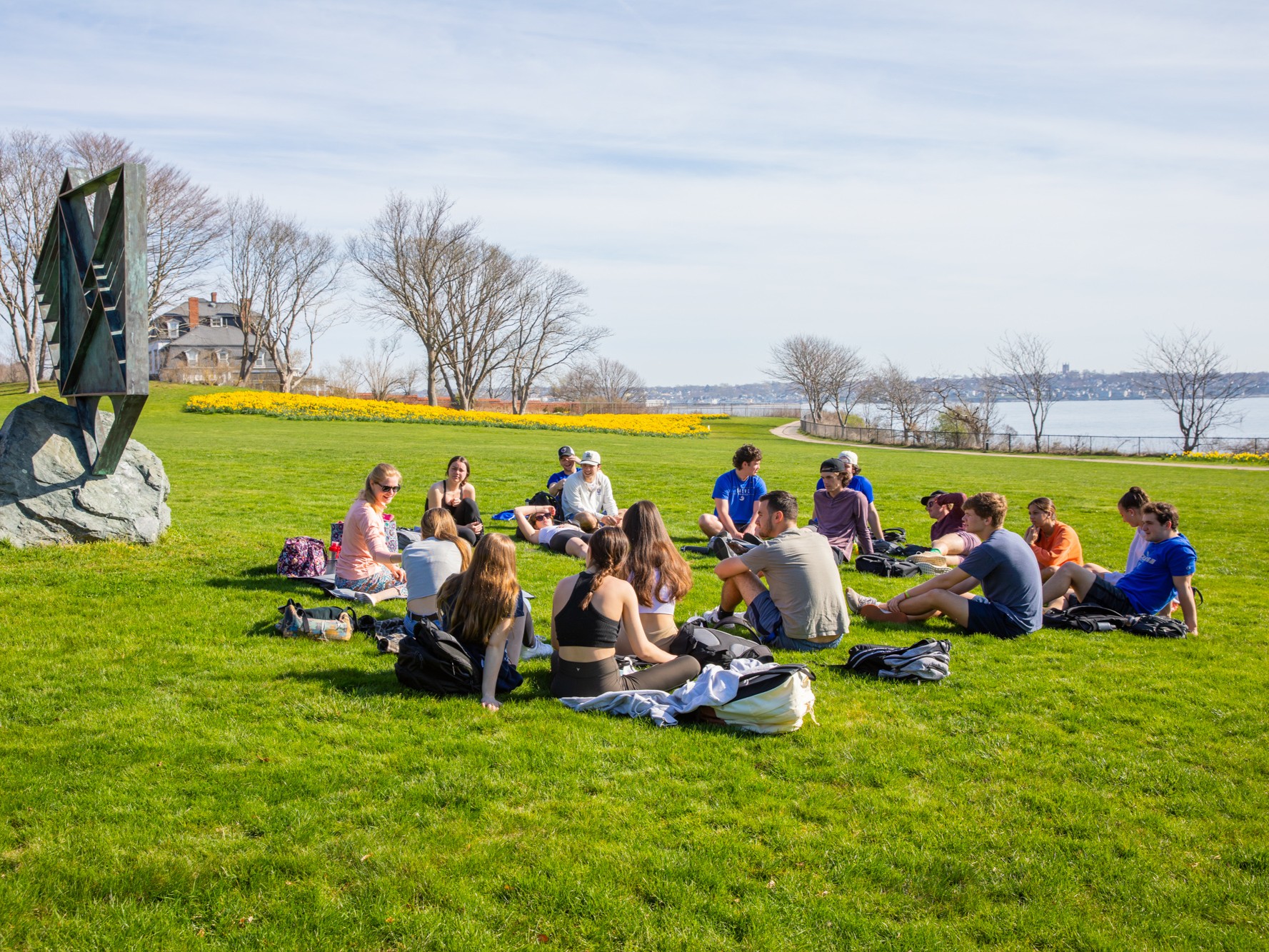
University of Rhode Island Vice President of Student Affairs Ellen Reynolds says the university offers a one-credit mental health first aid course, which trains people to identify and recognize signs if someone is struggling mentally. Reynolds also said URI is partnering with technology telehealth support company My SSP. It is a platform where students can access a mental health clinician 24/7 either by chat, virtual conference or phone and discuss a current problem a student is facing mentally, Reynolds said.
“That has extended our ability to have access available anytime a student might need access,” Reynolds said. “It has been well received by students in our community.”
Bryant, Ameer said, has added more daily 30-minute walk-in sessions for students to meet with counselors to address anxiety concerns.
Colleges are also taking approaches to build up students’ sense of belonging and engagement on campus that was lost during the pandemic. King says RWU’s focus will be on helping students create a personal balance between academics and enjoying life. That includes encouraging exercise and better sleep, which King says all feeds into improved mental health.
RWU will also host this fall its first wellness fair for students, King says, much like the fairs it held for staff. King said the fair, created by RWU’s new student health education and initiatives director – Cristelle Garnier – will offer students various resources to maintain physical and mental health.
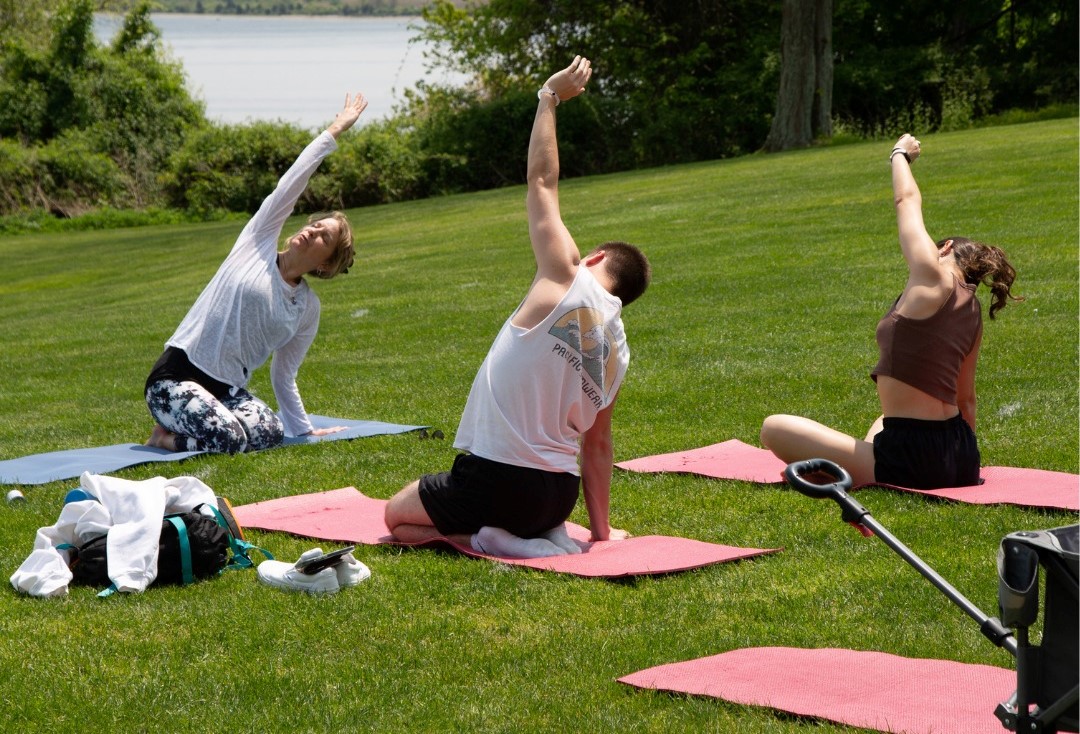
Bryant has a yoga reflection session that meets once a week on campus, Ameer said, for students to become fit and clear their minds of stresses. She also said the university also started a student support network, which has counselors train students strategies through meditation, journaling and “helping people be in the moment” and reach out for help.
“We learned that [enjoying each other’s company] was something … that people at the time were just not comfortable with yet because they just had not had that experience yet,” Ameer said. “It ended up being really wonderful last year, helping these first-year students going through this unique experience to settle into campus, feel like the place was theirs and a sense of belonging here.”
Addressing physical health will still exist on college campuses. Rhode Island College Center for Health & Wellness Director Marie Wilks says the college will still vaccinate students in a Sept. 6 clinic – it will only carry the current bivalent booster – and “strongly recommend” students to get the vaccine.
Johnson & Wales University is also recommending vaccinations for students, as well as asking students to create a plan within their dorms in case a roommate falls ill, JWU Director of Health Services Jennifer Barlow said.
New England Institute of Technology Executive Vice President Scott Freund in an email said the technical college will recommend students, faculty and staff to still follow the U.S. Centers for Disease Control and Prevention’s current COVID-19 guidelines, including indoor masking “predicated on community transmission levels. New England Tech will still ask students who test positive for COVID-19 to remain off campus until they test negative, Freund said.
Brown University, the Community College of Rhode Island and the Rhode Island School of Design did not respond to interview requests from PBN for this story.
James Bessette is the PBN special projects editor, and also covers the nonprofit and education sectors. You may reach him at Bessette@PBN.com. You may also follow him on Twitter at @James_Bessette.