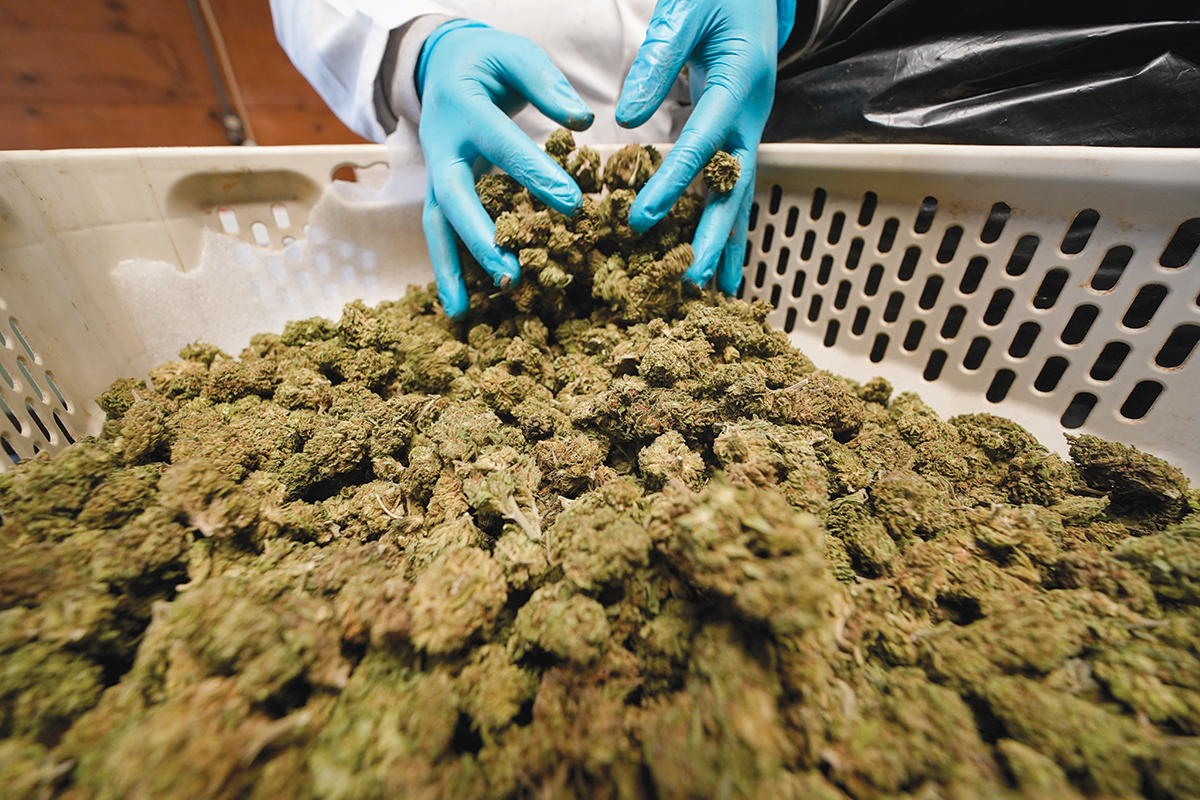
ALBANY, N.Y. – The first licenses to sell recreational marijuana in New York will go to people who were casualties of the war on drugs.
People with marijuana-related convictions will get dibs on the first 100 to 200 retail cannabis licenses awarded by the state in an effort to redress the inequities of a justice system that locked up a disproportionate number of people of color for drug crimes.
Some licenses will go to nonprofits or businesses that have a leader linked to a marijuana conviction. Priority also will be given to people with a parent, legal guardian, child or spouse convicted of a marijuana-related offense.
The regulations were posted on the state’s website on March 9.
It’s unclear how many retail licenses will be issued in New York, the second-most populous state after California to legalize possession and use of marijuana for adults over age 21.
Social equity emerged as a key theme in marijuana legalization in recent years.
States where marijuana is legal have increasingly tried in recent years to ensure there’s a place in the market for people who were prosecuted because of a now-allowed drug. But the efforts have been slow-moving in many states.
In Rhode Island, legislative leaders have introduced a bill to legalize recreational marijuana that would require six of 24 retail licenses to go to “social equity” applicants. Among the possible qualifiers for that status is that at least half of the owners of an entity have been arrested and convicted of drug offenses eligible for expungement under the bill. Qualified entities would also be eligible to use a financial assistance fund supported by application and licensing fees.
New York “is taking a big swing,” said Kassandra Frederique, the executive director of the pro-legalization Drug Policy Alliance.
“We don’t know what’s going to work,” she said, but “the thing that New York is showing here is that they’re willing to try and they’re willing to do things differently. … This is a real try towards achieving equity.”
The licensing plan follows other New York initiatives, such as a proposed $200 million grants and loans fund for marijuana entrepreneurs who are women or minorities, struggling farmers, disabled veterans and people from communities that endured heavy pot policing.
New York aims to provide 50% of licenses to such applicants.
“It’s really encouraging to see that New York is taking the lessons learned from other states,” said Melissa Moore, another Drug Policy Alliance leader.
New York’s regulations also will lay out rules for other retail license applicants. Individual applicants must prove their presence in New York and that they have at least a 10% ownership interest in a business that ran a net profit for two years.
“We want to see an industry that’s big enough and broad enough for everyone to be involved,” said Steve Hawkins, CEO of the U.S. Cannabis Council, an industry group. “This effort is one that we certainly embrace and see as very meaningful, in terms of giving those individuals impacted by the war on drugs an opportunity to get started in what’s going to be a very significant market in New York.”
PBN contributed to this story.