PROVIDENCE – Hasbro Inc.’s relocation from Pawtucket to Boston will move upwards of 700 jobs out of state, but panelists at Providence Business News’
2026 Workforce Development Summit said it doesn’t reflect a shortage of skilled workers in Rhode Island.
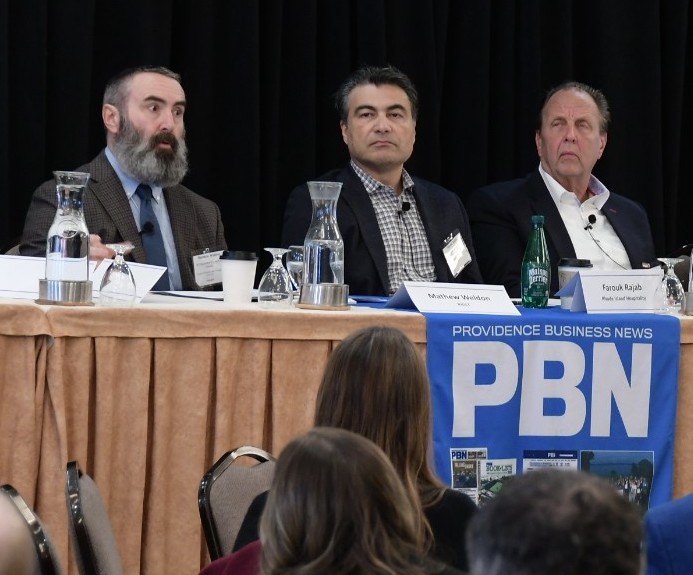
Matthew Weldon, director of the R.I. Department of Labor and Training, emphasized that while the toy company's decision may grab headlines, it is more about company strategy than local workforce limitations.
“We could have provided Hasbro with the workforce they needed," Weldon said. "Hasbro wanted to move; they weren’t interested in the options we offered, but that doesn’t mean our system can’t deliver talent. We offered them a very generous package (to stay in Rhode Island)."
Weldon noted that Hasbro is only a minor participant in the state's Real Jobs RI program, which has served more than 50,000 workers through partnerships with roughly 7,000 employers.
“They were involved for a very short period, and I don’t think they fully engaged with what the system offers,” he added.
Karl Wadensten, CEO and president of VIBCO Inc. and a board member of the R.I. Commerce Corp., said that Hasbro's departure reflects changing priorities for the company, and not a lack of talent here.
“I sat on the Commerce Board with former Hasbro president Al Verrecchia back in the early 2000s,” Wadensten said. “At the time, he said something really profound: ‘We have become a production company.’"
Wadensten said that while Hasbro is still a toymaker, its major focus now is on large-scale production and gaming.
“My sense is they didn’t believe we had the capacity to meet those needs,” he added.
Weldon said that the state had every ability to meet those needs. He specifically cited the state’s ongoing programs in skills development and experiential learning, which aim to train workers for high-demand jobs, including those in production, technology and health care.
“Hasbro’s decision doesn’t mean we can’t create talent,” Weldon said. “Our system is built to respond, and it has been used as a national template for workforce programs.” He urged employers to fully participate in workforce initiatives, noting that “you have to meet us halfway.”
The discussion underscored a broader message from the summit: Talent availability is not just about headcount, but engagement with state programs and strategic workforce development.
Rhode Island continues to perform solidly across labor metrics, Weldon noted, but aligning employer needs with training initiatives remains key to keeping jobs and companies in the state.
As Hasbro transitions to Boston, the message from the summit was clear: Rhode Island has the talent and infrastructure to support advanced manufacturing and production, but companies must actively tap into it.
"(Hasbro leaving) doesn't reflect negatively on Rhode Island," Weldon said. "It does not mean that we cannot create talent."
Matthew McNulty is a PBN staff writer. He can be reached at McNulty@PBN.com or on X at @MattMcNultyNYC.