PAWTUCKET – A state Senate committee that analyzed the proposed deal for a new Pawtucket Red Sox ballpark has recommended an amended legislative package that would direct more revenue from the operation to the city.
Among other major changes, the Senate Finance Committee recommends the city of Pawtucket receive half of the proposed naming rights revenue, estimated at $250,000 annually, as well as surcharges on premium tickets.
Selling Luxury Real Estate Requires More Than Exposure
By Emilio DiSpirito IV License Partner | Private Office Advisor Engel & Völkers Oceanside www.DiSpiritoteam.com…
Learn More
The legislation would also be clarified to require the team to cover the operational costs and maintenance of the new ballpark.
These and other changes are designed to assure that Pawtucket can meet its debt repayments until ancillary development around the site materializes, which is expected to take several years, according to a report released Thursday afternoon.
If the city defaults on its bond repayments for the new ballpark, the state would deduct the amount owed from annual payments for state aid made to the city, an arrangement to be stated in the enabling legislation.
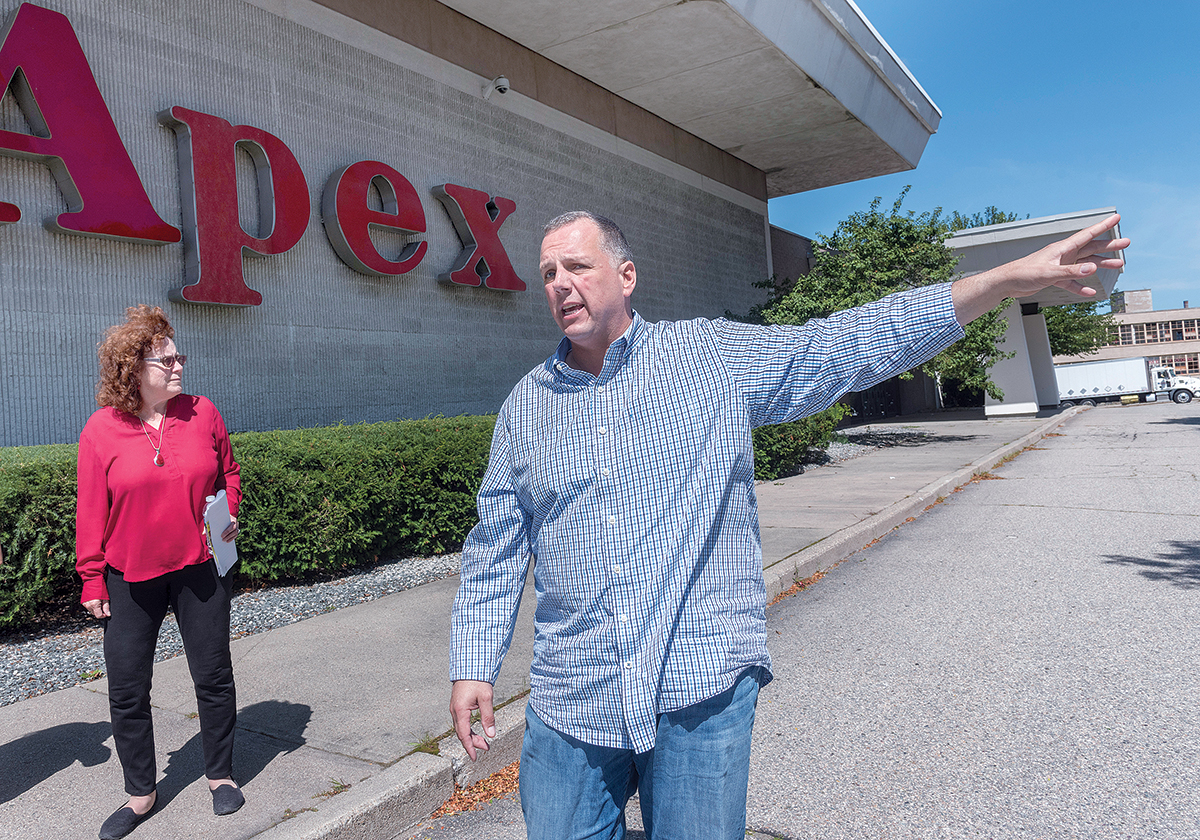
The $83 million ballpark, proposed for a downtown Pawtucket site now occupied by the Apex department store, would be built in a partnership of the team owners, the state of Rhode Island and Pawtucket.
The team would cover the majority of the costs, according to the terms, contributing $12 million in equity and $33 million in principal debt. The state would provide $23 million. The city would provide $15 million.
The city is now expected to pay $963,000 in annual debt service payments based on interest rates as of Sept. 25.
The committee recommends the enabling legislation for the construction be modified to reflect the interest and fees associated with the three bond issues for the three parties. It would identify the maximums as $41 million, $26 million and $18 million, for the team owners, state and city shares, respectively.
In other changes, the amended legislation would remove the proposed expansion of the eminent domain authority initially requested by the bond counsel, according to Senate Finance Chairman William Conley Jr. The language would revert to the “blighted and substandard” language already present under state law.
According to the Senate report, city leaders had concerns that the existing eminent domain law would not be applicable to portions of the Apex property that are not substandard, but during the two-month hearing process, concerns were expressed to the committee that the new language could be applied statewide.
Conley provided a detailed overview of the proposed changes and the rationale.
On the elimination of the expansion of eminent domain authority, he said that addition in the original legislation had been made at the request of bond counsel. But as a result of the testimony, over seven separate hearings on the proposal held by the committee, the committee members had determined it wasn’t needed.
“There is no expansion of eminent domain powers in this project or any other,” he said.
Conley explained, in a Thursday hearing, the revised legislation includes provisions that will provide more funds up-front for the city of Pawtucket to repay its debt.
Because private, ancillary development in Pawtucket may not generate enough tax revenue to cover the city’s debt payments for seven to 10 years, Conley said, several changes have been made in the substitute legislation that would support Pawtucket’s financial position.
In addition to half of the proceeds from the naming rights heading to the city, the ticket surcharge for premium admission would be directed from the state to the city. This is expected to generate about $100,000 annually, he said.
The team, outside of the original legislation, had promised to develop 50,000 square feet of retail and mixed-use space around the ballpark. The new legislation incorporates this, and mandates that it happen at the same time as the ballpark construction. This too will generate about $100,000 in additional tax revenues for the city, he said.
Although the revisions were announced today, the Senate Finance Committee did not vote on them.
This story has been updated to include comments from Senate Finance Chairman William Conley Jr.
Mary MacDonald is a staff writer for the PBN. Contact her at macdonald@pbn.com.