

PROVIDENCE – Rhode Island is ranked as No. 11 for lowest rate of adult obesity in a study by the State of Obesity, a project organized by the Trust for America’s Health and the Robert Wood Johnson Foundation.
The study, released Wednesday, found that 26.6 percent of adults in the state qualified as obese, up from 16.9 percent in 2000 and 10.1 percent in 1990.
Cybersecurity Awareness Month: What to Do When Your Identity Is Stolen
In recognition of Cybersecurity Awareness Month, it is important to remember that identity theft affects…
Learn More
This year’s is the 14th iteration of the project’s annual report which uses data from the Behavioral Risk Factor Surveillance System to analyze body mass indices in states on a broad scale.
A plurality of 33.1 percent of obese individuals in the state were between the ages of 45-64 while around 25 percent were between the ages of 26-44 and a further 25 percent over the age of 65. Men in the state were four percentage points more likely to be obese than women.
While the state was ranked No. 11 for lowest obesity rate among ages 10-17, it had the 10th highest rate of obesity among ages 2-4 at 16.3 percent.
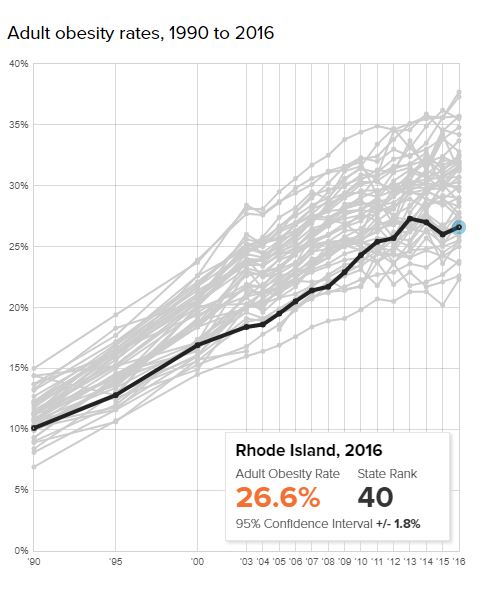
States in New England fared better than most, with each state placing below the national median for obesity. Massachusetts stood out as having the No. 3 lowest rate of obesity in the nation, 23.6 percent, behind the District of Columbia and Colorado.
Standing at the opposite end of Colorado’s lowest-ranked 22.3 percent obesity rate was West Virginia, beating out all other states with an adult obesity rate of 37.7. On the whole, rates decreased in Kansas between 2015 and 2016, increased in the states of Colorado, Minnesota, Washington and West Virginia, and remained stable in all others.
“Obesity rates are still far too high, but the progress we’ve seen in recent years is real and encouraging,” said Richard E. Besser, MD, president and CEO of the Robert Wood Johnson Foundation. “That progress could easily be undermined if leaders and policymakers at all levels don’t continue to prioritize efforts that help all Americans lead healthier lives.”
Kyle Borowski is a PBN contributing writer.