
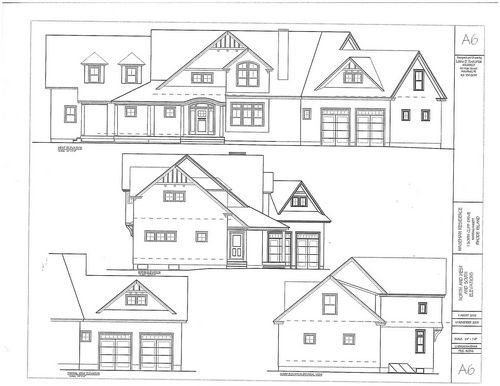
NARAGANSETT – After a yearlong design process, work is under way on a more than 4,300-square-foot “green” home in Narragansett. The Hageman’s private residence is set to be the state’s first certified under the LEED-H home initiative, a voluntary program run by the U.S. Green Building Council’s Leadership in Energy and Environmental Design program.
On one acre with an ocean view, the home has been designed to “withstand the Northeast corridor’s harsh elements,” while balancing a controlled budget and “the unique constraints of building green,” the homeowners said.
“Homeowners want to make socially responsible buying decisions when it comes to building or remodeling their house, but there are so many resources and so much misinformation,” homeowner Kimberly Lancaster Hageman said in a statement promoting LEED’s “Green Life Smart Life” project.
“This is a real home for a real family. It shows how fun and easy it is to make smart decisions and operate a home efficiently without sacrificing comfort, convenience or original style. Our goal is to show other families how you can make your home high-tech, high-design and high-efficiency, all while being environmentally conscious.”
The home, to be completed next year, is expected to earn a Leadership in Energy and Environmental Design (LEED) Gold Certification from the U.S. Green Building Council.
It is being constructed with some recycled and salvaged materials and will reduce water consumption through drought-tolerant, native landscaping and rainwater irrigation. With solar hot water and radiant floor heat, it’s expected to use up to 40 percent less energy than other homes. Digital systems will be installed to control water, energy, security and entertainment.
The Green Life Smart Life project is sponsored by The Consumer Electronics Association, Pella Corp. and National Lumber. For additional information, including a blog and photo updates, visit www.GreenLifeSmartLife.com.


A 4300 sq ft home should not be called green unless a family of 16 is moving in. This actually looks like a nice design for 3 families.
Efficiency does not equal conservation, it is a way to conservation that can be misused.
For example, if this home uses 40% less energy than other homes its size, it doesn’t save energy over a home that uses 40% less than a reasonably sized home, say half that size. It uses twice as much!
Can you spell “greenwashing”?
Any home owner that goes though the effort to design and build a home that uses less energy and is a LEED certified project deserves to be applauded. It will be though the resources and efforts of this family that other designers and builders can gain knowledge for other properties, no matter what size.
Karina has it right.
As the homeowner, I find it frustrating that when people go about trying to “go green” that they are attacked for not doing enough. Negative attitudes drive people to the decision to do nothing as opposed to being mocked at not doing enough.
The home is reflective of the neighborhood. People will never think about green building if they can’t live their life according to their personal lifestyle. We have considered every point in building this house, from the impact on the environment to its water use to its energy management and consumption to its plant life and lifecycle durability. A home twice the size does not consume twice as much energy, it actually only consumes roughly 15% more, our envelope efficiencies then would use 25% less energy than a home that is 2,150 sq/ft. This formula also does not consider the solar energy we are generating since that cannot be measured yet, nor does it factor the water conservation and rain harvesting system we’ve planned. We’re using only materials that are sourced locally and can be verified as post-consumer recycled or reclaimed. We are diverting 83% of our construction waste from the central landfill. And we are one of handful of homeowners in RI who care enough to do this. We chose methods to offset our size and maximize our investment, and there is nothing “greenwashed” about this house.
I suggest finding ways to encourage people to adopt green living instead of mocking those who do. We were building this home either way; we chose the sustainable path as an example to our children that you can make a difference if you try and to hopefully inspire other Rhode Islanders to do the same.
Kimberly Hageman
Kimberly,
I’m sorry, greenwashing is too strong a term, and I regret using it, as I did not mean to mock you. Certainly if you are going to build a large home, the most energy efficient large home is a greener large home. My point is it still may not be sustainable–meaning leaving enough resources for future generations. “Green” is often used to mean “greener” or “moving toward sustainability”–but at this late stage of the ecological game, I try to keep my eyes on the prize–a healthy planet for all and for all generations.
Regarding the proportion of size to use, you may be right. I wasn’t thinking–one of the joys of the internet is getting caught not thinking out loud–and yes, there would be some lower use as more volume would be contained in less surface area, meaning less heat loss in proportion.
I do hope people who are building homes follow your example in efficiency, materials sourcing, construction waste reduction, etc.–but I also hope they will consider how large a home they really need, since it will use less resources.
Can we still be friends? 🙂
Hi Katrina,
We can be firends; and I do agree that it is important to use less resources. I hope when we’re done you come see the house and we can show how despite building bigger to maintan our value, our offsets proved worthwhile. More important, if other people start adopting green building, the better it is for all of us. Thanks,
Kimberly Hageman