After several semesters of delivering presentations and listening to them in a humdrum classroom, Salve Regina University senior Taylor Barnaby is hitting the road.
And so are many of her fellow nursing students.
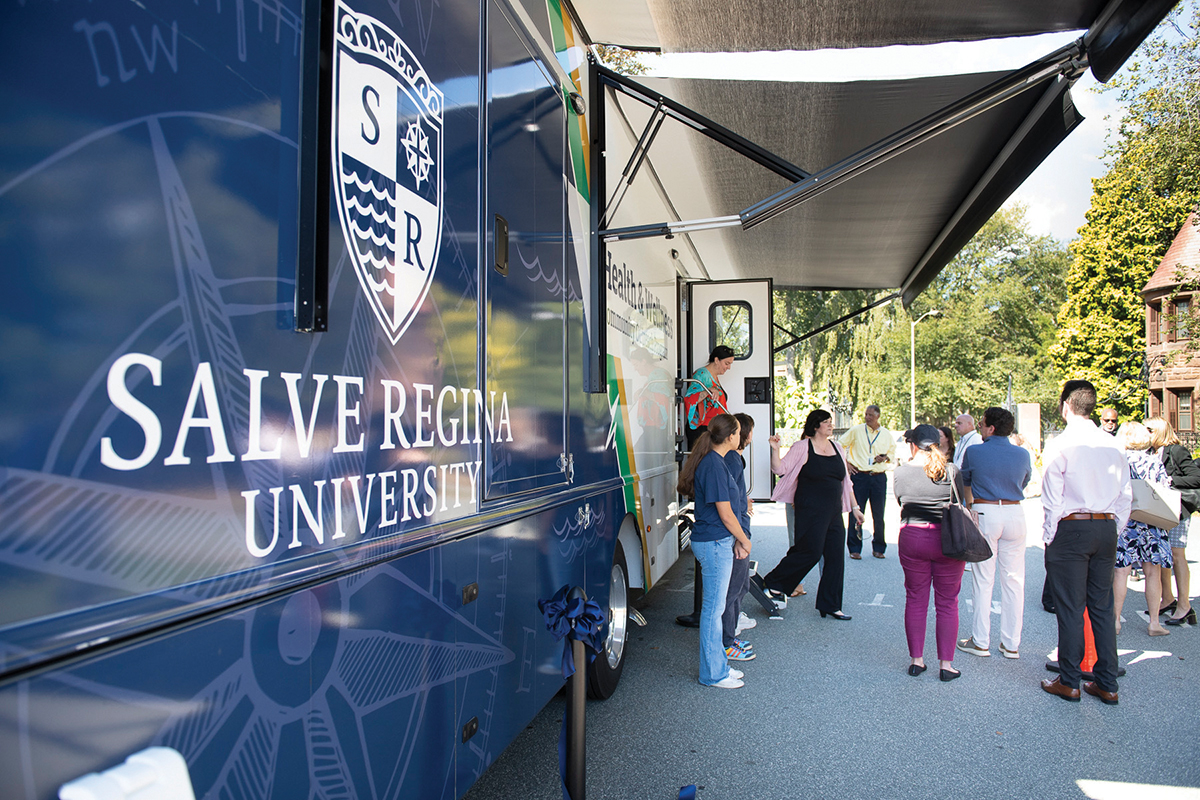
They and some of their professors will soon be tooling around Newport and the rest of the state in a specially equipped, 40-foot converted recreational vehicle as part of the university’s new health and mobile outreach program, believed to be the first of its kind among schools in Rhode Island.
The plan is to make stops at various senior centers, schools and nonprofits to teach people about everything from reading food labels to controlling stress and anxiety, giving a boost to access to health care information where it’s needed.
At the same time, it’s a learning experience for the nursing students, too – brushing up on the health topics in preparation for the bus visits and getting real-life experience in dealing with people in a health care setting.
“We will work directly with members of the community, hear their questions and see what works and what doesn’t – so we can learn while we teach,” Barnaby said at the formal launch of the mobile outreach program on Sept. 22.
Indeed, some of Salve’s professors are incorporating the mobile unit into their curriculum, including classes on public and mental health, as well as nursing. Barnaby says she got involved with the outreach vehicle through a group project she was assigned in a mental health course that is required of all senior nursing majors.
The mobile unit contains an examination room, two private counseling rooms and a check-in area, according to Debra Cherubini, associate professor of nursing and director of Salve’s RN to BSN program. She is also the director of the new outreach mobile unit program.
There’s enough space for six to nine nursing students to travel on the vehicle, but no medical treatments will be performed – just basic screenings such as eye exams and blood pressure reading, and the health care presentations.
Cherubini says the mobile unit is meant to be aligned with the ideals of the founders of Salve, the Sisters of Mercy, a Catholic order of women who take a vow of service to the poor, sick and uneducated.
The university has partnered with the Edward King House Senior Center Inc., the nonprofit Conexion Latina Newport and the Boys and Girls Club in Newport County. The outreach unit will be making stops at 12 events in the coming weeks so far. Newport Mayor Charlie Holder has been enlisted to identify other organizations that could benefit from a visit by the nursing students.
And Cherubini says each visit – whether part of a larger event or a standalone gathering – is intended to be different, with the hosts setting the topics of discussion.
“We don’t want to just say, ‘Hey, this is what we want to give you,’ ” Cherubini said. “We want to know what they need and have it match up so that students realize that they need a community assessment to meet the needs of their patient population.”
Salve’s program was funded by $1.95 million earmarked from the federal Health Resources and Services Administration, with the support of Sen. Jack Reed, D-R.I. The money helped the university purchase the van and several years of the mobile unit’s operating costs, as well as new simulation technology for the school’s nursing labs that support the program.
There are other health-related mobile units in the state, including the Rhode Island Blood Center’s Mobile Blood Drive and Women & Infants Hospital’s Community Mobile Health Clinic, which offers postpartum care services.
Cherubini says she is not aware of another mobile health care program in the state similar to Salve’s program, focused on general health care education.
Barnaby is eager to make the rounds on the road and “do something other than just a PowerPoint presentation in front of our class.” She is taking a course on caring for aging adults and those at the end of their life, which offers extra credit for students who go on trips with the mobile unit.
“The first step in caring for people is primary prevention, which is education. So, I think it’s really important that people receive the proper education and us being able to do that is super exciting,” Barnaby said. “A lot of people don’t go and seek out information on [health care topics], so to bring it to them is really helpful.”