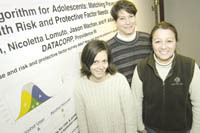
Providence research consultants crunch data, study substance abuse issues
The work is complex, highly technical, but also very sensitive: large-scale surveys, data-gathering and statistical analysis about mental health and substance abuse issues – and the ways in which communities can protect the most vulnerable among them.
It’s the kind of work that state agencies, social-service groups and academics do. For P. Allison Minugh and the team she’s built, however, it’s also business.
Minugh didn’t start out as an entrepreneur. After earning a doctorate in experimental psychology from the University of Rhode Island, she worked at Brown University’s Center for Alcohol and Addictions Studies, then at a research center at Harvard Medical School.
But in 1998, she got a chance to do research in Rhode Island, as a consultant. All she needed was some support staff, and her own separate office. DATACORP was born.
What the company does, in essence, is help governments and organizations take care of projects that are too big, too complex or too specialized for their capabilities.
“We do a lot of number-crunching, from the planning end all the way to (measuring) the outcomes,” Minugh said.
DATACORP does much more than math, however: It combines Minugh’s background in addictions and treatment research, with her partner Susan L. Janke’s experience as a clinician, with the skills of statisticians, to provide expertise not only in the technical aspects of each project, but in the subject matter itself.
“It’s a good combination of methodological and clinical skills,” Minugh said. “But we work as teams. Being as small as we are, everybody wears a lot of different hats. And one of the nice things about being a small business is there’s no bureaucracy to deal with. We have flexibility to change the way we do things, to adapt.”
Along with the core staff, they add workers as they need them – they’ve had up to 13 people on the payroll – and assign them to the home office, in Providence, or wherever the work is (right now they have a second office in Wyoming, for example, where they have multiple projects).
Some of their clients are scattered across the country: Alabama, Virginia, Wisconsin, Utah, but they do still have close ties with several Rhode Island communities, local substance abuse and health groups, and other organizations. So they work remotely sometimes, travel sometimes, and attend numerous conferences and meetings each year, to stay visible.
It was at a conference that they met Wyoming’s substance abuse prevention director, who has engaged DATACORP in the fight against methamphetamine addiction. It’s work that is particularly close to their hearts – and they’ve done the legwork to know their subject well.
And both women talk about the impact of crystal meth on the work force – how some employers don’t test for drugs because they’d rather not know how their employees can work so hard, and how those who do test for drugs can’t find enough clean workers.
This firsthand knowledge allows them to translate the data and research into practical reports that even laypeople can understand, and put to use.
“The kind of stuff we do is what the universities would do, but I think we’re a little more applied,” said Minugh.
Given Minugh’s and Janke’s expertise in substance abuse and mental health, most of their work is related to those subjects, though in a wide variety of settings: school surveys to determine how at risk students are of using drugs or alcohol assessments of agencies’ ability to change and improve their services.
Their goal each time is to affect change – to ensure that the most vulnerable get the best help they can get, and that policy decisions are based on facts, not politics or speculation.
A few days ago, Minugh said, they got news from Wyoming that made them feel particularly good about their work. They’d done a study of adolescent substance abuse resources in the state and found only eight residential treatment beds were available for them. Wyoming has plenty of mental health beds for youths, however, and DATACORP recommended making them available for drug-addicted teens as well.
At first, the response in the state was muted, Minugh said, but earlier this month, adopting her team’s advice was made a legislative priority for the state.
“Our mission is that data gets used to improve the human condition, and in this case, that’s what happened,” Minugh said. “It’s pretty rewarding.”