Rhode Island is facing a serious shortageof health care providers, often leaving residents scrambling to find care. Primary care is exceedingly difficult to attain, as are appointments with mental health providers and those in a range of other health disciplines. While demand for health services continues to increase, the state simply does not have the health care workforce necessary to meet its needs.
This is more than just an inconvenience for individuals. It is a problem for society. When people don’t have access to the care they need, they get sicker and often end up in the emergency department. The cascading effects include not only financial costs, but treatment delays in emergency rooms that are overwhelmed with patients who could be seen in other settings, such as primary care practices.
Addressing our health care needs requires a multifaceted solution, which includes attracting students to critically needed health fields and providing outstanding training opportunities now.
One potential solution is a public medical school. A legislative commission is examining the feasibility of establishing one in Rhode Island. But while we pursue the possibility of a public medical school, there are things we can – and must – do now to improve the health and well-being of Rhode Islanders.
As the state’s flagship public research university, the University of Rhode Island offers a broad range of undergraduate and graduate programs to help build our health care workforce. URI’s College of Health Sciences provides a broad range of interdisciplinary programs spanning psychology, human development and family science, physical therapy, kinesiology, nutrition, communicative disorders, neuroscience and public health. These programs together with URI’s College of Nursing and College of Pharmacy offer wonderful career opportunities for students and provide the trained professionals to fill our state’s critically important health care needs.
In response to state and national needs to expand the mental health provider workforce, this fall the College of Health Sciences is launching a new master’s degree program in mental and behavioral health counseling designed for students who are committed to a career helping to improve the mental health and overall well-being of individuals, families and the community.
The program, which can be completed in two years, meets educational licensure requirements for individuals seeking to become a licensed mental health counselor in Rhode Island, enabling students to quickly enter their career and improving access to mental health services. The program is in addition to our well-established programs, including the Ph.D. program in clinical psychology and the Master of Science degree in human development and family science, with a specialization in couple and family therapy. With the U.S. Bureau of Labor Statistics projecting a 19% growth in employment of substance abuse, behavioral disorder and mental health counselors by 2033, these programs not only address a state need but also a national one.
But our health care workforce also needs to expand beyond primary care and mental health. This includes physical therapists, where Rhode Island has a clear need for more practitioners and there is a 14% projected growth nationally, speech and language pathologists (18% projected growth nationally), as well as dietitians and nutritionists (7% projected growth nationally).
To be workforce ready, URI’s College of Health Sciences places a strong emphasis on learning by doing, by partnering with providers. For example, our highly ranked Master of Science in dietetics program includes a partnership with Sodexho, providing incredible opportunities for experiential learning throughout the country.
In addition to clinically focused programs, this fall URI will also launch a new Master of Public Health program, which builds on our tradition of inspiring future health professionals. The program’s interdisciplinary approach will provide students with the knowledge, skills and perspectives to address current and future public health challenges. The program is designed to meet public health workforce needs in Rhode Island and to provide public health training to students entering a broad range of clinical fields.
Students can complete the program fully online or through a combination of online and in person courses, making it highly accessible for working professionals. URI students can also combine their undergraduate degree training with the MPH, with the possibility of completing both degrees in as few as five years.
URI is committed to high-quality education, community engagement and solving the world’s most important challenges. For the College of Health Sciences this means addressing the health care needs of Rhode Island and our nation through innovative educational programs to help develop the next generation of health leaders.
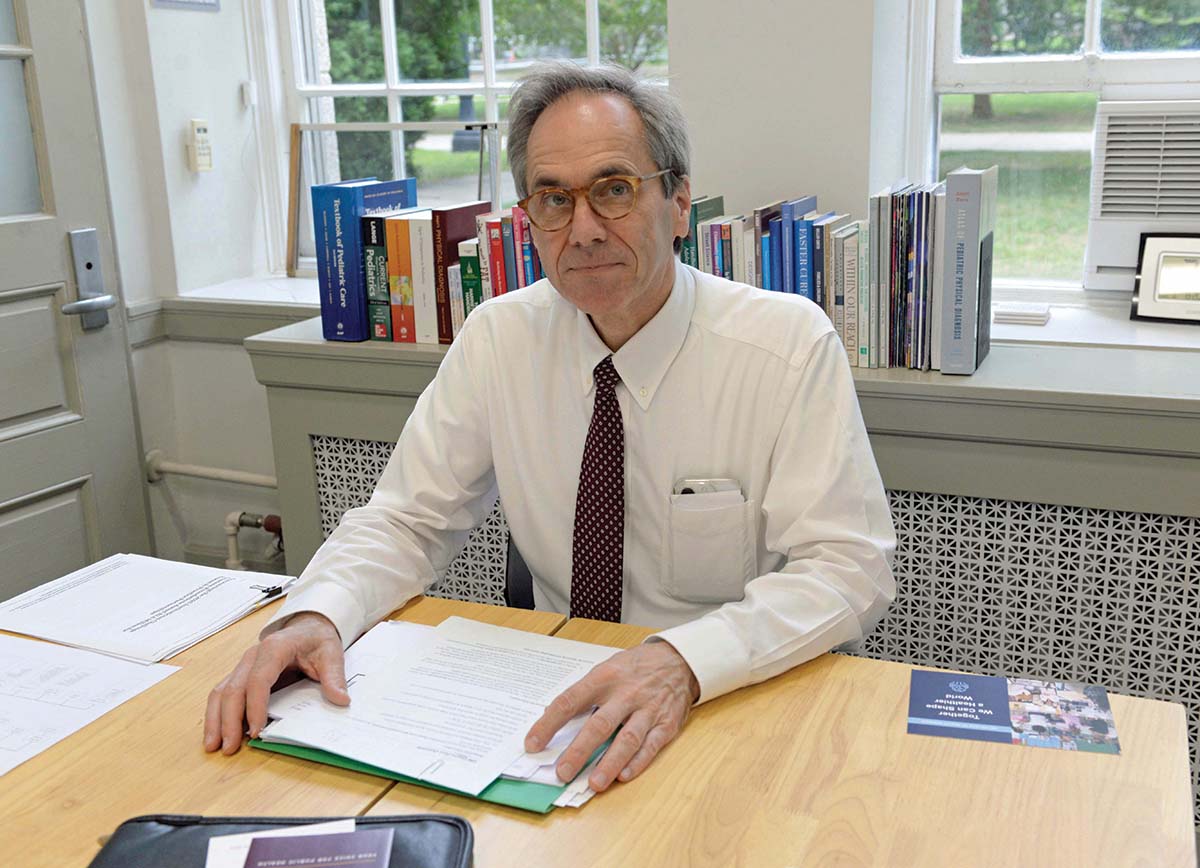
(Dr. Patrick Vivier is dean of the University of Rhode Island’s College of Health Sciences. Vivier is a board-certified pediatrician.)