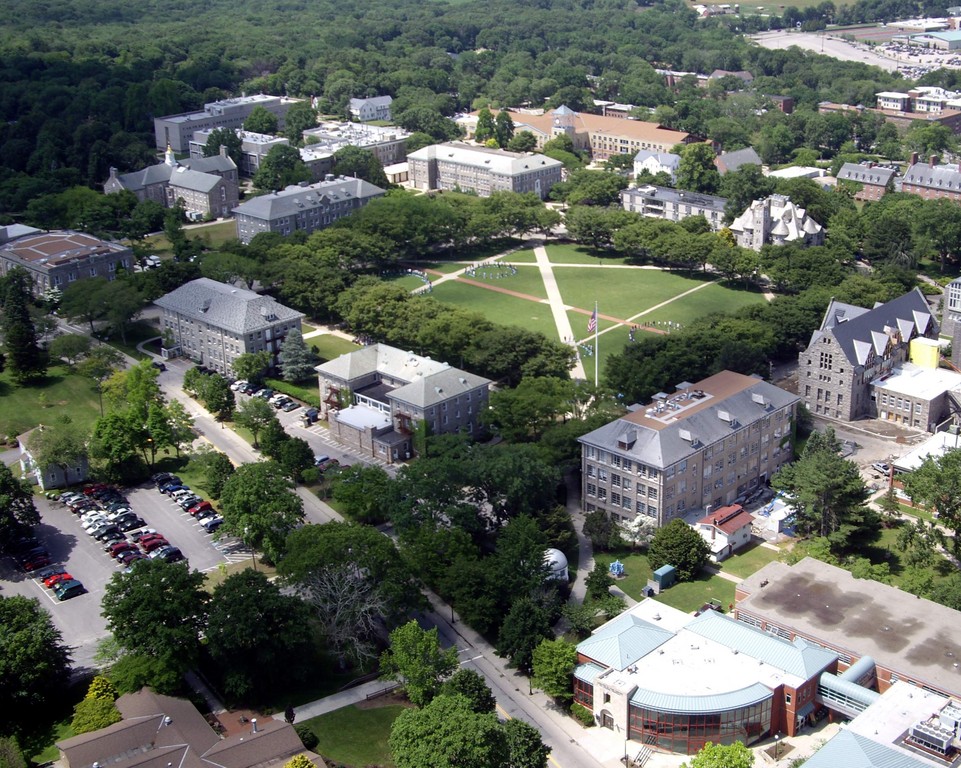
SOUTH KINGSTOWN – Brennan Phillips, assistant professor of ocean engineering at the University of Rhode Island, has made advancements in the field of soft robotic grippers that can be used to identify and safely collect fragile undersea species, the university announced Dec. 3.
URI ocean engineering students Russell Shomberg and Brendan Unikewicz joined Phillips and researchers from Harvard University and the Monterey Bay Aquarium Research Institute on an expedition off the coast of Honolulu, Hawaii, from Oct. 12-17 to test the equipment.
Building a Strong Data Foundation in the Age of AI
Artificial intelligence (AI) has become a key priority in the boardroom and across management —…
Learn More
“Our primary focus was to experiment with various soft robotic grippers, using a new deep-ocean hydraulic system,” Phillips said in a news release. “We also tested some new miniature deep-sea cameras, which were invented at URI and have a wide range of undersea applications.”
Shomberg helped develop the hydraulic system with Stephen Licht, associate professor of ocean engineering at URI.
“We wanted to see our soft robotic hydraulic drive function on an integrated ROV [remotely operated vehicle] system and test out the new features on the latest iteration of the DEEPi camera system,” said Shomberg in the release.
Phillips said all of the systems were demonstrated to work at depths of up to 1,200 meters. No species were collected during the expedition, but using the Monterey Bay Institute’s Deep Particle Image Velocimitry system, researchers were able to scan multiple organisms, including deep-sea jellyfish, ctenophores, siphonophores and glass sponges, URI said.
Both Shomberg and Unikewicz work in Phillips’ Underwater Robotics and Imagining Laboratory at URI, but Shomberg said the expedition provided valuable experience beyond the lab.
“The Harvard engineers challenged us to build a drive system to handle their more-exotic soft manipulators and the ROV pilots shared with us the challenges of working in a deep-sea environment,” he said. “That’s something we would have never experienced in a lab.”