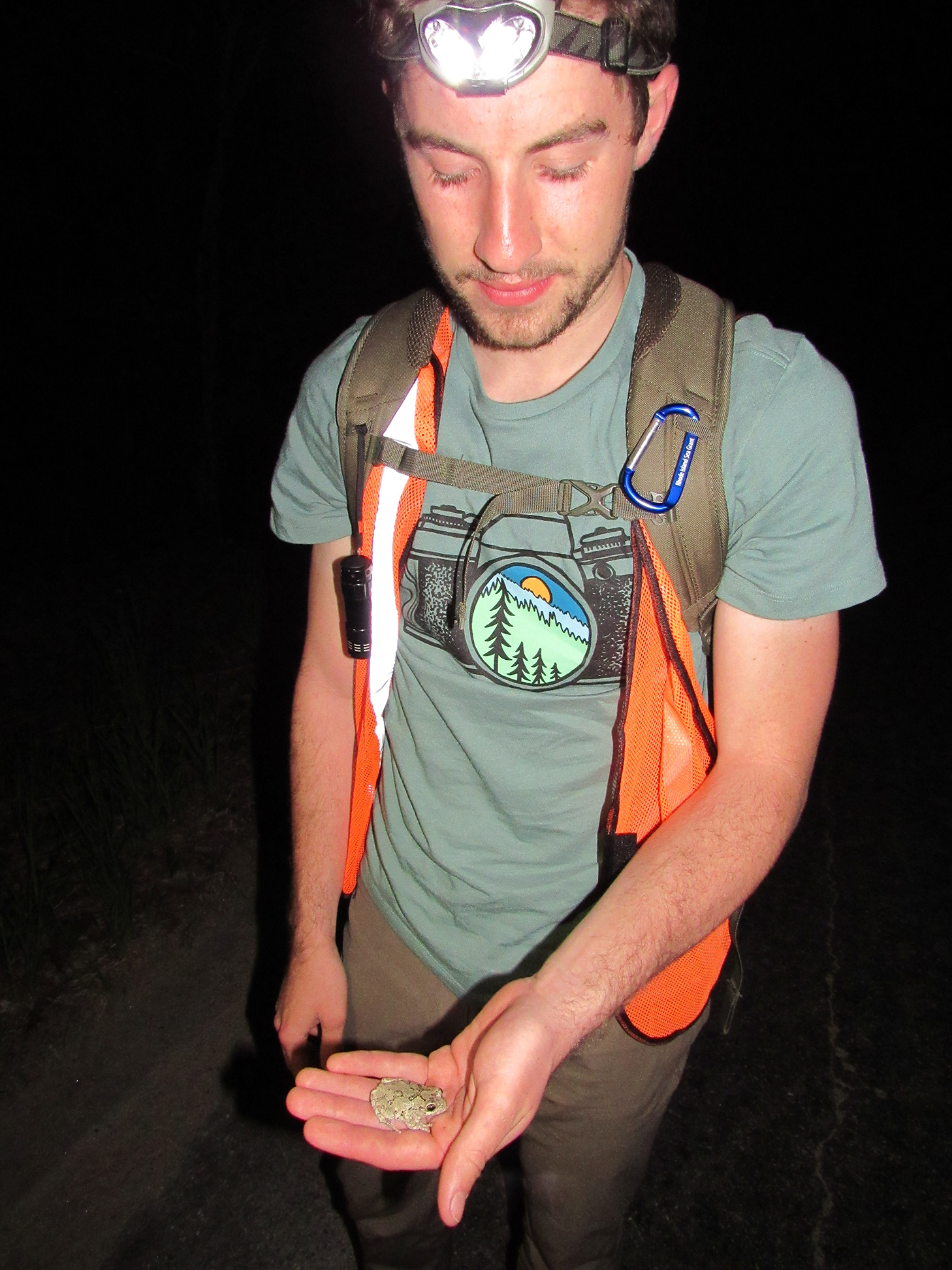
SOUTH KINGSTOWN – A University of Rhode Island graduate student is developing a computer model to predict areas in Rhode Island where large numbers of reptiles and amphibians such as frogs are killed while attempting to cross the road.
It’s a serious issue for frog, turtle and snake species. URI said a study in Denmark found that amphibians have a 34% to 61% chance of being struck when crossing a roadway, and studies have shown that turtles in Florida have less than a 2% chance of surviving a road crossing.
In Rhode Island, the state Department of Environmental Management is beginning to investigate the problem and to develop strategies to reduce death rates, URI said. DEM is interested in identifying locations where higher numbers of animals are struck.
URI graduate student Noah Hallisey has created a computer model that factors in traffic volume, proximity to forests and wetlands, and distance to ponds and lakes to predict the likeliest locations of reptile and amphibian road mortality.
“It’s a growing problem,” said Hallisey, a native of Niantic, Conn. “The combination of increased development, increased traffic volume and lots of wetland habitat adjacent to roads has made it very risky for reptiles and amphibians to move around.”
Hallisey’s approach to the problem differs from what has been tried in other states. Instead of walking hundreds of miles of roads looking for dead frogs, snakes and turtles, he used geographic information systems to predict the hotspots.
He and volunteers are visiting sites identified by his model to validate its accuracy.
Most of the hotspots he has identified are in western Rhode Island, he said, where more habitat and less development mean that reptiles and amphibians are in abundance. But he has identified hotspots in almost every Rhode Island community.
“Mortality is highest in spring when the animals are traveling to their breeding locations,” Hallisey said, “and then again in the fall. For the amphibians, it mostly happens on rainy nights.”
The model validation surveys will continue until the end of June.
Once the model has been validated, he will conduct a statistical analysis to identify the factors that are most influential in predicting road mortality to improve the model’s predictive power. And then he will present his data to the DEM and the state Department of Transportation.
DEM herpetologist Scott Buchanan said the state is exploring the possibility of installing tunnels beneath some roadways – and drift fencing to divert reptiles and amphibians into the tunnels – to reduce mortality. Hallisey’s model will be used to identify priority locations for the first tunnels.
“It’s an expensive remedy, but it’s what we have to do if we’re going to protect some of our rarest reptiles and amphibians,” Buchanan said.
William Hamilton is PBN staff writer and special projects editor. You can follow him on Twitter @waham or email him at hamilton@pbn.com.