
WASHINGTON – The nation’s real gross domestic product increased at an annual rate of 0.6 percent in the first quarter, slowing from its fourth-quarter rate of 2.5 percent, according to revised estimates released today by the U.S. Department of Commerce’s Bureau of Economic Analysis. The slowing reflects an increase in imports paired with decreases in exports, federal spending and personal spending for non-durable goods, the BEA said.
The revised GDP – the total goods and services produced by labor and property in the United States – is based on more complete data than was available for the bureau’s “advance” report, issued April 27, which estimated an annual growth rate of 1.3 percent.
In addition to falling from the advance estimate, the new GDP report lagged the 0.8-percent median prediction from a Bloomberg News survey of 78 economists.
The bureau credited the GDP’s growth to increases in personal spending and spending by state and local governments, offset by reduced investment in residential fixed investment and private inventories, lower federal spending and increases in imports.
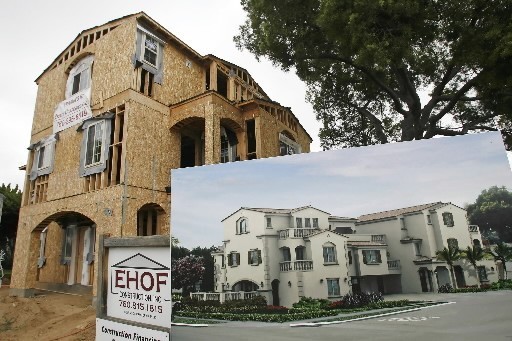
Real residential fixed investment – mostly housing construction – fell 15.4 percent in the first quarter, after falling 19.8 percent in the fourth quarter of 2006 and 18.7 percent in the third.
Real nonresidential fixed investment increased at a 2.9-percent rate, after falling at a 3.1-percent rate in the fourth quarter; nonresidential construction increased at 5.1 percent after edging up at 0.8 percent in the previous quarter.
Current-dollar GDP – the market value of the nation’s goods and services output – increased 4.7 percent to $13.6 trillion, after rising 4.1 percent in the fourth quarter. The revised figure lags the BEA’s advance estimate of 5.3 percent.
Real personal consumption expenditures increased 4.4 percent in the first quarter, after rising 4.2 percent in the fourth and 2.8 percent in the third.
The price index for gross domestic purchases was unchanged from the previous estimate, rising 3.6 percent. Excluding food and energy, it rose at an annual rate of 2.8 percent after rising 2.4 percent in the fourth quarter.
The quarter may prove to be the low point of the current slump, economists told Bloomberg News. “We’re looking for a gradual firming in growth,” said Michael Feroli, an economist at JPMorgan Chase & Co. in New York. “The inventory situation is a lot more favorable, and the drag from housing will be reduced.”
Additional information is available at www.bea.gov.