WOONSOCKET – A cluster of three former mill buildings have reopened their doors as 70-units of affordable housing.
Known collectively as Millrace, the buildings offer a total of six studio apartments, 57 one-bedroom units and seven two-bedroom units ranging from $749 to $1,350 in monthly rent. The project also hosts 23,000 square feet dedicated to commercial and community space.
Residents earning between 30% and 100% of the area median income, as designated by U.S. Department of Housing and Urban Development regulations, can apply to live in the housing units.
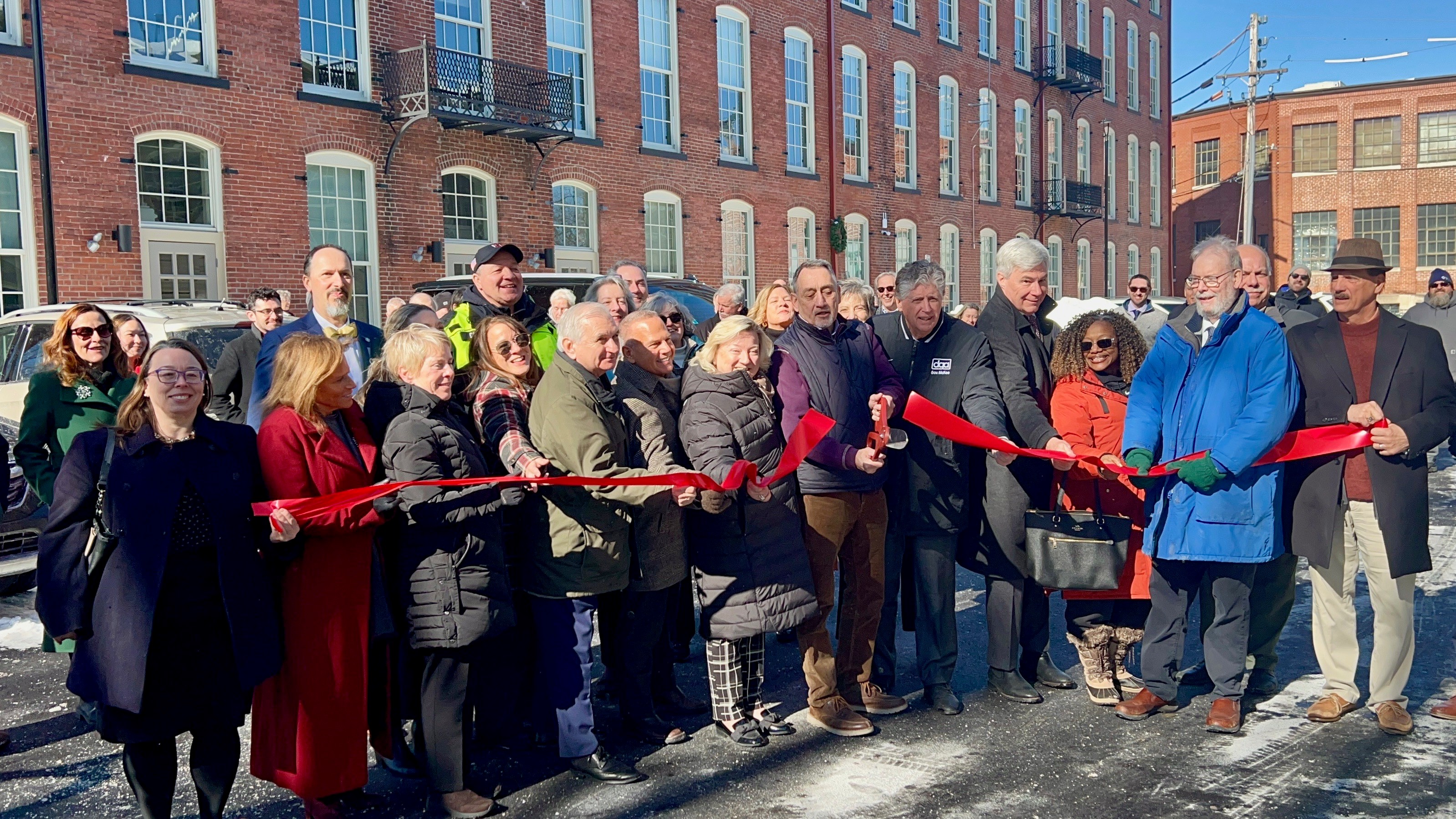
The development team at NeighborWorks Blackstone River Valley gathered with officials, funding sources and community partners on Feb. 8 to commemorate the $34 million project's completion with a ribbon-cutting ceremony.
During remarks, speakers celebrated the addition to Woonsocket's housing market while highlighting the state's dire housing shortage. No Rhode Island communities currently meet affordable housing goals.
"Millrace demonstrates how thoughtful housing investment can deliver affordability for Rhode Islanders while honoring the character and history that make our communities unique," R.I. Secretary of Housing Deborah Goddard said in a statement. "This development provides 70 new homes to Woonsocket while honoring a treasured historic asset, reinforcing that housing growth and strong neighborhoods can go hand in hand."
The three buildings are located at 15 Island Place, and 68 South Main St., all within the city's Island Place Historic District.
All units will have wi-fi services from OSHEAN, a Rhode Island nonprofit provider of high-speed internet.
The mills were built between 1857 and 1919 and housed the Woonsocket Rubber Company/Falls Yarn Mill and Island Machine Co. But the buildings supported a range of other businesses over the decades, including blacksmithing, metal-working and carriage repair services. In the 1990s, the mills were converted into artist studios.
The city acquired the buildings in 2013 and 2016 and needed to implement substantial renovations and environmental remediation measures to make them suitable for apartments.
The development has sixteen permanent finance sources, including Citizens Bank of Rhode Island with the Federal Home Loan Bank of Boston; the National Equity Fund through Federal Housing & Historic Tax Credits; RIHousing; the R.I. Department of Housing; and the R.I. Housing Resource Commission. The Providence Revolving Fund also contributed pre-development financing.
Jacquelyn Voghel is a PBN staff writer. You may reach her at Voghel@PBN.com.