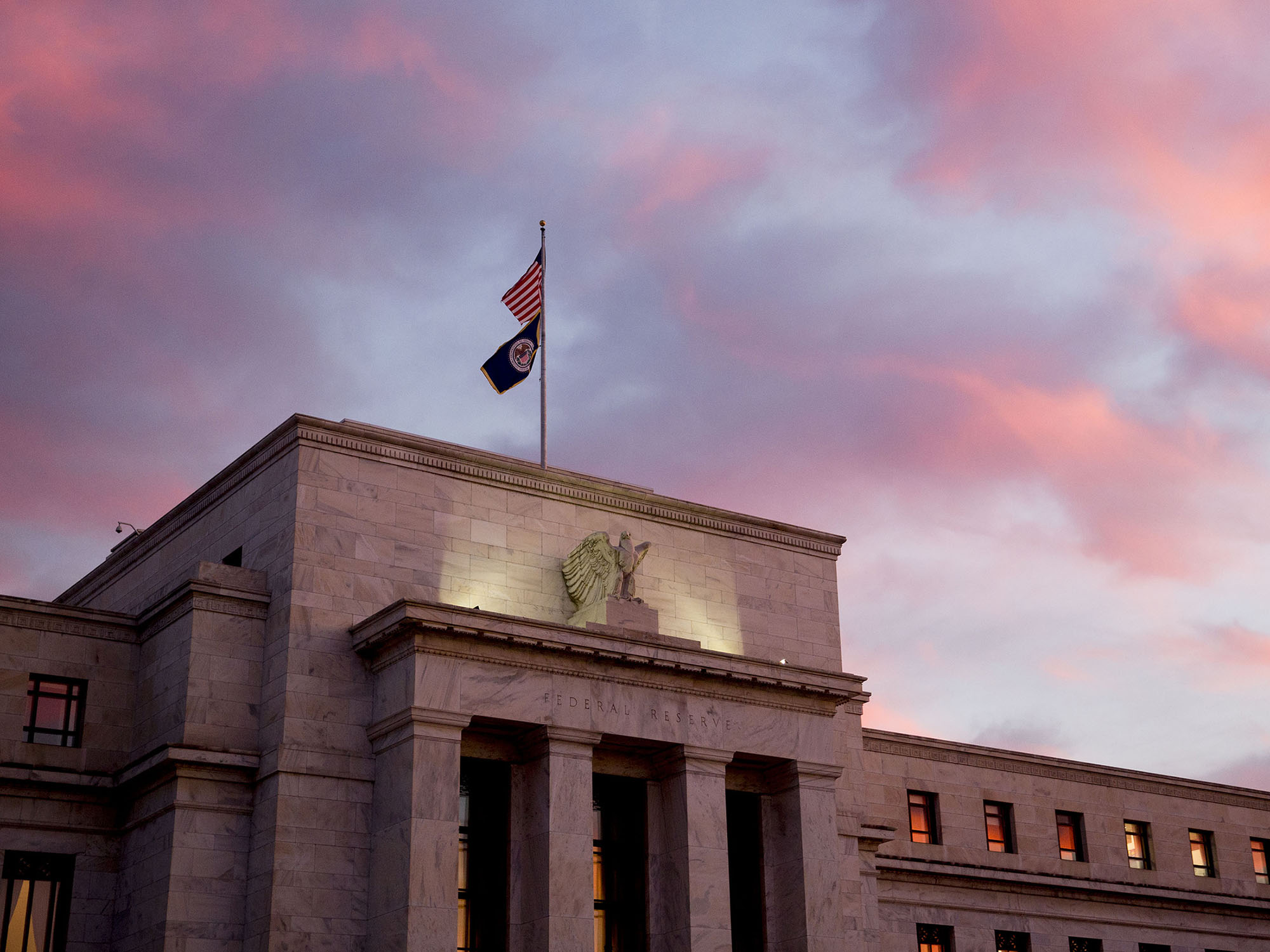
LONDON – The mural in the Federal Reserve Bank of Cleveland’s lobby depicts its place in the trenches of the U.S. industrial economy. So it’s fitting to ask Cleveland Fed President Loretta Mester what’s happening in the Rust Belt, where recent tariffs meant to help American manufacturers have backfired on some.
In an interview in London this week, Mester said her district is holding up pretty well. But she’s beginning to hear examples of how trade uncertainty is inhibiting investment plans:
- “Trade concerns certainly have been raised by a number of our business contacts. They’re concerned about where it’s going.”
- “When the president started talking about Mexican tariffs – that seemed to be a sea change in the face of a lot of the businesses that we talk do. They’ve been living with uncertainty about trade and tariffs for quite a while, but I think concerns were really raised at that point going forward.”
- “But when we talk to our firms, a majority are saying ‘We haven’t really changed our planned investment,’ orders are staying up so we’re on track with our investment.”
- “A few firms now have told us that ‘We may want to reassess our investment plans,’ and a couple of others have said that ‘We were planning to borrow to expand, and we’re rethinking that now.’ So we’re seeing it affect a few firms, but not a majority of our firms yet. So that’s another one of the things that we want to watch.”
- Worsening tariff concerns and slower global demand have the potential to hurt business and consumer sentiment, according to Mester. If that happens, a downshifting economy could warrant a Fed interest-rate cut. “But I don’t think we’re there yet,” she said. “I want to see more evidence.”
Brendan Murray is a Bloomberg News staff writer.