New café could support restaurant jobs program
When Amos House launched a micro-business two years ago that catered lunches for two local charter schools, it chose not to charge students who couldn’t afford to pay. That was how the nonprofit “house of hospitality” was used to doing things.
But Executive Director Eileen Hayes said she quickly learned that adopting a more business-minded approach was the only way that Amos House would make money from the enterprise and not have it be a drain on resources.
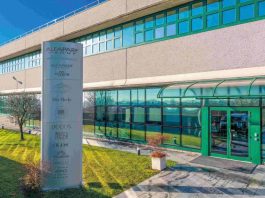
Last year the catering business, Amos House Works, broke even on revenue of $300,000, she said. And now, in addition to the school lunches, the nonprofit is trying something new: It has opened a café in the Goodwill Industries facility on Houghton Street.
After seven weeks, the Amos House Café is generating enough revenue to sustain one of its two paid staff positions, said Alan Harlam, business manager for Amos House Works. Eventually, it should be able to generate revenues for Amos House.
A successful café could also provide jobs for graduates of the nonprofit’s culinary training program, ACE, which trains people who are homeless or at risk of homeless for employment in the restaurant industry. “Many have never had gainful employment,” Harlam said.
The café must serve 40 to 50 lunches per day to cover the cost of food and labor, he said.
But that shouldn’t be a problem with about 40 Goodwill employees in the building and about 200 people walking through it each day, said Lori Norris, president and CEO of Goodwill Industries of Rhode Island.
“I really credit Amos House for going down this road,” Norris said. “They are taking responsibility for themselves as a nonprofit to support what they provide as services.”
Amos House runs a 90-day program for 34 men and women who are homeless or at risk of being homeless, Hayes said. They live at the nonprofit’s temporary housing shelter in Providence. It also operates the largest soup kitchen in the state, serving about 800 meals per day. The nonprofit owns 70 rooms for guests with mental/physical disabilities, suffering from drug addictions, or needing case-management support. About 130 Amos House clients have graduated from ACE since its inception in 2002.
Amos House isn’t alone in launching a microbusiness to supplement its revenues. About 100 Rhode Island nonprofits sell some kind of service or product to earn income for programs, said Deborah Schimberg, executive director of Social Venture Partners Rhode Island (SVPRI), a nonprofit that provides services to other nonprofits.
“It’s becoming more necessary because funding on the federal and state level for social services is shrinking,” said Norris, adding that Goodwill Industries earns income with English as a foreign language classes for businesses such as Taco Inc. in Cranston.
But despite Amos House’s entrepreneurial spirit, it could not have come this far without help. Goodwill Industries is providing the space for the café, free of charge. New Harvest Coffee Roasters, a Rumford coffee distributor, provides coffee at a discount, and Seven Stars Bakery in Providence does the same with bagels and sandwich bread.
“They gave us pricing that allowed us to sell high-quality products at low prices,” Harlam said. “They loved the story of creating sustainable jobs.”
Harlam said Amos House Works plans on opening another café in a different location within the next three months, and a third café by the end of the year.
He said he wants revenues to at least rival individual donations, which yield 52 percent of Amos House’s $2.3 million annual budget.
“Our goal is to use the money to continue to pay for the ACE program so we don’t have to rely on grants,” Hayes said, adding it would be nice if the café could generate at least $100,000, which is half the cost of running ACE.