Creative Findings LLC got into the food export business after its president, Leonard Rosenblatt, tasted frozen cheesecake on a stick.
He was having dinner with friends, he said. One of them had a sister who created the dessert, which is manufactured in Ohio.
“I asked if they exported,” Rosenblatt said. “As a frequent overseas traveler, I knew that any traveler overseas would pay a premium price to get to enjoy this dessert.”
After visiting with the sister and her family, they agreed to let Pawtucket-based Creative Findings represent Libby’s Gourmet Desserts for export. That was less than a year ago.
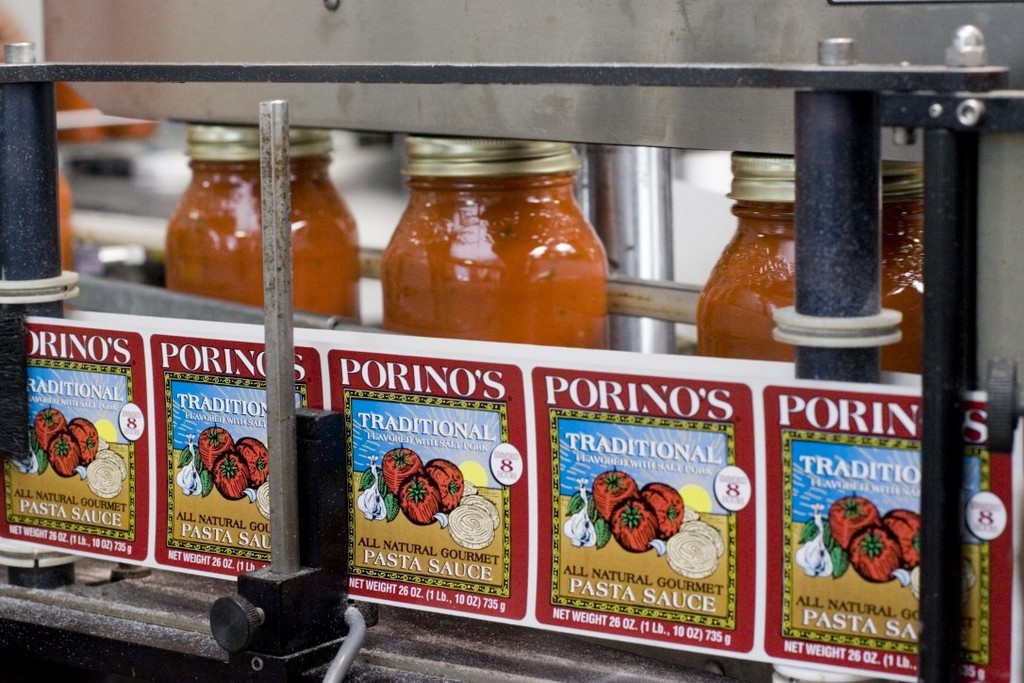
Since then, Creative Findings also has made deals with two Rhode Island companies, including Comanzo & Co. Artisan Bakers in Smithfield, which makes biscotti, and Porino’s Gourmet Foods in Central Falls, which makes tomato sauce products.
Rosenblatt will be representing the two companies on a trade mission April 23 to 27 to the Dominican Republic, Costa Rica and Miami.
The trade mission is being organized by the R.I. Economic Development Corporation in partnership with Food Export U.S.A. and the Massachusetts Department of Agricultural Resources, said Kathy Tufts, the EDC’s associate international trade director.
Tufts, also the Rhode Island representative for Food Export U.S.A., said the main goal of all the trade missions organized by the EDC is to act as a matchmaker.
“It’s for companies to meet with potential buyers of their products,” she said. “In this mission we’ll be meeting with large hotel chains … food service people … supermarkets.”
“The Caribbean and Costa Rica both are incredible markets for food because of the tourism industry,” she added. “American tourists want the food that’s familiar to them.”
And with the Dominican Republic – Central America Free Trade Agreement (CAFTA), tariffs have been reduced, making it less expensive for Rhode Island companies to export to the countries in the agreement, she said.
Rosenblatt said trade missions like this one are “very, very worthwhile programs.” But it is not his first EDC-organized trade mission. He’s been on previous trade missions to Canada, Mexico, Brazil, Dubai, Kuwait, Hong Kong, Seoul and mainland China.
“The program also identifies target customers and provides background details and descriptions of the nature of their businesses,” Rosenblatt said.
It would take many months of research and thousands of dollars for a company to do this type of research on its own, he said. The EDC does it at a fraction of the cost and time.
“Someone starting out would be well served to contact RIEDC as a starting point,” he said. “I have also worked with Bryant University’s Export Assistance Center for almost 20 years. … They also have a large base of knowledge and experience to draw upon.”
Creative Findings has been exporting manufactured components to Canada, Mexico, Puerto Rico, the Dominican Republic, Venezuela, Argentina, Peru, Colombia, Brazil, Australia, New Zealand and many countries in Europe and the Far East for more than 30 years.
And manufactured components – such as jewelry findings and finished pieces, craft and hobby components, giftware and plastics – still make up the majority of the company’s business.
“Our sales have not increased yet from the food exports,” Rosenblatt said. “We have opened many doors and have potential orders from many places, including Starbucks Hong Kong.”
The company, which started in 1973 as a manufacturer of jewelry findings, reinvented itself as an export sales representative for other companies after the U.S. jewelry industry began declining due to the cheaper labor and unregulated environments in developing countries.
Rosenblatt said one key to success when exporting is to maintain a strong personal relationship with customers overseas. That involves making several trips to visit them. It is also important to register products and get intellectual property protection.
“Patents not filed in the country of export can be a major headache,” he said. “You can lose the right to use your own company name and/or product name in an entire country.”
Failure to provide perfect paperwork also can create problems. “A capital letter versus a lowercase letter can cause a delay or rejection in payment,” Rosenblatt said.
But even with the inherent pitfalls, he said, “the potential gains greatly outweigh the potential risks.”
“Most important to remember is that we are now a small country,” Rosenblatt said. “There are virtually billions of customers around the globe compared to our approximately 300 million people in the U.S.A. … Focusing only on the U.S.A. limits a company’s potential growth to a mature, stable market.”