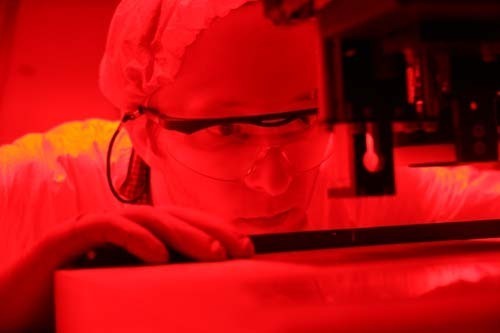
A new partnership between Brown University and Draper Laboratory – a Massachusetts-based nonprofit applied research and engineering center – is intended to corral the two entities’ abilities and streamline the research and design of new energy technology.
Brown and Draper announced early this month that they plan to work together as research partners. Together, they’ve applied for several federal grants.
Brown Vice President for Research Clyde Briant last week said it will be a “long-term” partnership. Although much of the collaboration that’s being done now is through video conferencing or phone conversations, there’s a possibility that the partnership could someday find a physical location in Providence.
“It’s certainly best if you can have everyone co-located and they can see each other regularly,” Briant said. “We’d like to see some space here to make that a reality. Right now it’s a hope.”
In the approximately three years since Briant became vice president for research, he’s been attempting to revamp Brown’s energy-research facilities and make them more cohesive.
The university’s research “runs anywhere from efficiency and sustainability to the effects on the environment. … So I’ve been pushing … to try to pull a number of these activities together,” he said.
To put that plan into action, Briant turned to Peter Weber, the chair of Brown’s chemistry department, “and at about the same time we had an inquiry from Draper” about starting a partnership, Briant said. That was about a year ago.
In defining the partnership, Briant said Brown’s role will be to focus mainly on research while Draper focuses on the development and design. “So if you have an idea for sustainability, you would [typically] just be able to do the basic research,” he said. “But with this partnership you would also be able to look at the engineering applications and prototypes.”
The memorandum of understanding calls for at least two joint projects a year, with at least one Brown graduate student being supported as a Draper fellow each year. Along with establishing a board of advisers – which is now under way – the partnership could in the future hire support staff to help coordinate funding, according to a memorandum of understanding.
At Draper, Len Polizzotto, principal director of strategic business development, said in a statement that the partnership will “provide us both with the chance to create truly new and innovative solutions for the nation’s energy challenges. To be successful, we need each other.”
Said Weber, “If you want to go from the lab to the marketplace, you need the research part. You can’t do it all alone.”
Brown pinpointed a few preliminary study areas for which it hopes to soon be awarded research grants.
It hopes to attract funding for developing innovative ways to store carbon dioxide and convert carbon into environmentally friendly fuel sources. It hopes to develop technology that will use carbon-based waste for electricity production. For renewable energy sources, like wind and solar energy, the partnership would like to create new energy storage capabilities to help with the integration of those systems into the power grid. And the partnership wants to study and improve the current combustion systems used by carbon-based power sources, including coal-burning plants.
Up to 15 faculty members from the chemistry, engineering and physics departments at Brown are working with Draper to draw federal funding. Briant said the partnership’s ability to solve complex problems through both research and design should make it a prime candidate for some of the funding being supplied by the American Reinvestment and Recovery Act.
“By going together,” Briant said, “we feel that we can offer something very good to the funding agencies.” •