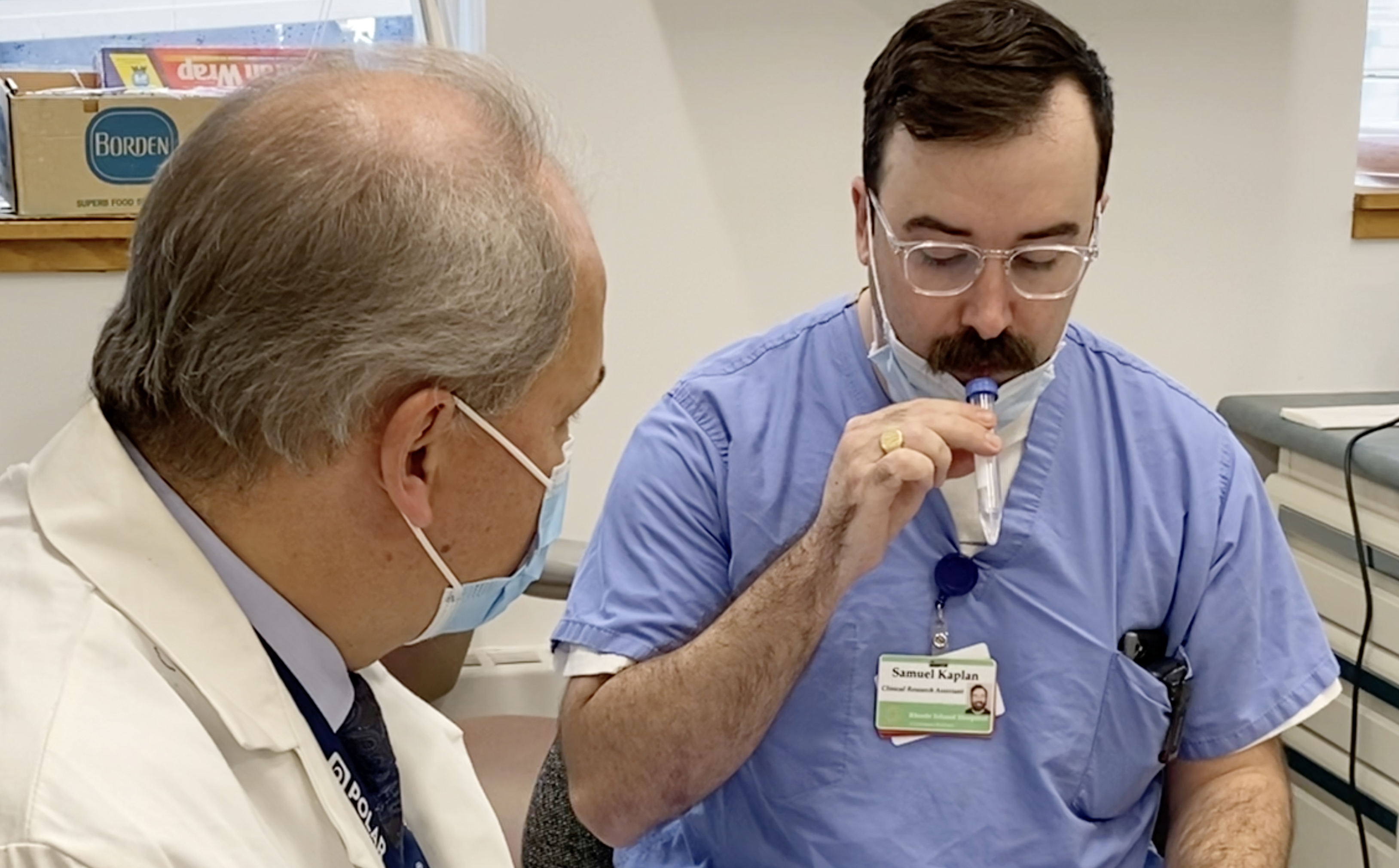
PROVIDENCE – A new breathalyzer-style test for COVID-19 that’s been dubbed the “Bubbler” was developed recently by a team of researchers from Brown University and Rhode Island Hospital, according to the university.
And the Bubbler test, named for the sound produced by the user exhaling into the device, may work better than the traditional COVID-19 nose swab test, researchers said.
“The Bubbler is more likely to be a better indicator of current infection than nasopharyngeal swabs,” said William G. Fairbrother, a Brown biology professor and lead investigator in a study of the device. “Involvement of the lower respiratory tract is often a precursor to severe COVID-19, so there is an argument for a more-direct sampling focused on exhaled breath.”
Researchers said that because swab tests detect viral ribonucleic acid fragments in cells that persist in previously infected cells, traditional PCR tests can return a positive result for months after infection.
“By contrast, the Bubbler detects airborne viral particles and is a better measure of risk of contagion,” according to a statement from Brown about the outcome of the research.
The breath test for COVID-19 was detailed by researchers in a new report for the Journal of Molecular Diagnostics, presenting the results of a study on the effectiveness of the testing method.
The Bubbler is a glass tube with a mouthpiece, and the tube is filled with “a reverse transcription reaction mixture and cold mineral oil,” which is triggered by the presence of viral RNA that is converted into DNA, allowing for detection of COVID-19 using a PCR instrument. Researchers said the handheld device could be adapted for convenient sampling from patients at hospitals, workers in offices and travelers in transportation hubs, ships and planes.
The Bubbler device can also create a barcode, linking the sample directly to the patient, which allows for testing “at a fraction of the cost of conventional testing,” Fairbrother said.
The barcode can be used to identify the strain and viral load of a sample, Fairbrother said, specifying whether the sample contains the delta or omicron variants of COVID-19. That could help the patient and doctors gain more information about the transmissibility and potency of a COVID-19 infection, he said.
Fairbrother said researchers believe the Bubbler could potentially be used to identify aerosolized nucleic acids and detect COVID-19 in the air of a building, and to map airflow in indoor spaces, but no tests have been done yet. That information can be used to change the airflow in a building to make it more safe from the spread of COVID-19, they said.
“Such technology could be useful in restoring service to industries such as hotels, cruise ships and casinos,” Fairbrother said. “There is also an epidemiological benefit to routine testing of air at early warning sites such as transportation hubs and hospital emergency departments.”
Marc Larocque is a PBN staff writer. Contact him at Larocque@PBN.com.