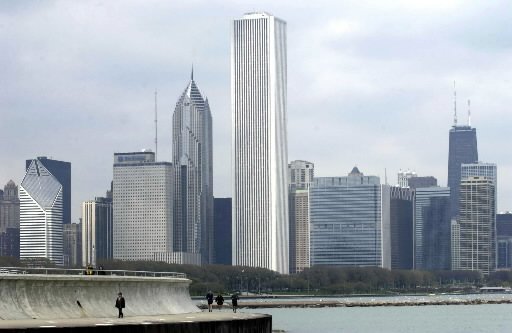
Chicago has carried many monikers over the years, both proud and dubious – City of Big Shoulders, Second City, the Windy City, Hog Butcher to the World. But in recent years it has garnered another important distinction: the unofficial U.S. capital for meetings and conventions.
Last year, Chicago was the most popular destination in the country for corporate and association meetings, according to the 2002 Meetings Market Report released in August by Meetings and Conventions magazine. In the biannual survey of U.S. meeting planners, 27 percent of respondents said they held an event in Chicago during 2001. The Chicago Convention and Tourism Bureau estimates that 7.1 million group-meeting travelers came through Chicago last year.
Rounding out the top five cities for meetings, according to the Meetings and Conventions report, were Orlando and Las Vegas (24 percent each); New York (21 percent) and Los Angeles (19 percent).
Chicago – with its huge pool of hotel rooms, busy O’Hare Airport and massive Merchandise Mart downtown, which is the largest convention center in the country – has long been a favorite of meeting planners.
Despite the size of Chicago’s marquee meeting site, the Merchandise Mart “isn’t just for mega tradeshows anymore,” according to the Chicago CVB, as the city has made a concerted effort to attract more small- and mid-sized groups. The Lakeside Center at McCormick Place is tailored to accommodate smaller meetings, as is a new exposition center at Navy Pier on Lake Michigan in Chicago’s Loop.
But Chicago’s location might have as much to do with its popularity for meetings and conventions as anything else.
“When you’re planning a meeting, you have to look at the logistics of getting your attendees there,” said Laura Yates, vice president of marketing for Navigant Performance Group, which helps companies plan meetings, incentive trips and special events all over the world. “Chicago is so centralized to the rest of the country, it’s an obvious choice.”
Yates said Chicago is affordable when compared to New York, Boston and Los Angeles. And its infrastructure is first-rate too, with good public transportation and plenty of hotels that are accustomed to doing large-group business, and it boasts great museums, shopping and restaurants.
The one drawback? Its cold and snowy winter weather, which not only whips up bone-chilling wind gusts but also can cause flight delays. “If it’s the middle of February, attendees will be a lot more motivated to visit Orlando than Chicago,” Yates said.
Orlando, tied with Las Vegas for the country’s second most popular town for meetings, is unrivaled when it comes to leisure activities, which serves to boost employee morale, according to Bill Peeper, president of the Orlando Convention and Visitors Bureau. The area is packed with varied activities, including Disney World and the Epcot Center and 26 golf courses, and its year-round warm weather is hard to beat.
Peeper said Orlando’s status as one of the country’s top leisure destinations has helped foster an ideal infrastructure for meeting and convention business, which the city has worked to build over the past two decades. Orlando’s two airports, for instance, have more non-stop flights to U.S. destinations than any city in Florida.
And the city’s ample supply of hotel rooms is complemented by its Orange County Convention Center, which is undergoing its own massive expansion that will bring its exhibition, meeting and public space to 7 million square feet when it opens in fall 2003.
While the huge facility is being built to accommodate the largest of conventions, Peeper said Orlando really caters to small- and mid-sized groups, with nearly 90 percent of business booked by the Orlando CVB derived from groups of fewer than 500 rooms. He points to the city’s 2,000-room Marriott, which averages groups sizes of fewer than 300 rooms.
“That’s really our bread and butter, the small, in-house groups,” Peeper said. “The city-wide conventions get the headlines, but we eat off the 350-to-500 room groups.”
Las Vegas boasted nearly 4 million convention and meeting guests in 2000, according to the Las Vegas Convention and Visitors Authority. Its combined 6 million square feet of convention and meeting space – much of it created in just the past decade – has helped shed its “Sin City” image.
Yates of Navigant Performance Group, said Las Vegas is among the most affordable large U.S. cities to plan a meeting or event, is packed with things to do and has reliably good weather. But the city salacious stigma can be a turn-off to some meeting and convention planners.
“Because of the gaming, drinking and some of the entertainment aspects, there’s still an element of negativity that surrounds Las Vegas,” Yates said. “Some people love it, but others are turned off by it.”