Now that the $610 million relocation of Interstate 195 through Providence is complete, the next step in the process will see the old highway demolished, reclaimed street grids established as they were before the old highway was built and then the sale of approximately 19 acres of land on both sides of the Providence River for economic development, mostly in the Jewelry District. We spoke to Michael P. Lewis, director of the state transportation department (RIDOT), about the process and time frame for eventual sale of the land.
PBN: Have Brown University and Johnson & Wales University reserved any of the 19 acres?
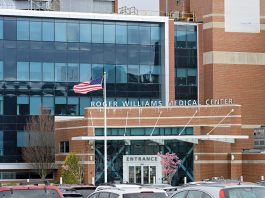
LEWIS: No. There are a number of studies that have been done over the years on the planning for that land and, most recently, we at RIDOT, working in partnership with the R.I. Economic Development Corporation (EDC) and the city of Providence, commissioned a study. … No entity currently has a lock on any of the property. But the state and the city do recognize that the institutions of Brown University, Johnson & Wales [and] the hospital complexes form a real potential catalyst for economic development in the downtown area. So, we definitely are encouraging those institutions to show interest in the land. …
First and foremost, the state has an interest in economic development. We have a once-in-a-generation opportunity to enhance that part of the city, to create an opportunity for economic development in the knowledge-based economy, building on the institutions and the strengths of Rhode Island. …
This is an area of land that has not been on the [city] tax rolls for 50 years because it has been a highway. And so, turning that highway into developable land is an opportunity for Providence to enhance its tax revenue [the second objective].
And then the third goal. This is an opportunity to revitalize the urban core of Providence, to rid the city of the scar [caused by the old] highway, basically splitting the downtown. … Not only is that a benefit for the quality of life in Providence, but it is also certainly a boon to economic development in the city.
But then the state has another objective … in that we are using the expected revenue from the sale of that land to help fund the overall Iway project. … And because it was purchased with federal money 50 years ago, the Federal Highway Administration … needs to be sure that the state gets fair market value for the land.
PBN: Who has control of the land?
LEWIS: The state owns the land, under the Department of Transportation, and we will … seek requests for proposals on the land. … In terms of timing, the land is not available today. So we’ll be bidding a contract later this year for the demolition of the existing highway and that work will take place over the course of the next calendar year. So 2010 will be the year that the existing highway is torn down and that land underneath will become available.
Following the demolition of the highway, we will then have a subsequent contract to restore the surface street pattern that was removed when the highway was built. So, 2010 will be the year of demolition; 2011 and 2012 will be the years of restoration of the surface street grids and park lands that are identified in that corridor. By the end of next year, we will start to get a sense of the land that will be available for development.
PBN: Who will decide which [bid] proposals are accepted?
LEWIS: That is yet to be decided. It is something that will be done certainly with the RIDOT, EDC will be a player and ultimately the State Properties Committee will have a say in the end.
PBN: Will any land be taken by eminent domain?
LEWIS: The land was already taken 50 years ago when the highway was built. There are no additional takings.
PBN: What is the role of the federal government in this process?
LEWIS: Back when the interstate highways were first built … the land would have been purchased with federal money for highway purposes. Therefore, it needs to be disposed of and the value of the land needs to go back into what are called [federal] Title 23 purposes, which are transportation purposes. We’ve identified the proceeds from the sale of the land to actually be a component of the funding of the Iway project itself.
PBN: So the federal government really does not have much of a role, other than to see that fair market value is received for the land?
LEWIS: That is correct, and that the value goes for highway purposes.
PBN: What should someone who might want to buy some land over there do now?
LEWIS: Stay close to the public process, be engaged with it. There will be a lot of discussion over the course of the next calendar year on setting up the disposition of the land. There will be ample public opportunity to weigh in. Also, when the requests for proposals go out, that will be broadly advertised. We are looking for a lot of interest. •
INTERVIEW
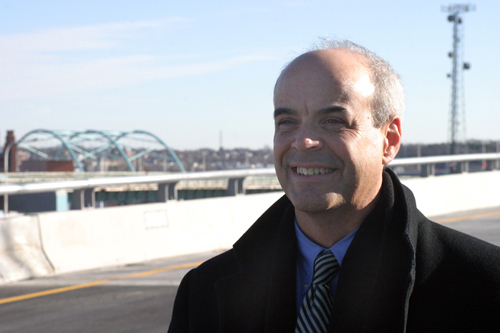
Michael P. Lewis
POSITION: Director of the R.I. Department of Transportation
BACKGROUND: In public service since 1984, Lewis worked in the Massachusetts Highway Department for six years. He then went to Boston to work for the Massachusetts Turnpike Authority on the Big Dig, eventually becoming director of design, deputy project director and, in 2000, project director. When the Big Dig was completed in 2007, he came to Rhode Island.
EDUCATION: B.S. in civil engineering, University of Vermont, 1983. Additional course work at McGill University in Montreal
FIRST JOB: As a teenager, he worked as a busboy at a restaurant in New Jersey.
RESIDENCE: Scituate, Mass.
AGE: 48