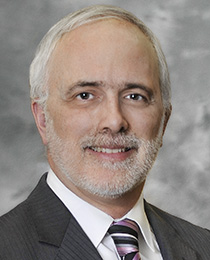
Dr. Henry T. Sachs III was appointed president and chief medical officer of Bradley Hospital in October. He stepped into the role after serving as the children’s psychiatric hospital’s interim president since June 2019, and its chief medical officer for child psychiatry and behavioral health since 2007.
Sachs, who specializes in autism and developmental disabilities, has worked as a pediatric psychiatrist at Bradley for more than 25 years. He spoke to Providence Business News about his new position and some of the hospital’s future goals.
PBN: What are some of your first priorities as head of Bradley Hospital?
SACHS: I have the good fortune of taking the helm of an organization that has been providing high-quality care and contributing meaningfully to the academic and research advancements of child and adolescent psychiatry for decades.
Among my priorities to keep Bradley Hospital on that trajectory is continued cultivation of a highly qualified workforce. Child and adolescent behavioral providers, whether they be nurses, psychologists, social workers, therapists, psychiatrists, behavioral specialists or others, are a precious commodity in today’s health care environment. The demands for our services far exceed the supply of providers available nationwide. Being able to attract and retain high-quality professionals across all these areas is essential to our ongoing success.
In addition, the level of need and amount of resources needed to effect change have historically been underestimated. All studies have shown that fewer than half the children needing behavioral health services actually receive them, often with tragic consequences. It is an ongoing priority of mine to work with all stakeholders to bring adequate resources to the table to address this growing challenge.
PBN: How have clinical services and programs expanded during your years at Bradley?
SACHS: When I arrived here 29 years ago, the hospital was focused predominantly on inpatient care with small outpatient and day program services. We came to realize that there were significant care gaps from the inpatient level of care to traditional outpatient services.
Over the years, we have dramatically increased our continuum of care to provide partial hospital, residential, in-home, expanded outpatient and special education – through Lifespan School Solutions – services. Today, we treat approximately 725 children and adolescents daily across that continuum of care, meeting children and families where they are clinically, and getting them where they need to go.
PBN: What’s next for the hospital – what changes do you envision in the future?
SACHS: Despite all our efforts, the community’s behavioral health needs continue to grow. We are working to move beyond our walls to educate the community regarding mental health, so they will feel more comfortable recognizing and addressing issues before they become a crisis.
We are also supporting pediatricians and other providers who are often the frontline in addressing behavioral health issues.
Finally, we are working with schools and other community partners to evaluate the urgent needs of children in crisis, so they can be better directed to available resources quickly and not end up at sites such as emergency rooms.
At the same time, we are continuing to grow our academic programs to train the next generation of providers and expand our already large research portfolio to seek better ways of understanding and treating the disorders we are seeing clinically.
PBN: What types of behavioral health issues are most commonly treated at Bradley? Has demand evolved over the past decade?
SACHS: We see the entire spectrum of behavioral health issues experienced by children, including attentional issues, anxiety, depression, the effects of trauma, mania, psychosis, substance use, autism and other developmental disabilities. Anxiety and depression, in particular, have skyrocketed over the last decade. Between 2005 and 2015, the number of children presenting to emergency departments with suicidal ideation or attempts increased 100% nationally. For the three most recent years of available data on completed adolescent suicides, the national rate has increased by 24%.
We are fortunate in Rhode Island – in that same time frame the rate here has decreased 42% and we rank No. 1, meaning we have the fewest adolescent suicides of all 50 states.
PBN: Is there anything about Bradley Hospital that most people aren’t aware of?
SACHS: Bradley and our related services with Hasbro Children’s Hospital are destinations for children and adolescents with behavioral health issues, and we are seen as a national model for how care should be provided. Many of the country’s most prestigious academic medical centers refer children to these services, and families come from all over the country, and world, to seek our services.
Elizabeth Graham is a PBN staff writer. She can be reached at Graham@PBN.com.