Jonathan Tourtellot drove home the meaning of “geotourism” with a slideshow. Accompanied by a voiceover of a woman saying how much she’d loved a recent trip to Rhode Island, the pictures showed historic buildings, beautiful scenery, Narragansett Bay.
And then a suburban road lined with fast-food chains, with ugly signs jutting out of the driveways.
It’s our choice which one prevails, Tourtellot suggested. If Rhode Islanders recognize their state’s natural beauty, its historic and cultural heritage, its arts and cuisine and its people – if they realize those are its greatest assets, then they will preserve, cherish and build on them.
That, in turn, will make Rhode Island a more appealing tourist destination, Tourtellot said, because savvy travelers look for great places with character, with unique sights and experiences. And the appeal will last longer, too, because the state won’t become an overcrowded, nondescript “tourist trap,” easily trumped by the next big thing.
Tourtellot, director of the National Geographic Society’s Center for Sustainable Destinations, addressed Rhode Island tourism and business leaders at a luncheon last Wednesday at the R.I. Convention Center that culminated with a big commitment from the state.
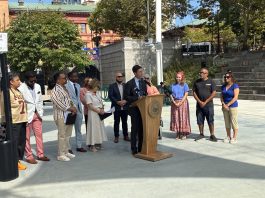
Gov. Donald L. Carcieri signed the National Geographic Society’s Geotourism Charter, making Rhode Island the second state after Arizona, and the sixth destination to endorse those principles. Honduras, Norway, Romania and Guatemala also have committed to it.
Geotourism, as National Geographic defines it, is “tourism that sustains or enhances the geographical character of a place – its environment, culture, aesthetics, heritage and the well-being of its residents.”
Much of the tourism industry is headed in a different direction, Tourtellot said, toward rest-and-recreation-focused travel, which prizes pretty resorts, and even “entertainment”-style travel, which involves destinations (Las Vegas is the ultimate example) that can be built pretty much anywhere and are disconnected from their surroundings.
The latter can have an “enormous” negative impact on a community, Tourtellot said, destroying its character and making the place undesirable and/or unaffordable for the original residents. Geotourism, on the other hand, aims to make places more enjoyable for all.
The concept is not new, and Tourtellot showed pictures of several examples, from Norway to the Caribbean. Rhode Island has also done this, he noted, especially the Blackstone Valley Tourism Council, which has focused on the valley’s industrial history and cultural heritage.
It was the council and its executive director, Robert Billington, that first reached out to Tourtellot, in the fall of 2005, and brought him back last November for a “sustainable tourism” summit attended by key local leaders. State Tourism Director David C. DePetrillo, who had known Tourtellot for years, began talking with him about geotourism, the governor embraced the concept, and DePetrillo applied for the National Geographic charter.
“Geotourism is really what Rhode Island has been doing for decades,” he said in an interview. “We have been promoting what is natural and authentic about our resources.”
Now the state is going to take that further. A new Geotourism Collaborative, to be headed by Jonathan Stevens, executive director of Preserve Rhode Island, will bring together 40 to 50 statewide and regional environmental, historic preservation, cultural and other groups to promote geotourism, DePetrillo said.
Asked what the direct benefits of the National Geographic affiliation will be, DePetrillo said it will send the message that “Rhode Island is a place that believes in itself, wants to be authentic, wants people who appreciate authentic natural and cultural resources.”