Relocating to another country, even under the best of circumstances, is a traumatic experience. Fleeing your native land with nothing but the clothes on your back is another story. Yet every year thousands of refugees looking for a place to call home arrive in the United States with little more than hope. But thanks to organizations like the International Institute of Rhode Island (IIRI) in Providence, they are not alone.
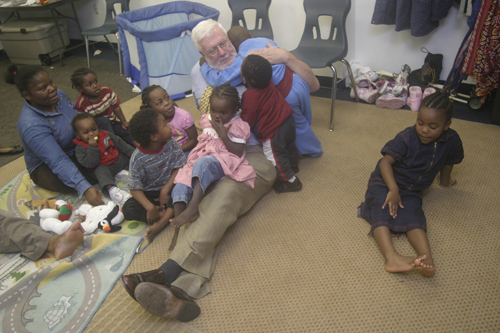
Last summer Fey Bare Bile and the rest of his family left a refugee camp in Africa and set out for the Unites States. A representative of the IIRI met the Somalis at T.F. Green Airport and the adventure in their new world began. For weeks before their arrival, IIRI staff members worked tirelessly collecting food, furniture, linens, cookware and anything else needed to build a home from scratch. Multilingual, trained specialists helped the newcomers to settle into their new environment, and even worked with them to learn simple everyday things like setting an alarm clock and putting out the trash on the right day.
In time, the family developed a routine and started adapting to life in a new country. IIRI continued to support them with English classes and employment counseling and opportunities. It is what the IIRI does, and the core of the reason it was chosen the winner in the 2008 Providence Business News Business Excellence Awards category for nonprofit organizations.
The organization was founded in a two-room office in Pawtucket in 1921 to assist refugees and immigrants in making the transition to their new lives. William Shuey, executive director of IIRI, describes the organization as “a first stop for new immigrants.” Last year the IIRI provided 24,000 services for refugees, immigrants and native-born residents in the Rhode Island and southeastern Massachusetts.
With a staff of 60 employees – all multilingual – Shuey said the IIRI helps resettle 120 refugees per year. “I love the idea that we make a difference in so many lives,” he said. “Many of these people have no family here and don’t speak the language. Some have survived extremely violent conditions in the countries they fled, or experienced horrid living conditions in refugee camps. They were deprived of human rights. This is a new start for them.”
The mission of the organization is “to enable all residents, especially immigrants and refugees, to become self-reliant, invested participants in our country while fostering respect and understanding among all people.” It is a mission IIRI take seriously, as they help former residents of Burma, Togo, Laos, Ukraine and other countries.
In order to live up to its mission statement, the organization offers interpreting and translation, English as a second language classes, GED preparation, advocacy, referrals, and assistance with legal issues, such as getting a green card and achieving citizenship.
Even down the road the new residents look to IIRI for programs that teach skills and lead to employment.
According to the organization, an average refugee is working and paying taxes within one year of arrival, thanks to IIRI program assistance. The organization also offers outreach programs for health, such as tobacco-control programs, and a women-and-infant’s van that’s made available to newcomers on a regular basis.
Outreach workers are available to host cultural awareness and diversity workshops tailored to address specific needs and issues as well. The goal is always the same – to understand and embrace contributions from people of diverse backgrounds.
A 29-year-old Guatemalan man named Rafael and his family came to the United States not long ago, and he got a factory job as soon as he could. The man worked hard and was promoted. He spent evenings after work in class learning how to speak English. When his employer noticed how much he had improved his language skills he was given another promotion.
Though the road may have been bumpy in the beginning, the Guatemalan man can now see a real future and knows he will be able to provide for his family. He even hopes to one day fulfill his dream of becoming a licensed electrician.
This story is just another example of how the IIRI helps people to get their new life off to the right start. The IIRI works with an annual budget of approximately $3.4 million. Shuey said one-third comes from public contributions, one-third from philanthropy and the remaining third from fees for services such as hospital, court costs and ESL classes – those fees are subsidized.
Most recently a significant number of émigrés from Burundi have come to Rhode Island. Last year Jonathan Kabura and his wife, Evenise, and their four children came to the United States with nothing but a dream. Confronted with the high cost of rent, food, phone, furniture, diapers and medicine, it didn’t take long for the family to become overwhelmed. The resettlement startup costs seemed insurmountable, but luckily, funding provided by the Rhode Island Foundation for the Refugee Resettlement Program at the IIRI made it possible for them to get started.
Before long, with a little help from the IIRI, Kabura found full-time employment and is currently furthering his education at the Rhode Island College Outreach Program.
“America is a funny country,” said Shuey. “We say everyone is welcome here, but often immigrants are not always warmly welcomed. Leaving one’s homeland is a brave and scary thing to do, and our goal is to help make people’s lives a little better when they get here,” Shuey said.
In particularly difficult times the IIRI is needed more than ever, and fortunately in 2008 the organization has had a record fund-raising campaign, which brought in $350,000 of unrestricted giving. In total, the IIRI received more than $1 million last year in philanthropic support, Shuey said.
In addition, the organization has completed a film entitled “Home Across Lands,” that chronicles the lives of newly arrived Kunaman refugees from the Shimelba Refugee Camp in Ethiopia to their new home in Rhode Island. The in-depth film, which offers a close look at refugee struggles, debuts at the Columbus Theater on Wednesday, Nov. 19. •