
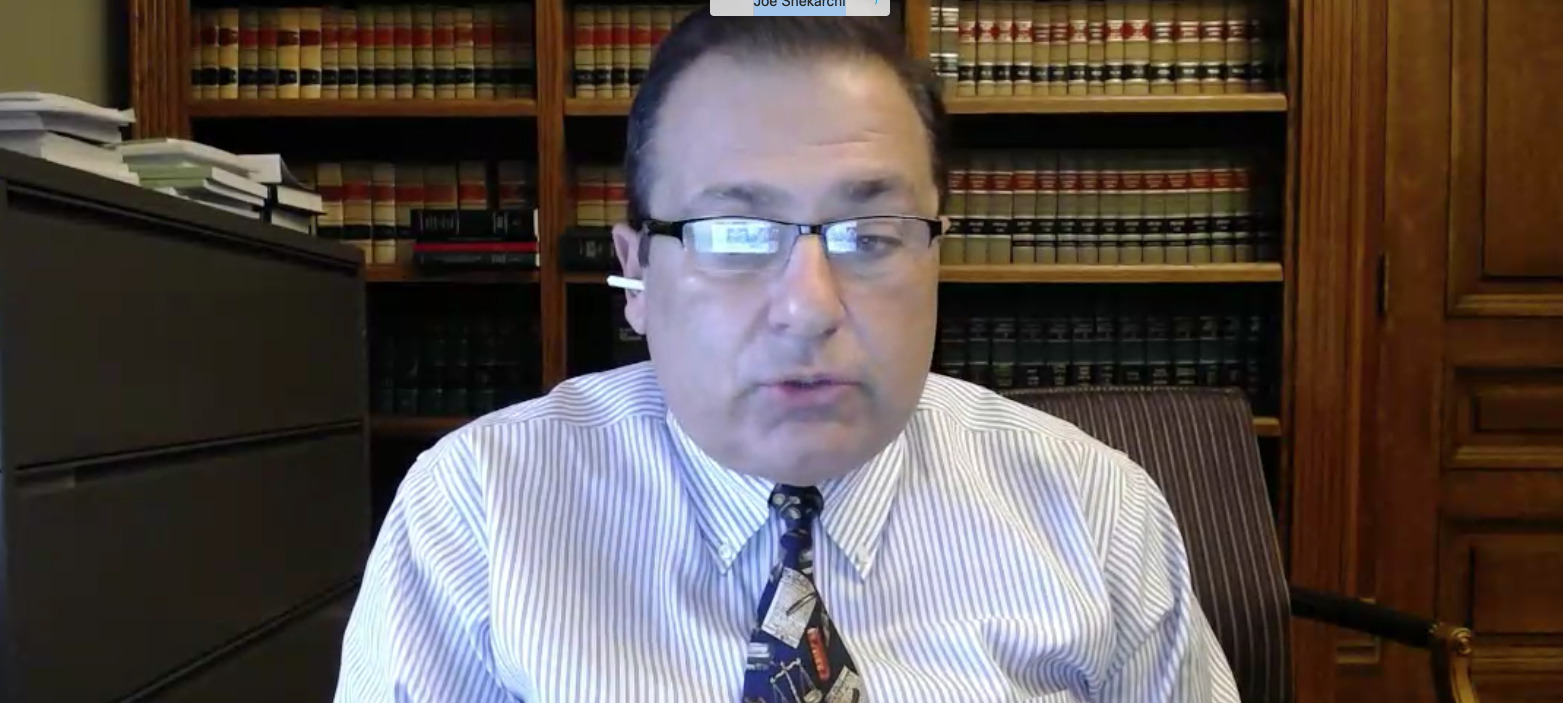
PROVIDENCE – The House Committee on Finance on Wednesday approved a $12.7 billion state budget for fiscal 2021 that will carry Rhode Island through the next six months.
The spending plan, which House Speaker-elect Joseph Shekarchi, D-Warwick, called a “skinny” budget because of the absence of new policy, will be applied retroactively to July 1, when the fiscal year began. It’s designed to carry the state into the new year, when a more robust public discussion of tax policy, programs and other fiscal matters can take place as part of the fiscal 2022 budget, he said.
“The goal was to put together a budget that solves immediate problems in a very short order, and put us on the right path for the work we will do together in the 2021 session, which begins in three weeks,” Shekarchi said. “It’s a transitional budget. It stabilizes the state in many ways, giving certainty as to what we can do, particularly with local communities.”
The budget is sourced with $5.8 billion in federal funds and $4.1 billion in general revenue, with the remainder coming from restricted funds or other sources.
The budget plan, which now goes to the full House, revises what was released almost a year ago by Raimondo, and followed weeks of discussions among legislative leaders.
It does not include any new policy initiatives. It doesn’t propose any new taxes or fees, cut any social services programs or make any significant policy changes, including the potential legalization of the sale of recreational marijuana, Shekarchi said. It does not authorize an agreement between IGT and Twin River Worldwide Holdings, negotiated by the parties earlier in 2020.
It maintains the existing education funding formula.
“I felt very strongly that any new initiatives as far as policy should wait until we have a new General Assembly,” Shekarchi said, explaining that the House has had a 20% turnover in new members following the November election. “They deserve to be part of the process going forward.”
The budget will include:
- $400 million in bonds that include funds for housing, universities, environmental improvements and investments at the Quonset Business Park.
- $30 million more in state aid to cities and towns, including a full restoration of aid to several so-called “distressed” cities that had been operating under reduced revenue this fiscal year.
- The budget will continue the planned auto excise tax reduction, as negotiated several years ago.
- It will include funding to continue the Rhode Island Promise free tuition program through the end of the next academic year.
- It has $2.5 billion more in spending than what was in the governor’s $10 billion budget proposal in January, largely the result of federal stimulus dollars for COVID-19-related expenditures.
- It eliminates what the House determined was a $275 million deficit, largely through use of the federal CARES ACT funds retained by Raimondo this year, and partially through increased sales taxes, particularly in online purchases.
The state received revised guidance as to how it could spend the $1.25 billion federal dollars that it received in the CARES ACT, Shekarchi said, which encouraged him to recommend a budget that disperses funds. “We were aggressive with that,” he said. “We got better guidance from the U.S. Treasury as to how we could use the CARES money.”
(UPDATES throughout with vote and details on the spending plan.)
Mary MacDonald is a staff writer for PBN. Contact her at macdonald@pbn.com.