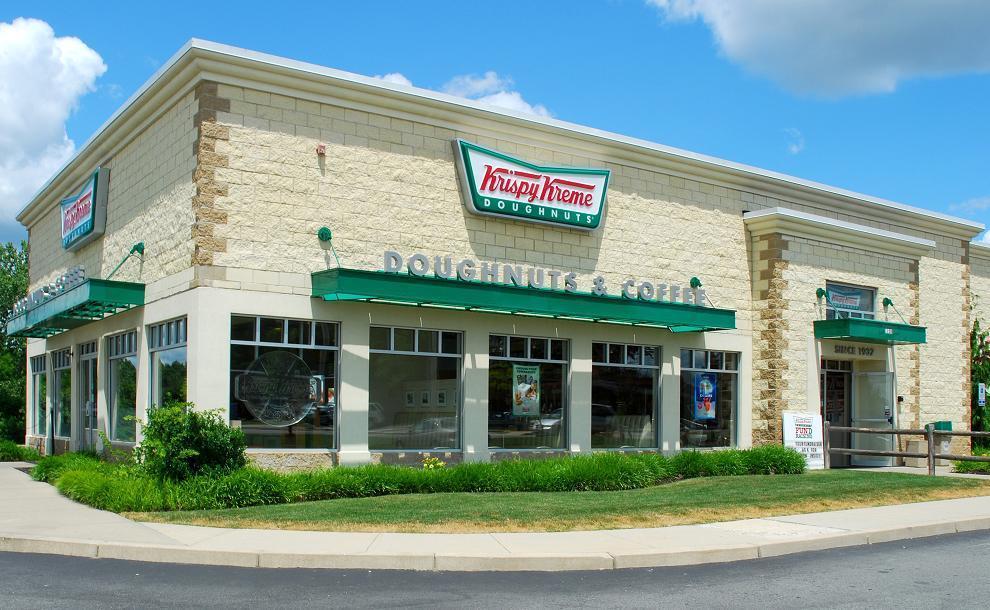
When Krispy Kreme first came to Rhode Island in 2003, it was greeted by long lines of customers and a media frenzy. But after four years of shrinking market share in the state, the North Carolina-based chain is closing its sole location in Rhode Island.
In an e-mail statement to Providence Business News, Krispy Kreme spokesman Brian K. Little said the company will close its Cranston location – along with its Dedham, Mass., store – on July 12, and also discontinue the sale of Krispy Kreme products in local convenience and grocery stores. That will leave only two Krispy Kreme stores in New England, both in Connecticut.
While Little declined to elaborate on the company’s motives for closing the stores, he said the decision was “part of [Krispy Kreme’s] turnaround” and that it will “continue to evaluate our growth and positioning throughout the United States in order to better serve our customers.”
The announcement was in sharp contrast to the store’s opening in 2003, which was described by the previous owner as the arrival of “donut theater” in the Ocean State.
Jan Companies, a Cranston-based holding company that owns Burger King and Newport Creamery restaurants throughout New England, brought the chain to Rhode Island after years of market research and a belief that the brand could succeed.
“We hope 10 years from now, we are talking about Krispy Kreme and Burger King as equal arms of this company,” company vice president Janice Matthews told PBN in 2001.
And at first, the wager seemed to pay off. Patrons swarmed the Pontiac Avenue storefront awaiting the trademark glowing-red “Hot Donuts Now” sign. They liked watching donuts being made and eating them seconds after they had been glazed. In mid-2003, Krispy Kreme stock was worth more than $50 per share, and officials at Jan said they hoped that the venture would create about 1,000 jobs in the region.
(Jan originally had an agreement with Krispy Kreme to open 16 stores in the region, with Krispy Kreme participating as a 49-percent partner in the venture.)
But soon after, business began decreasing and the company’s stock fell to $5 per share. Jan opted out of the venture, selling the eight stores it owned to Krispy Kreme.
While both Little and representatives from Jan declined to say why the sudden decline in business occurred, one answer could be Dunkin’ Donuts, the coffee restaurant powerhouse that boasts more than 400 locations within 50 miles of Providence, including 17 within five miles of the Krispy Kreme location.
The challenges of battling Dunkin’ Donuts in New England were recently alluded to by another new entry into the market – Tim Hortons.
The Canadian-based, wholly-owned subsidiary of Wendy’s moved into the state in 2004, purchasing the remnants of Bess Eaton, a coffee chain that had filed for bankruptcy. Tim Hortons took over 42 locations throughout New England, 31 of them in Rhode Island.
However, despite a strong marketing push and the approval of tax exemptions by the state legislature and the R.I. Economic Development Corporation, the chain has yet to produce the results it had hoped for.
In a recent filing with the U.S. Securities and Exchange Commission, Tim Hortons said that the competition had forced the company to re-evaluate its plans for the region, including new store openings and franchising.
“The company continues to face intense competition from one highly penetrated competitor in the southern New England market, and restaurants in this market are not performing at the level expected by the company,” Tim Hortons said in the filing. If customer traffic and sales don’t improve, it added, “the company will review the long-term viability of restaurants located in certain markets.”