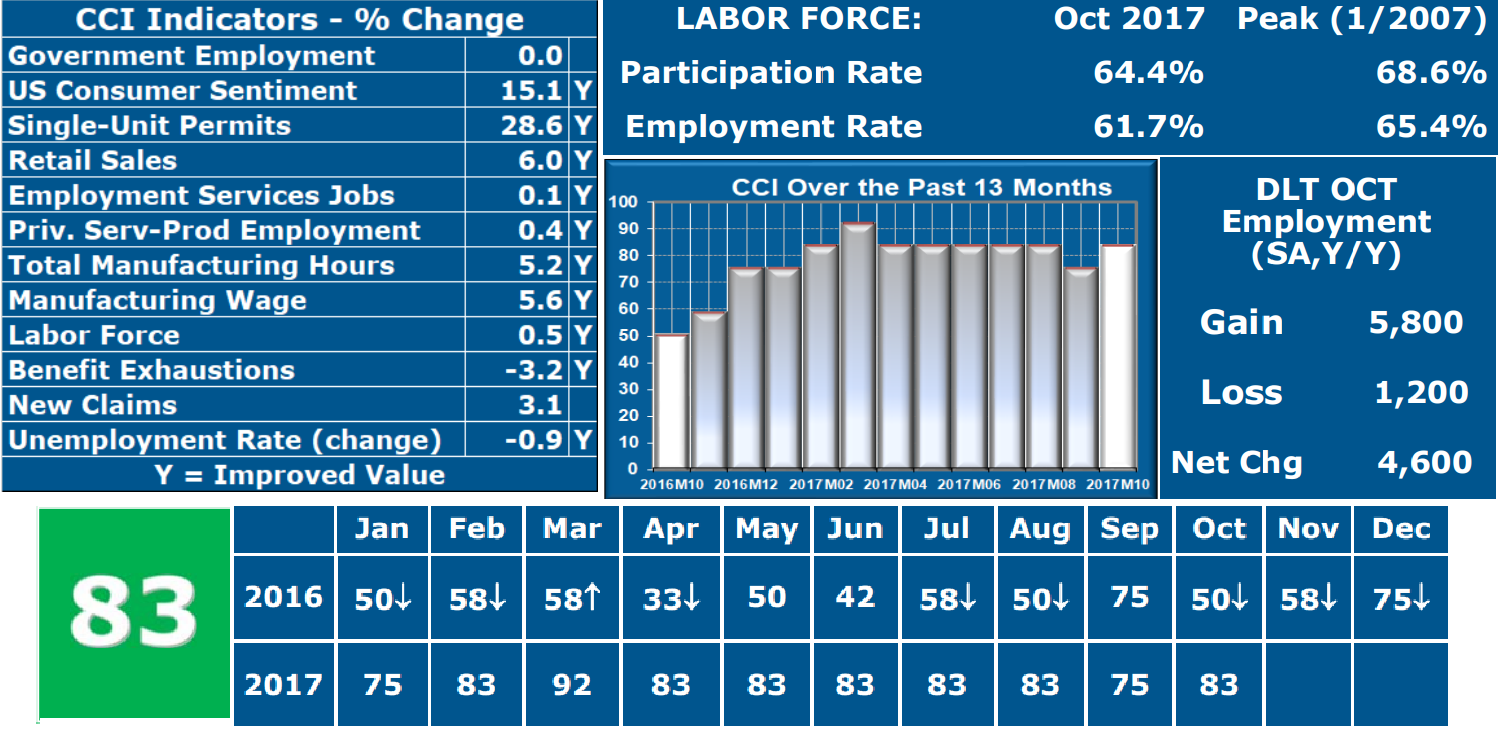
PROVIDENCE – University of Rhode Island economist Leonard Lardaro posted a Current Conditions Index for Rhode Island in October of 83, a 33-point gain from a year prior.
Rhode Island has now had a CCI of 83 for seven of the 10 months this year.
The CCI measures 12 economic indicators that are generally representative of the economic climate of the state. A value above 50 implies economic expansion while a value less than 50 indicates contraction.
While October’s CCI increased in October, Lardaro called it a “disappointing” win. He expressed reservations about the Rhode Island future economic performance, citing indications that the national economy is showing signs of slowing and that Rhode Island is unprepared for such a scenario. Lardaro says this is due to “Rhode Island’s elected officials doing so little to meaningfully reinvent our state’s economy over the years.”
Lardaro also pointed to declining payroll employment, a decline in tax-related income receipts and an increase in welfare-related caseloads as signs that the economy may be in for a downturn. The “under the hood” indicators, said Lardaro are a “potential reason for concern about Rhode Island’s rate of growth as we approach the end of 2017.”
Of the 12 economic indicators measured in Lardaro’s CCI for October, 10 showed signs of improvement, with government employment remaining unchanged and new unemployment benefits claims increasing.
Highlights of the report included the following:
- The jobless rate fell 0.9 percent over the year to 4.2 percent
- Employment service jobs increased 0.1 percent
- Single-unit permits, which reflects new home construction, rose 28.6 percent year over year
- Total manufacturing hours, a proxy for manufacturing output, rose 5.2 percent
- U.S. consumer sentiment increased 15.1 percent
- New claims, the timeliest indicator of layoffs rose by 3.1 percent
- Government employment remained unchanged in October above 60,000.
- Private service-producing employment increased a “sluggish” 0.4 percent.
- Retail sales, however, grew a “healthy” 6 percent year over year.
- A long-term unemployment indicator, benefit exhaustions, declined 3.2 percent, reflecting an improvement slow down from this year’s peak in June.
- Lardaro also maintained that the Rhode Island labor force remains a “train wreck,” growing 0.5 percent
Chris Bergenheim is the PBN web editor.