
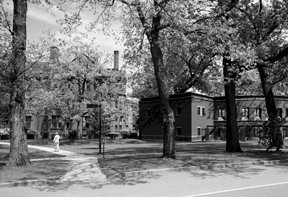
planned unit for elderly patients.
When it comes to issues of mental health for today’s elderly, Alzheimer’s disease steals all the headlines.
But the elderly are confronted by a host of mental-health problems, afflictions that traditionally had been chalked up to “old age.” Health-care providers in Rhode Island are putting more emphasis on – and more money toward – offering services for seniors to cope mental illness.
“It used to be that the elderly were expected to not go out very much and keep to themselves and be sad a lot,” said Stephanie De Abreu, project coordinator for Landmark Medical Center’s Positive Aging Project, a federally funded program the Woonsocket hospital started earlier this year.
“But what’s happened is that the medical community is trying to separate what is ‘normal aging’ from mental illness,” De Abreu said. “We’re trying to make seniors aware that it’s not normal to be depressed or to have anxiety or to live in pain.”
Through a grant of nearly $1 million from the federal Administration on Aging, Landmark last February created the project as a way to boost access to mental-health services in northern Rhode Island.
Educational seminars have focused on improving memory, managing stress, diet and exercise and using medications safely. A 24-hour crisis hotline has been set up for seniors to have immediate access to social workers. Landmark also plans to team with Personal Management Associates in Providence to help seniors with managing their finances.
“We’re trying to hit every angle of what could potentially be a source of anxiety for seniors, and financial planning is a key piece,” De Abreu said.
A. Kathryn Power, director of the Rhode Island Department of Mental Health, Retardation and Hospitals, said agencies around the state have made a concerted effort to bring mental health services for the elderly into the community. Seniors’ reluctance to acknowledge mental illness – or their lack of awareness of it – combined with the isolation that many live in make it a very difficult demographic to diagnose.
“In the past few years, community mental-health centers and local senior centers in Rhode Island have really tried to figure out ways to reach out to seniors and engage them in ways that might not be necessary with other age groups,” Power said.
One critical access problem is that many seniors receive virtually all their health services from primary care physicians, who sometimes are less adept than mental-health specialists at diagnosing illness such as anxiety or depression, experts say.
De Abreu said the Positive Aging Program has held seminars to help doctors better diagnose problems such as depression and substance abuse and to gain a better understanding of psychotropic drugs for seniors.
In addition to expanding outpatient behavioral-health services for seniors, providers in Rhode Island have seen swelling demand for inpatient treatment.
Butler Hospital in Providence, a 158-year-old psychiatric hospital, plans to build a $3.5 million, 10,000 square-foot facility for seniors next year. The 18-bed unit, which will replace a similar-sized in the hospital, will treat seniors with Alzheimer’s disease, other memory disorders, depression and other diseases.
“Demand for our senior treatment services has been exploding,” said Butler spokesman Jim Hallan.
The new facility will have enhanced safety features like motion detectors, special bathing equipment and soundproof walls. A solarium and an extensive walking path, both inside the facility and on the grounds, also are planned, said Mary Brinson, Butler’s associate vice president for quality and planning.
Butler also is involved in a number of national research programs to study mental health of the elderly. The hospital’s Memory Disorder Treatment Program recently presented the result of the first large-scale treatment study of vascular dementia, which is memory loss caused by stroke, at the World Alzheimer Congress in Sweden.
Other clinical studies at Butler include a study of older women who have a history of Alzheimer’s disease in their family, and a study of the psychiatric problems suffered by family members who take on the onus of providing care to loved ones.