Plans to convert the former Quaker Fabric Corp. headquarters in Fall River to luxury apartments and retail are progressing, with the first commercial tenant moved in and another cued up.
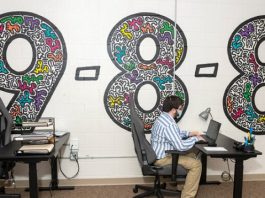
Bristol Community College moved its Green Center into its second-floor space in September. Another tenant, described by the landlord as an education and social services organization, has signed a lease but can not yet be named publicly.
The 6,000-square-foot Green Center teaches students the likes of weatherization and solar panel installation. And it will, hopefully, serve as the hub of the property, said Anthony Cordeiro, who purchased the building with two partners last summer for $1.5 million.
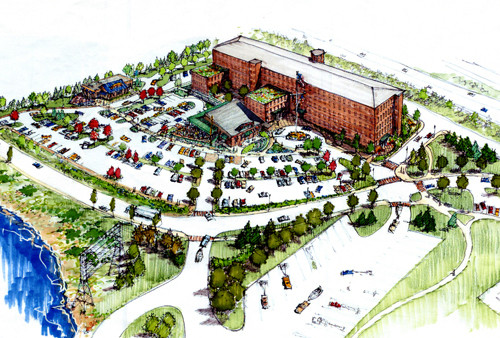
Cordeiro envisions the college’s students and instructors patronizing the shops and restaurants that he wants to draw to the first two floors of this five-story, brick mill now called Commonwealth Landing.
“It will give us a life down there so that’s why we were so excited about BCC taking space,” Cordeiro said.
The Green Center’s director, Julia Gold, expects about 50 students a day to visit the center once it fully establishes its programming. Most of those students will attend noncredit, work force development programs, but Gold also wants the center to reach out to the wider community and attract residents interested in sustainability practices. Perhaps they could even come from the apartments slated for above the center.
“There’s lots of opportunity,” Gold said. “I think we hope that the space is really going to get used as much as it possibly can.”
Also expected to bring activity to the area is a boat ramp completed last summer at the Bicentennial Park bordering the mill. The city completed a boardwalk from Battleship Cove to the park in 2004.
For Cordeiro, the ramp and the boardwalk present an opportunity to tap into pedestrian traffic looking to grab a drink or a bite to eat. Combined with the college activity and a planned marina, Cordeiro sees an appealing setting for retailers.
“We’re trying to take an industrial-life building and convert it to a modern use,” he said. “We think all the ingredients are there to make it a success.”
If Cordeiro’s plans become a reality, retail and at least three restaurants would fill the first and second floors of the 235,000-square-foot mill. Plans are also in the works to build a roughly 5,500-square-foot addition on the back of the mill to create a new primary entrance overlooking the river.
Cordeiro and his partners have already undertaken some renovations to the property, including work to comply with building codes, the installation of an elevator and general cleaning up. Architects are sketching out plans for 78 apartments and developers working to identify sales price.
Work is expected to come in phases, depending on how quickly tenants move in. Phase I, which includes work to the parts of the mill slated for retail – is expected to cost about $5 million. Later phases are expected to add another $15 million or so to bring the project’s total cost to about $20 million.
“It needs some love and a lot of attention,” Cordeiro said of the building. “You need to spend a lot of money in that building in order to make it work.”
Cordeiro, who has developed other properties in Fall River, said the down economy had a mixed impact as the owners progressed with renovations. On the one hand, construction costs are historically low as contractors battle for scarce jobs. On the other hand, finding tenants in an economy marked by depressed retail sales is a challenge.
“It just means you have to work a little bit harder, be a little more creative,” he said.
Cordeiro credits the economy with at least one positive though. He estimates he saved at least $1 million off the building’s purchase price because of the sagging real estate market. The trio of buyers – Cordeiro, Larry Couto and Alan Macomber – purchased the property under the name Mechanics Mill One at a foreclosure auction after owner Strictly by the Book went bankrupt.
Before that the mill housed the corporate headquarters of Quaker Fabric Corp., a fabric manufacturer that at one point held title as the city’s largest employer. The company went bankrupt in 2007 after stiff competition from overseas.
Cordeiro said he drove by the building frequently wondering what would become of it. But the price was always too high, until Citizens Bank brought the building to foreclosure. •