PROVIDENCE – Dr. Eleftherios Mylonakis, chief of infectious diseases at Lifespan affiliates Rhode Island Hospital and The Miriam Hospital, is the co-author of a study in the journal Nature about the discovery of a new class of antibiotics that may help combat drug-resistant ”superbugs.”
“This is an emergency,” Mylonakis said, citing a World Health Organization projection that by 2050, superbugs will surpass cancer as the global No. 1 killer. “This is a frightening situation. It affects more than individuals in the hospital or the very ill or the very old. It affects everybody.”
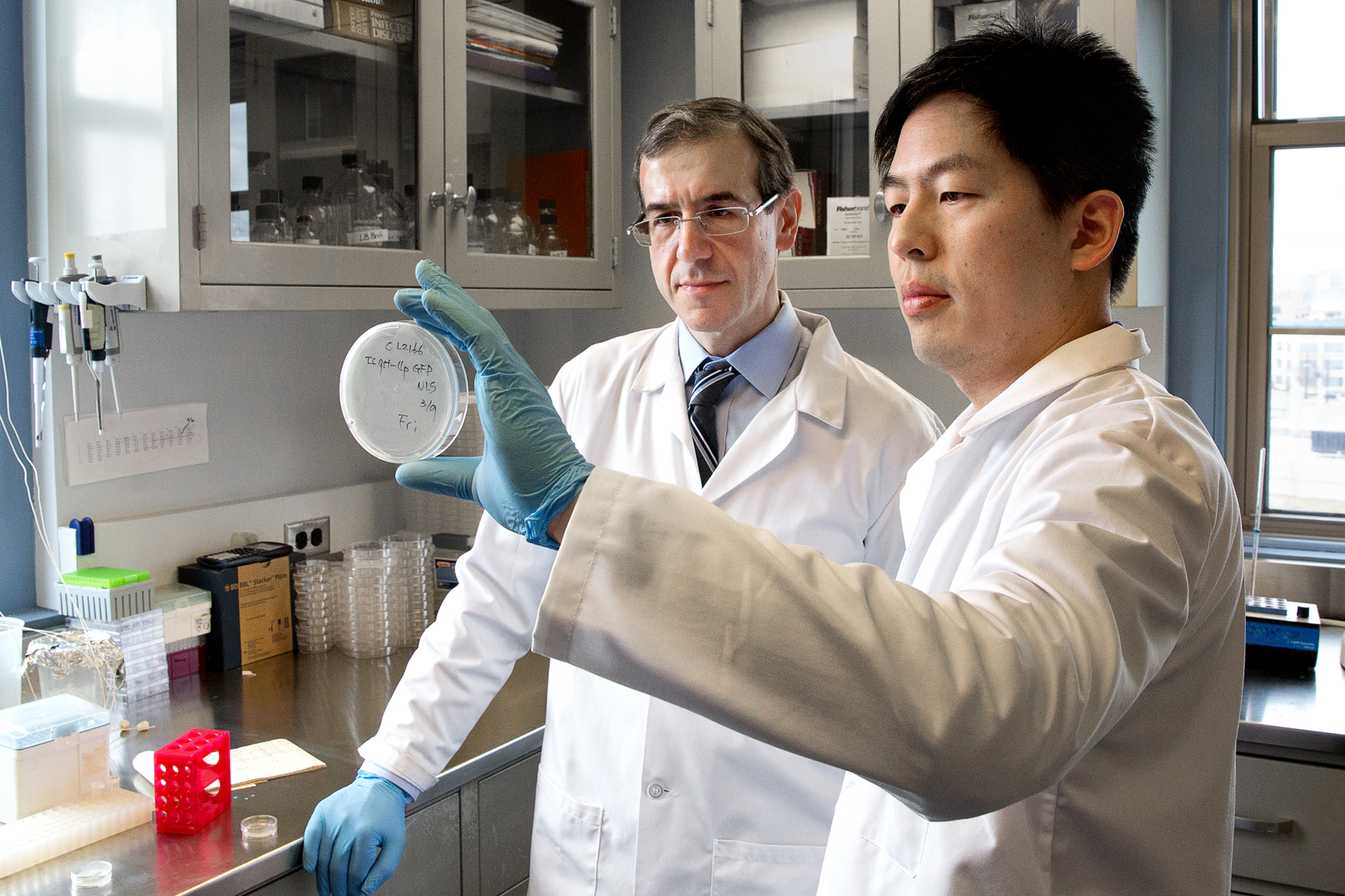
Mylonakis and Charles C.J. Carpenter, professor of infectious disease at the Warren Alpert Medical School of Brown University, led a multidisciplinary team of researchers searching for drugs to target bacteria that have developed a resistance to conventional antibiotics.
Their work was funded by grants from the National Institutes of Health, National Science Foundation and National Institute of General Medical Sciences. Rhode Island Hospital has used about $1.5 million in grant money toward the project so far. It expects to receive another $750,000 toward this research over the next few years, said Lifespan spokesman Richard Salit.
Mylonakis also collaborated on the study with researchers from Massachusetts Eye and Ear Infirmary, Massachusetts General Hospital, Brown University, Emory University and Northwestern University. He said teams such as his fill a void left by the major pharmaceutical companies, which have not invested in the development of new antibiotics for many years.
Their research led to the identification of two synthetic retinoids, both of which demonstrated the ability to kill MRSA (methicillin-resistant Staphylococcus aureus), a type of staph bacteria that is resistant to several antibiotics. Retinoids, which are chemically related to Vitamin A, are used to treat a variety of health problems, including acne and cancer.
Mylonakis said drug-resistant staphylococcus is of great concern for several reasons: It’s omnipresent in the environment and on skin, is highly virulent and can cause serious blood, bone and organ infections.
Computer modeling and other studies showed the retinoids impair bacterial membranes and kill MRSA “persister” cells, drug-resistant dormant cells that are not susceptible to current antibiotics. The ability of the drugs to make bacterial membranes more permeable also seemed a factor in why they worked well in tandem with an existing antibiotic, gentamicin. The modeling was led by Huajian Gao, the Walter H. Annenberg professor of engineering at Brown University and one of the study’s authors.
“The results were extremely positive. We are extremely optimistic,” said Mylonakis. But he added, “This is still years away from coming to clinical trial.”
Rob Borkowski is a PBN staff writer. Email him at Borkowski@PBN.com.