Frank Shea, executive director of the nonprofit Olneyville Housing Corporation, is concerned that redevelopment on Providence’s West Side has been pushing working families out of some neighborhoods.
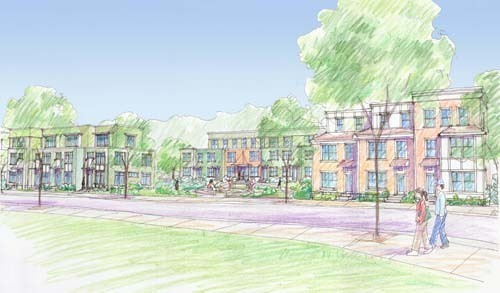
So, along the Woonasquatucket River, Olneyville Housing has been working to revitalize a neighborhood in the area by creating affordable housing. They have rebuilt 51 affordable residential units so far, with another 120 planned. But nearby there needs be a retail center, where those residents can work, Shea said. “So we’ve been looking for several years for an opportunity to do something more comprehensive.”
And now, with the $50,000 that Olneyville Housing was awarded on May 15 through Rhode Island Housing’s KeepSpace initiative, Shea and the nonprofit will be able to start the first round of community planning for a 120,000-square-foot, retail-focused redevelopment of Paragon Mill, which will “allow us to develop a property [in the neighborhood] with an eye toward jobs that can be filled by local residents,” Shea said.
That project is one of four community-development projects that were chosen from the 16 applicants for the first round of KeepSpace, Richard Godfrey, Rhode Island Housing executive director said at the May 15 announcement.
This year, the developments will each receive $50,000. They qualified because of their mixed-use planning, allowing for open space near residential and commercial development, he said.
All told, $10 million has been committed during the next several years to the four projects. Godfrey estimated that returns – in wages, taxes and other economic activity – could reach as high as $500 million.
KeepSpace was announced during August 2007, before Gov. Donald L. Carcieri’s supplemental budget allocated $26 million from Rhode Island Housing’s budget to the state’s general fund, Godfrey said. “The money that they’re taking from us does not directly impact these developments,” he continued, but it will affect the agency as it moves forward with other programs.
The four approved projects are all in urban centers along waterways.
The other three developments are in Cranston, Westerly and on the Pawtucket border with Central Falls.
The second project is the rehabilitation of a mill site in Cranston. Developers Printers Row LLC has proposed a redevelopment of the mill complex at the corner of Dyer Avenue and Cranston Street.
The third, near downtown Westerly, is being undertaken by the Westerly Land Trust and WH Properties. It’s a two-site development that includes the former Westerly Depot train station and a downtown mixed-use site. The project “will positively impact Westerly by allowing growth in the most cost-effective manner and bringing major upgrades to the town center,” according to Rhode Island Housing.
The final grantee is a Pawtucket Citizens Development Corporation project that includes the Pawtucket train depot complex. Executive Director Nancy Whit said her nonprofit and the city have been working toward many of the elements that define KeepSpace communities, “but we still have this giant disaster, a major element that isn’t helping with our revitalization.”
More than just funding for the projects, the KeepSpace initiative is also a way to establish a channel that can help projects reach timely approvals, Shea said.
“By working through that kind of regulatory process quickly, the project gets done faster,” Shea said. “And a faster project is a less expensive project.”
With the R.I. Department of Environmental Management, R.I. Division of Planning, R.I. Economic Development Corporation and other state agencies working together, the projects will have a more streamlined approval and permitting process, Godfrey said.
“The concept that we can recreate the village is a marvelous example of how we can recycle land, avoid sprawl and preserve open space,” DEM Director W. Michael Sullivan said. •