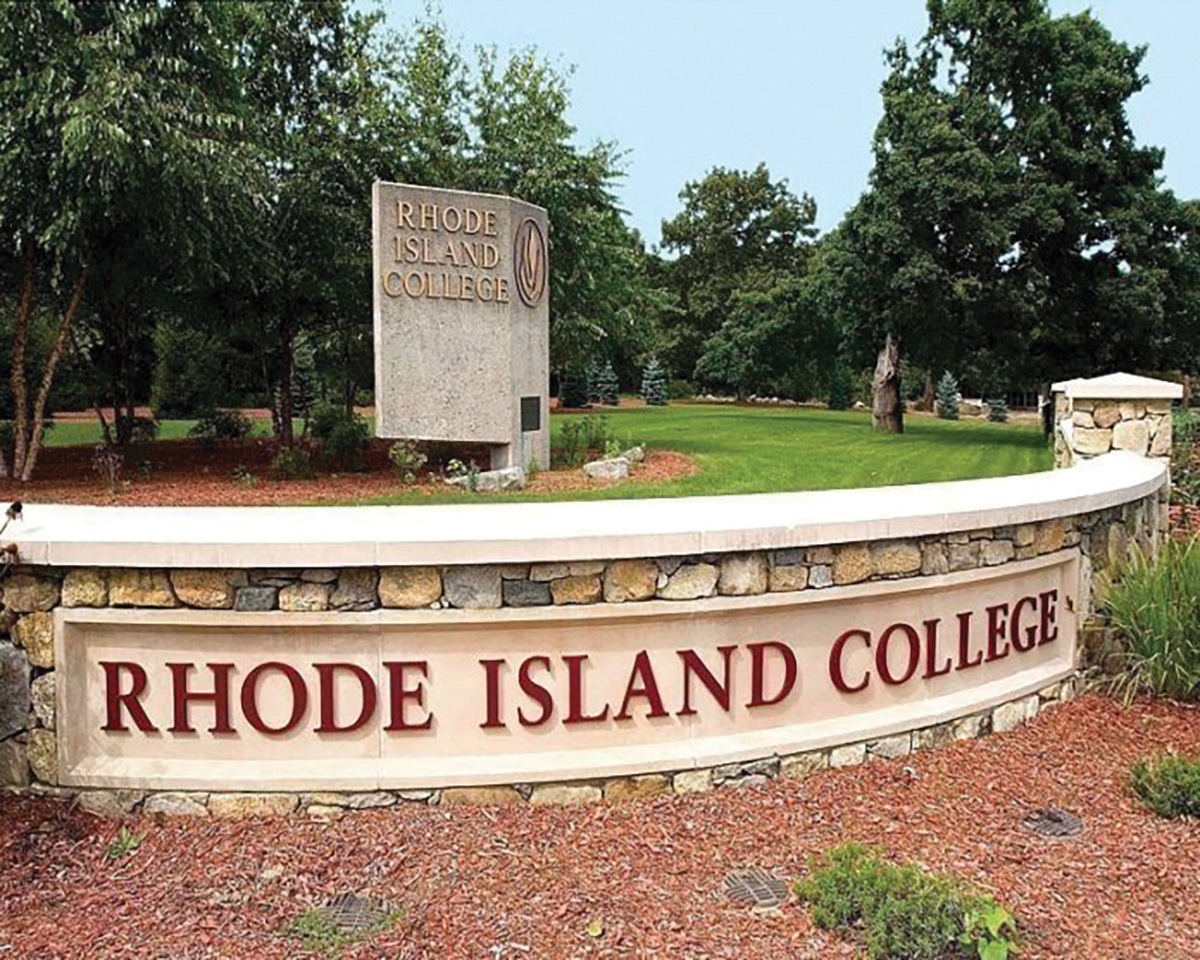
PROVIDENCE – Rhode Island College students soon won’t have to meet standardized test score requirements to enroll in RIC’s teacher preparation program.
The pilot program approved by the R.I. Education Commissioner Angélica Infante-Green Monday aims to help boost RIC’s enrollment while addressing statewide teacher shortages by temporarily waiving certain standardized test score requirements for prospective teachers.
The R.I. Department of Education has in the past required students who are seeking admission to teacher preparation programs – like RIC’s Feinstein School of Education and Human Development – to meet certain academic performance benchmarks, both individually and as a group average, including a minimum test score on the SAT, ACT or PRAXIS. At RIC, the test score portion has long been believed to exclude potential students from being accepted, particularly students of color who statistically do not perform as well on these types of standardized tests.
“We need a more robust teacher pipeline, and a diverse teacher pipeline, ” RIC Interim President Jack Warner said in an interview with PBN. “This policy has worked against it.”
It has also worked against efforts to bolster RIC’s student enrollment, which has fallen even as the pandemic has eased and other colleges and universities reported a resurgence of students. The 4,719 undergraduate RIC students enrolled as of the fall 2022 marks a 10.2% decline over the year prior, and a 37.1% drop over the last decade. Warner, who was brought on as interim president in July, has been tasked with helping revive the state college, including by increasing enrollment.
Warner expects that waiving the test score requirement will double the number of students RIC can accept into its teacher preparation program, from a typical 150-student cohort per year to 300. Taken over the four years of the pilot program, which begins in the fall 2023, this translates to an extra 600 students in the education school, and the college overall.
Previously, students admitted to RIC but rejected from the education program due to test score requirements may have opted to leave the college entirely, Warner said.
“If I apply for education and have my heart set on being a teacher and then get rejected, why should I stay here,” Warner said.
Erik Christiansen, a history professor and president of the RIC faculty union, also spoke to the importance of revitalizing RIC’s renowned teacher program for the college overall.
“If we can just turn that one thing around, I think in the whole college we are going to see a turnaround,” Christiansen said.
The postsecondary council approved a resolution supporting the pilot program at its Dec. 7 meeting, though one member questioned whether eliminating test scores would lessen the quality of teachers coming out of RIC.
Warner rejected that concern, calling these particular test scores the “wrong instrument” to measure students’ academic success.
Evidence backs up his claim. Although the pilot program waiving test scores was just approved, a similar easing of test-related admissions was applied during the 2020-2021 academic year because the pandemic shut down many of the places where students could take these standardized tests.
Data collected by RIC during that year shows that the students performed just as well regardless of whether they had to meet test score admissions requirements, according to a memo from RIC Education Dean Jeannine Dingus-Eason submitted to Postsecondary Education Commissioner Shannon Gilkey. Specific measurements of performance proving that point included GPA, graduation rates and the percentage who passed the PRAXIS II exam, according to the memo.
Moreover, the students accepted into the teaching program without test score requirements were overwhelmingly more diverse. Of the 133 students accepted through the “conditional pathway” that eased test score requirements, 31% were students of color. By comparison, of the 41 students who were admitted using traditional test score minimums, 12% were students of color.
The pilot program will still rely on other measurements of academic performance to admit education students, including a minimum GPA that is higher than what RIDE required when it was coupled with standardized test scores. Admitted students must also pass certain standardized tests specific to teachers before starting student teaching and pass basic undergraduate skills courses with a “B” grade or better.
RIDE did not immediately respond to inquiries for comment.
Nancy Lavin is a PBN staff writer. You may reach her at Lavin@PBN.com.