In recent years, Westerly has witnessed a spike in housing construction, retail development and out-of-state banks coming into the area. And according to Town Planner William Haase, it can be all linked to Wall Street.
While Westerly’s neighbors – and Rhode Island as a whole – witnessed a dip in building permits issued in 2006, Westerly reported a total of 195 permits last year, up from 86 in 2005, according to the Rhode Island Builders Association.
Rhode Island as a whole saw a decrease of 9 percent during the calendar year, while Westerly’s neighbors Richmond and Charlestown witnessed drop-offs of 56 percent and 44 percent, respectively.
According to Haase, the increase in building permits can be linked to a stock market performing “phenomenally.” With successes on Wall Street, fund managers and corporate executives have a lot of bonus money coming in. And with the additional income, some are purchasing second homes in Westerly.
Another big factor in Westerly’s boom is empty-nesters from out of state who are moving into town houses and condominiums, Haase said, many drawn by the proximity to the ocean.
“They’re buying into the condominiums that are being built, those that are south of Route 1,” he said. “They’re not on the ocean, but they’re near the ocean.”
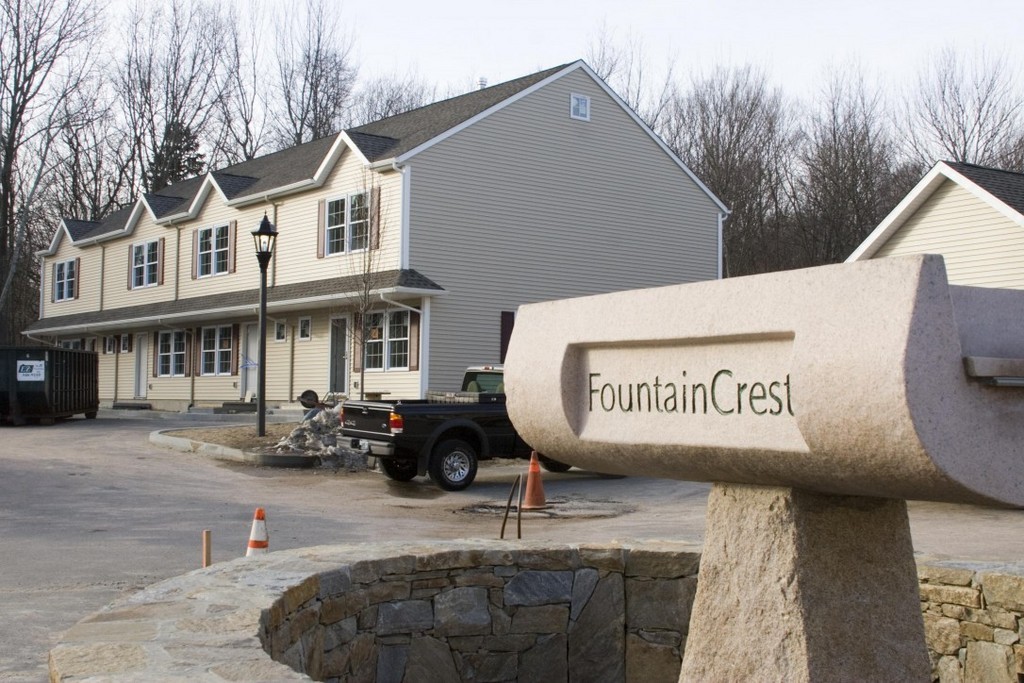
Among the most high-profile of those condominium developments is FountainCrest Preserve, a 76-unit development south of Route 1 in Westerly. But nearly 40 other units are being built within a two-mile radius of that complex, Haase said.
While the statewide real estate market hit a slump last year, individual properties in Westerly have done well, and overall sales dropped by 10 percent, less than the statewide 14-percent drop.
Bob Richins, manager of Coleman Realty’s Westerly office, said the area’s shoreline properties attract luxury second-home buyers, and there will “always be a market for that.”
The influx of high-end buyers, both speculative and long-term, has led out-of-state banks to build branches and developers to propose new retail complexes.
One new retail complex has been proposed near the intersection of Airport Road and Route 1. While the development is only slated to be 170,000 square feet, Haase said that its landscaping and architectural designs are among the “finest” he has seen.
“I think that is a reflection of where the market is going,” Haase said. “I think the people that are coming down here and retiring bring more income than your typical American household.”
But that trend has created other issues, particularly in terms of affordable housing.
Building a Strong Data Foundation in the Age of AI
Artificial intelligence (AI) has become a key priority in the boardroom and across management —…
Learn More
The Westerly Town Council adopted a 90-day moratorium in January on the issuance of new permits for residential developments containing more than five units. Haase said that the moratorium was necessary in order to give officials time to properly examine the town’s affordable-housing needs.
Like every Rhode Island community, under state law, Westerly must have 10 percent of its housing stock considered affordable to low- and moderate-income residents. However, the town currently only has about 5 percent affordable housing.
With the spike in the luxury second-home market, Haase said, that percentage could drop. Westerly is looking at adopting “inclusionary” zoning requirements, which would mandate that multi-unit developments have a certain percentage of units priced at affordable rates.
However, inclusionary zoning regulations generally include density bonuses, a means of offsetting the cost to a developer of having a portion of the units priced at below-market rates. Haase said that changing the regulations to include inclusionary zoning might require an overhaul of the town’s regulations to make conservation developments more feasible.