PROVIDENCE – A drug that may make a strain of “superbug” more vulnerable to treatment by antibiotics has been identified by an international research effort led by a team at Rhode Island Hospital.
Researchers found that the drug bithionol, which has been used to treat tapeworms in horses and liver parasites in animals and humans, can enter and weaken membranes around bacteria cells, while not harming other healthy cells. Lab tests also showed that a combination of bithionol and gentamicin, an antibiotic, kills dormant bacteria cells and reduces overall bacteria levels in mice.
ISO 9001:2026: A Practical Opportunity to Build for What’s Next
For Rhode Island manufacturers, ISO 9001 has been much more than a certificate on the…
Learn More
The discoveries target the treatment of staph infections, or MRSA. The antibiotic-resistant strain of infections can also become dormant in a patient’s body, leading to high incidences of relapse.
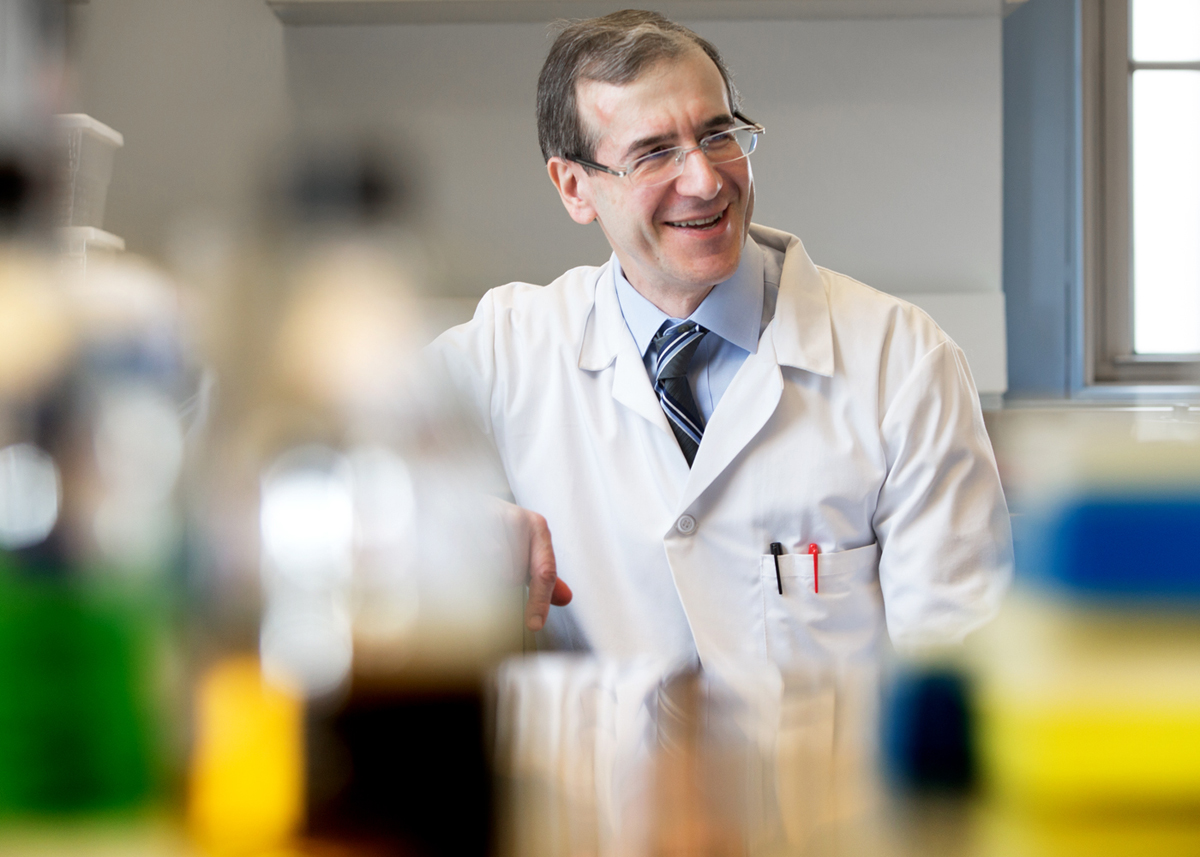
“They don’t necessarily have symptoms, but this is one of the reasons why they relapse,” said Dr. Eleftherios Mylonakis, chief of infectious diseases at Rhode Island Hospital and The Miriam Hospital. “The main implication is we have now a set of compounds that allows us to differentiate between chemicals that act on the membrane of bacteria versus those that act on the membrane of human cells.”
Mylonakis is leading a multidisciplinary team that is working to identify drugs with the ability to attack antibiotic-resistant bacteria that has become dormant.
Researchers at Brown, Emory, Harvard and Northwestern universities, along with schools in China and Brazil, are also collaborating on the effort under Mylonakis’s direction.
The team’s findings were recently published by the Proceedings of the National Academy of Sciences.
Grants from the National Institutes of Health, National Science Foundation and National Institute of General Medical Sciences have helped fund the research.
Mylonakis estimates the project will introduce about $15 to $20 million to the state’s economy.
A total of $5 million in funding has already been received, and an additional $10 million is expected over the next four years. More than 10 researchers are working specifically with the bithionol compound, although the overall effort includes many more people.
Years of work are ahead before researchers can finalize a drug to be marketed, Mylonakis said.
Re-purposing a drug that has already been tested for toxicity and other issues can help save time and money, Mylonakis said. Bithionol is no longer used in the U.S. as a treatment for parasites, he added.
Drug-resistant staphylococci, or the bacteria that cause staph infections, can live on skin and in the environment, and can cause serious blood, bone and organ infections.
As so-called superbugs appear with increasing frequency, treatments are not keeping up, researchers say.
The World Health Organization has projected that by 2050, superbugs will surpass cancer as the number one killer worldwide, Mylonakis said.
“This is a frightening situation,” he said. “It affects more than individuals in the hospital or the very ill or the very old. It affects everybody,” he added.
Last year, the team announced a related discovery after it found that two synthetic retinoid compounds were able to penetrate bacterial cells’ membranes and kill dormant cells when combined with gentamicin. The work generated from the team’s focus on finding non-toxic antibiotics that can effectively treat MRSA and its dormant cells. A total of 185 compounds have been identified so far.
Elizabeth Graham is a PBN staff writer. You may reach her at Graham@PBN.com.