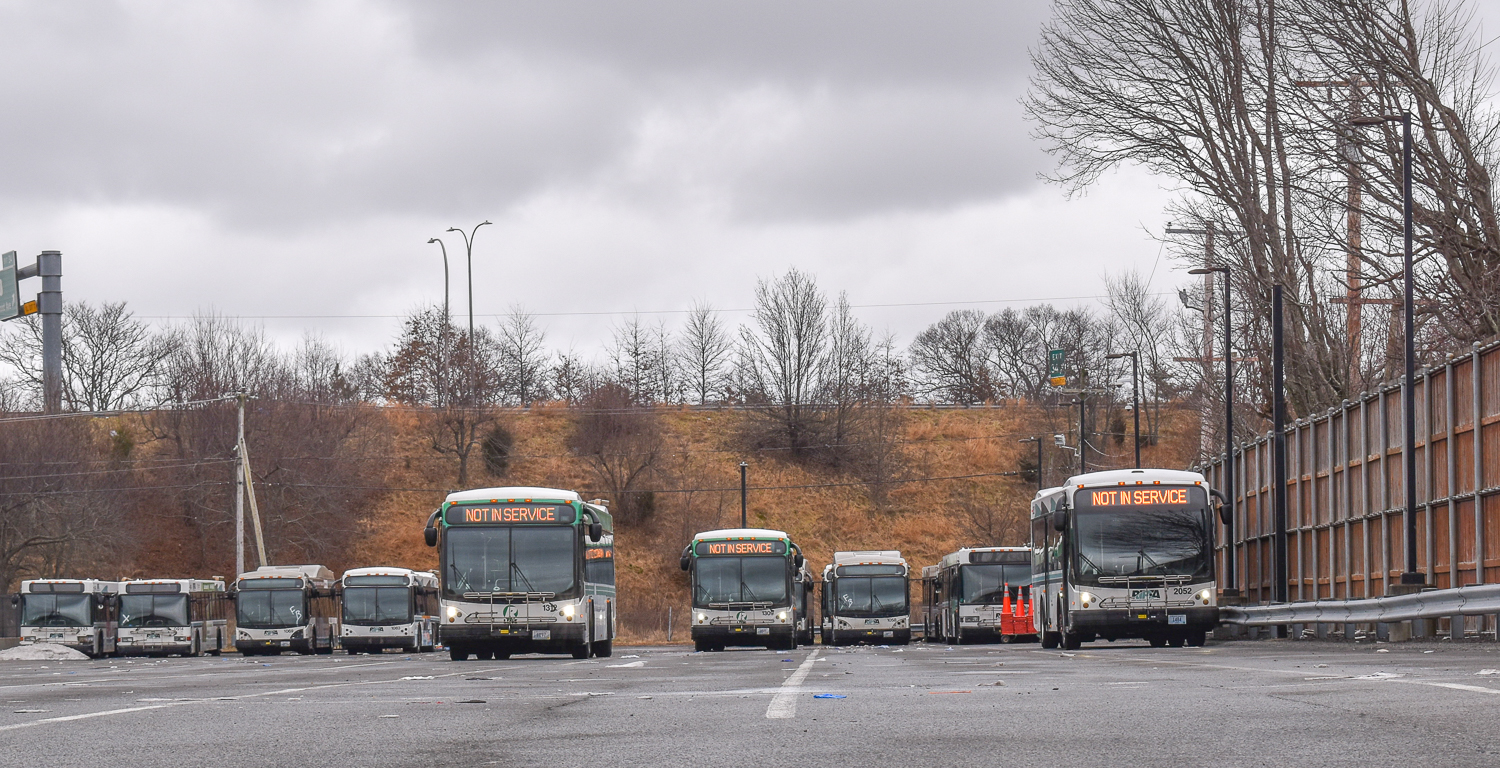
A favorable diesel price lock that helped the Rhode Island Public Transit Authority narrow last year’s budget gap ended three months ago. But the financial woes facing the statewide bus agency from skyrocketing fuel prices is just beginning with the cost of diesel now over two and a half times what was budgeted for this year.
RIPTA’s annual spending plan for fiscal 2027, approved by its board last December, budgeted $5.2 million to fuel its fleet of fixed route diesel buses – a cost based on an average price of $2.48 per gallon.
Your Business Has Gone Global. Has Your Insurance?
A decade ago, “doing business internationally” was mostly a large-company concern. Today, a manufacturer in…
Learn More
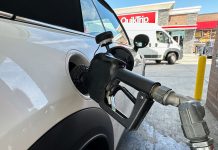
Diesel prices have surged to record highs since the war involving Iran began in late February, as disruptions to oil shipments through the Strait of Hormuz tightened global fuel markets. The national average for diesel was $4.84 per gallon on July 1, the first day of Rhode Island’s fiscal 2027 year. The national average climbed to $6.45 as of Monday, according to data compiled by the Climate Solutions Lab at Brown University’s Watson School of International and Public Affairs.
Rhode Island’s average for diesel was $6.33 per gallon as of Monday, according to Brown’s fuel tracker which uses data from AAA, along with figures from the U.S. Energy Information Administration and the U.S. Census Bureau.
“Given the volatility and price fluctuations, we are monitoring the impact daily,” RIPTA spokesperson Cristy Raposo Perry wrote in an email to Rhode Island Current. “If diesel prices remain at these elevated levels for the rest of the year, RIPTA would likely need to make up the additional fuel costs through cost savings and/or additional revenue.”
RIPTA uses about 2 million gallons of diesel a year, Raposo Perry said. For every $1 increase in the price of diesel, the agency must add about $2 million to its annual expenses, she added. The agency spent $1,067,144 on diesel fuel between the start of the fiscal year July 1 and Aug. 31, Raposo Perry confirmed in an email Tuesday morning.
RIPTA had a fixed-price contract with New Hampshire-based Sprague Energy for fiscal 2026, covering 2.016 million gallons of diesel at $2.3675 per gallon. The agreement expired in June.
“RIPTA is now subject to the market-rate price for diesel,” Raposo Perry wrote. “Because fuel prices are volatile and very difficult to project, RIPTA is currently working on revising its budget.”
In an email Tuesday, Raposo Perry said locking RIPTA into a multiyear pricing agreement at current diesel prices would not be “financially prudent” because the agency could wind up paying a higher rate if diesel costs fall. A spokesperson for Sprague Energy did not immediately respond to request for comment.
John Flaherty, senior adviser for Grow Smart RI, said suppliers typically charge a premium to lock in a fuel price because they are taking on the risk that market prices will rise.
“My hunch is that if you’re going to do a price lock, you’re probably agreeing to a slightly increased rate over the prevailing rate,” Flaherty said in an interview.
Several factors are pushing diesel prices higher, Jeff Colgan, a political science professor at Brown who heads its Climate Solutions Lab, said.
Much of the world’s crude oil flows to Asia, where refineries – particularly in China – are producing less diesel than they have in the past because of shipping disruptions caused by the Iran war. And while the United States is a net exporter of diesel, that does not insulate American consumers from higher prices overseas, Colgan said in an interview.
Rhode Island gets much of its diesel from Gulf Coast refineries in states such as Louisiana and Texas, Colgan said, and those refineries can sell their fuel wherever they can get the highest price.
“If they see higher prices in Europe or Asia, that’s where they want to sell,” Colgan said.
For RIPTA, Flaherty said the higher fuel prices leave the agency with a few options for making up the difference.
“One is to cut service, one is to raise fares, one is to get more of a subsidy from the state,” he said.
RIPTA reduced service on 46 of its 67 bus lines last September – the most significant cuts in the agency’s 59-year history – after Gov. Daniel J. McKee declined to fill a $32.6 million budget gap for fiscal 2026. The General Assembly ultimately provided nearly $15 million by increasing RIPTA’s share of the gas tax and the state’s Highway Maintenance Account, while the agency and McKee’s administration found other savings, including the diesel price lock with Sprague.
CEO Chris Durand told Rhode Island Current in August that RIPTA was not focused on raising the base bus fare, which has been $2 since 2010. Instead, the agency is looking at upgrading fare technology to make it easier for passengers to board the bus and in turn, attract and retain more riders. A new open-payment system that would allow riders to tap their phones to pay with a credit or debit card should be up and running within six months, Durand said.
Rhode Island AFL-CIO President Patrick Crowley, who chairs RIPTA’s board of directors, is scheduled to meet with Durand on Friday to discuss the agency’s financial picture amid rising diesel costs. But Crowley said he believes RIPTA needs to restore as much of the service cut last year as possible.
Crowley said he believes the rising costs will add urgency to discussions with lawmakers about how to adequately fund the agency.
“We keep facing these financial headwinds that are not anyone’s fault in Rhode Island, but as a result of the president’s misguided war in Iran,” Crowley said.
U.S. Sen. Jack Reed, who has repeatedly criticized the Trump administration over rising fuel costs since the war with Iran began, said RIPTA’s higher diesel expenses are another reason for federal investment in alternative fuel sources.
“RIPTA strives to provide affordable and accessible transportation to all, but that mission is jeopardized,” Reed said in a statement to Rhode Island Current.
Christopher Shea is a staff writer for the Rhode Island Current.