
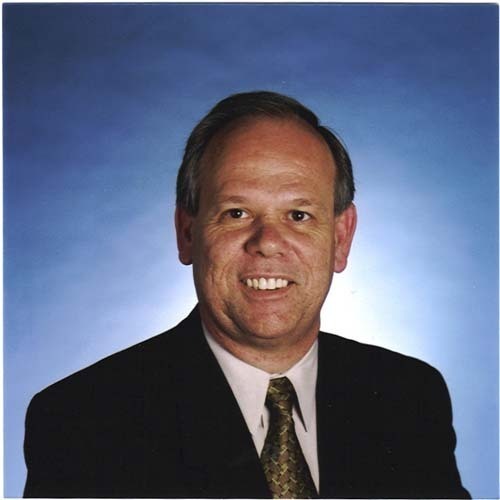
Since credit began to tighten in today’s tough economy, Mark S. Hayward, the Small Business Administration’s Rhode Island district director, has been insisting that banks and credit unions provide more capital to small businesses, even though the financial institutions say they are still making loans to creditworthy clients. Hayward recently spoke with Providence Business News about the credit crunch, how small businesses are faring in Rhode Island and an upcoming summit.
PBN: Give us your take on the state of small business today in Rhode Island.
HAYWARD: Clearly, with the economic conditions the way they are today, the state of small business is somewhat wobbly. Small business is critical to the Rhode Island economy, it makes up over 99 percent of the business community, and economic conditions have certainly put it in a position of concern.
Rhode Island's Market Has Changed. Developers, Builders, Investors and Sellers Must Change With It.
By Emilio DiSpirito IV License Partner | Engel & Völkers Oceanside Leader | The DiSpirito…
Learn More
PBN: What is the biggest problem facing small business today?
HAYWARD: I have said this continuously, access to capital, access to cash is the lifeline of small businesses. Without the ability to obtain either, it really jeopardizes the business itself.
PBN: What advice would you give to small businesses caught in the credit crunch?
HAYWARD: What we advise small businesses is, don’t wait until the last minute, have continuing discussions with their accountants, with their lawyers, with their bankers, with the SBA, with our resources partners as to what kind of technical assistance they can get. There’s no question that the community itself is hurting, and you will not be a lone wolf crying out in the wilderness because there are a lot of other people with you.
PBN: Can you give us an idea of how the state can help small businesses?
HAYWARD: The fee guarantee tax credit, when it was in place, was an enhancement to the smallbusiness community. Even lenders could tell you that it provided them with an incentive to provide capital to the small-business community. That clearly is one of the major issues that needs to be addressed, [the tax credit] needs to be reinstated without question.
We’re all brainstorming to try to figure out where do we go from here, what is the best way to provide capital to the business community. I realize a number of lenders are out there saying [they are lending], I’m not trying to broad-brush everybody. But, basically, what we are seeing in loans that we look at on a daily basis, we are seeing a severe constriction of capital and credit. In order for the Rhode Island small-business community to continue to thrive, they need access to capital. …
Some lenders are telling me that they will only look at FICO [Fair Isaac Corporation credit-score model] scores over 750, which is a significant number. The FICO scores really are driving everything, and the problem is, as people are canceling credit cards or they’re becoming delinquent on their loans, their credit scores continue to go downward.
We have and will continue to ask for indulgence from community [lenders] for small businesses, to look at alternatives other than calling in loans, to offer deferments and other mechanisms. We allow flexibility on SBA-guaranteed loans that is not normally seen on loans that are regulated either by the FDIC or the Office of the Comptroller of the Currency.
PBN: How do current economic conditions compare with other difficult economic times that you have seen while at the SBA?
HAYWARD: Clearly, the events that happened in the late 1980s and early 1990s, which eventually led to the closing of a number of thrifts not only here in Rhode Island but across New England, [offer] somewhat of a comparison. I don’t think it’s an exact comparison because we’re talking about a credit crunch and an economic downturn that are unparalleled. A number of lenders have told me that they have never seen anything like this in their entire lives, and many of them have spent all of their time in lending. When you hear a lender say, “I have never seen anything like this in my entire life,” you know you’re going through an extraordinary time.
PBN: Tell us about the economic summit that the SBA will hold Jan. 9 in Rhode Island.
HAYWARD: Our economic summit, for which invitations already have gone out to lenders and small businesses … will again be at the Johnson & Wales University Culinary Archives and Museum on Harborside Boulevard in Providence. We will continue to have the five standing committees that we have had in the past: taxes and budget; regulations; health care; education and work force development; and energy.
Last year and the year before, the committees, along with the chairs, did a tremendous job in defining the issues as they saw them. Those issues are still prevalent today. Their foresight to include energy as one of those issues – because the energy committee was founded new last year – is really telling because, at the time, we did not have the kind of increases [in energy costs] that we have today.
The small-business community was right on target on regulations. The impact of regulations on small business is tremendous. The disparity [in] the cost of regulations on small business versus large business is something that the committee looked at as a matter of fact because the larger businesses have the capacity to hire high-powered attorneys and to band together.
I think the committees’ foresight as to the impact of environmental regulations, the new fire code, and a number of other issues certainly was tremendous. … I fully expect that this summit is going to have an impact as to guiding the discussion between the governor, lieutenant governor, general treasurer – General Treasurer [Frank T.] Caprio has agreed to come – and the Assembly leadership regarding where we go for the remainder of the calendar year 2009. •
INTERVIEW
Mark S. Hayward
POSITION: District director, Rhode Island District Office, U.S. Small Business Administration
BACKGROUND: District director since 2000, previously served as deputy district director since 1991, including a six-year stint as acting district director of the Rhode Island District, SBA
EDUCATION:B.S. in American history, Providence College, 1977
FIRST JOB: As a teenager, Hayward did odd jobs at the Sun Valley Country Club in Rehoboth, Mass., and worked as a clerk at the former Reitman’s Pharmacy on the East Side of Providence
RESIDENCE Seekonk
AGE: 53



