About four years ago, Salve Regina University was looking to increase on-campus banking options for its 2,000 undergraduate students, many of whom do not have cars.
The university’s first step was to look into bringing a full bank branch to the campus – the closest is a Bank of America branch, about a mile away – but it quickly realized that the relatively small student body couldn’t sustain a branch, said Michael Grandchamp, associate vice president of finance for the university.
“So the solution that we set up – when we knew we weren’t big enough for a branch here – was to do it through ATMs and online banking,” Grandchamp said last week.
At the time, the campus had had a BankNewport ATM since the early 1990s. It soon added a Bank of America ATM.
Now, incoming students are almost immediately introduced at their freshman orientations to marketing from the two banks through agreements with the university. “We give both banks the opportunity to be on campus to open student accounts,” Grandchamp said. “I give a presentation to parents about both options.”
The national presence of Bank of America appeals to many of the out-of-state students, whose parents can deposit money from home, Grandchamp said. Locally-based BankNewport draws many of the in-state students, he said.
Overall the program has been successful, he said, attracting between 80 to 90 percent of incoming students to the two banks.
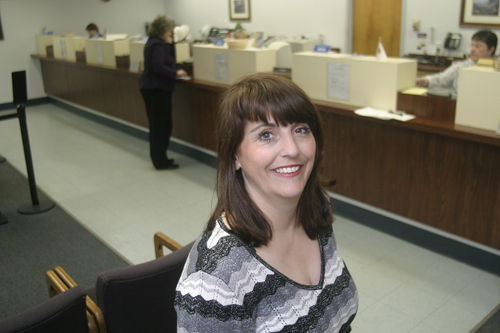
In a similar effort to provide on-campus banking for work-study students and those living on its rural Kingston campus, the University of Rhode Island has had a Rhode Island Credit Union branch for more than 30 years, said Branch Manager Nancy Seale. It’s in the Memorial Union, across from the URI Bookstore, and offers ATM service as well as standard teller service.
Like Salve Regina’s banks, the credit union also markets its services at parent-student orientations. That marketing draws in a lot of students, said Gina DePalo, the credit union’s vice president of branch administration and marketing. “Before the students can even start their careers at URI, we speak with the parents and let them know we’re on campus,” she said.
She said the credit union has changed its internal procedures to accommodate students. For new URI students, it allows them to open accounts by mail during the summer before they arrive in Kingston. That’s a service that’s unavailable to the other 30,000 members of the Providence-based credit union, she said.
At Salve Regina, other banks have approached the school in hopes of setting up an ATM, but more than two aren’t needed, Grandchamp said. If either bank were to vacate its spot, a competitor could easily be found to fill it, he said.
At URI, however, Memorial Union Director Bruce Hamilton said there has never been a formal request by other banks for Rhode Island Credit Union’s commercial lease, which was last renewed until 2011.
“They know that we’ve been very happy with this particular tenant,” Hamilton said of other banks. “And any proposal is a combination of business practices, rent proposals, length of lease, past experience and, of course, we reserve the right to reject any and all proposals in an RFP.”
Also, the university hasn’t expressed a desire to bring in a different bank, Hamilton said. Many students and a large percentage of URI employees keep accounts at R.I. Credit Union.
Hamilton explained that a bank on campus has to be willing to deal with students, who usually don’t have high bank balances and aren’t familiar with banking.
But that hasn’t been a problem for R.I. Credit Union, Seale said, adding, “We really do try to take them under our wing, help them with whatever they need with their finances and guide them to whatever account is best for them.” •