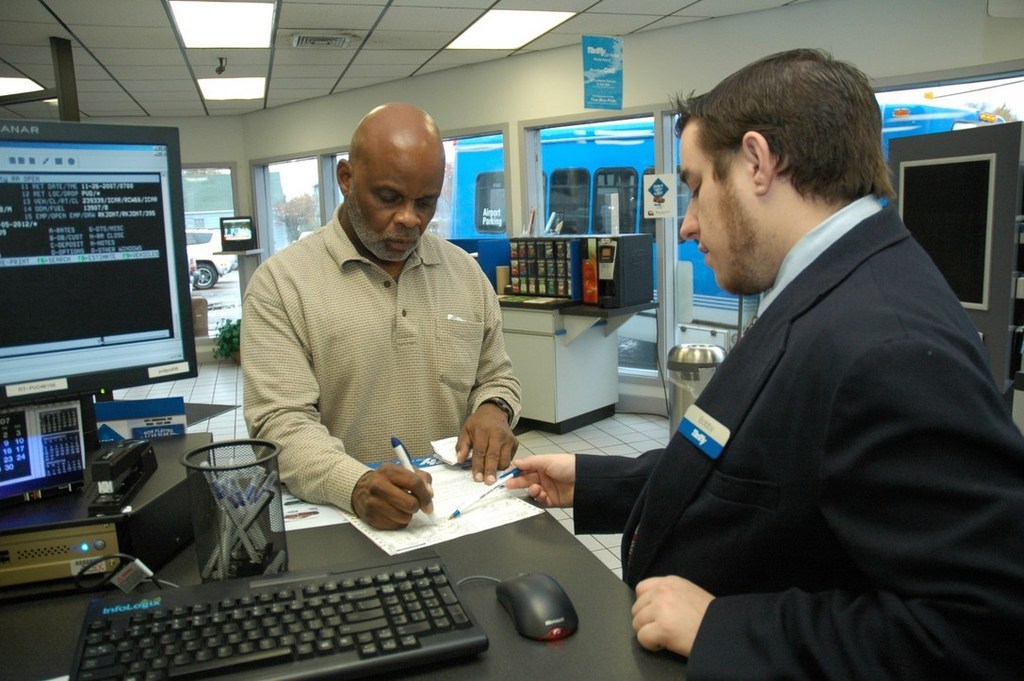
If Chris Payne had his way, tourists would be reading their auto insurance policy as closely as their travel brochures before leaving on a trip.
“People should know as much as they can about their insurance before they reach the rental-car counter,” said Payne, a spokesman for Dollar Thrifty Automotive Group Inc., parent to Thrifty and Dollar Rent A Car. “When they get to the counter, it’s almost too late.”
Why should consumers delve into the details of their own car insurance policy before traveling? So they can determine whether they truly need insurance coverage offered by the rental-car companies, a daily charge that can cost $35 or more.
It’s apparently a question that stumps many people when they’re asked to fill in the car-rental agreement: Should they pay the extra money for insurance coverage?
A survey conducted by the National Association of Insurance Commissioners in September found that 42 percent of the respondents were confused or had little idea about their insurance coverage when renting a car. And 24 percent said they were unsure whether their credit card provided any coverage for the rental.
As a result, 34 percent said they purchased the rental company’s insurance just to play it safe, the survey said.
Those results don’t surprise Frank Doyle, senior vice president for insurance at AAA Southern New England. “I can certainly sympathize,” he said last week, just days before the Thanksgiving holiday, one of the busiest travel periods of the year. “It can be a very complicated issue.”
Indeed, insurance industry trade groups and rental-car companies agree that advance research is the best way to handle the coverage question. The Insurance Information Institute suggests making two calls before a trip – one to your insurance agent, the other to the issuer of the credit card to be used to pay for the rental – to determine what coverage you might have.
Many credit card companies provide some coverage to their cardholders if they waive the rental company’s coverage and use the credit card to make a reservation and pay for the rental.
In Rhode Island, a statute on the books puts an additional twist on the matter, those in the industry say.
In most states, a driver’s policy follows him or her to the rental car, meaning the car is insured up to the policy’s coverage limits and has the same deductible, although it varies among insurance companies how many days the coverage lasts.
The problem: Many car owners don’t carry collision insurance provisions that cover repairs to their own vehicle, particularly if they own an older car with diminished value and they want to reduce their premiums. In that case, the driver would have no coverage for damage to the rented vehicle, according to Ernie Shaghalian Jr., owner of Alpine Insurance Agency in Cranston.
It’s different in Rhode Island. Paula Pallozzi, chief property and casualty insurance analyst at the R.I. Department of Business Regulation, said state law extends a car owner’s property damage liability coverage – state residents are required to have at least $25,000 coverage – to a rented car for up to 60 days.
That means a driver from Rhode Island would have coverage for damage to a car rented anywhere nationwide, even if he or she doesn’t have a collision provision, Shaghalian said.
Still, he said, even that might not be enough coverage – such as in a case in which a driver who only has $25,000 property liability insurance wrecks a rental worth more. “That would be one situation that I’d say additional coverage is needed,” Shaghalian said.
Generally, however, he tells most of his clients that they probably don’t need the coverage offered by the rental-car companies.
Doyle, from AAA, isn’t so sure.
Unless consumers are certain about their coverage, he recommends buying the insurance offered by the rental-car companies “mostly to avoid any headaches,” he said, noting that rental agreements and insurance policies have numerous exemptions that could nullify coverage.
“There are so many ways you can trip yourself up,” he said.
And since most U.S. car insurers don’t extend coverage to policyholders when they drive outside the United States and Canada, Doyle said overseas travelers should buy coverage from rental companies.
While the rental-car firms acknowledged that their insurance products generate some revenue, some companies said they’ve attempted to reduce the amount of confusion over coverage – both Hertz Corp. and Dollar Thrifty Automotive Group, for example, have produced brochures on the topic available at the rental outlets.
But don’t expect any advice from employees at the counter. Paula Rivera, a Hertz spokeswoman, said employees are instructed to avoid giving advice.
“With all the insurance policies out there, there’s no way they could advise each customer as to what they need,” she said.
Ultimately, Rivera said, it’s up to the consumers to do their homework before they rent a vehicle. •