In response to climbing foreclosure rates in Rhode Island and around the nation, U.S. Sen. Jack Reed has helped to create HOPE, in the form of a $615 million program to assist homeowners as they try to stay in their homes.
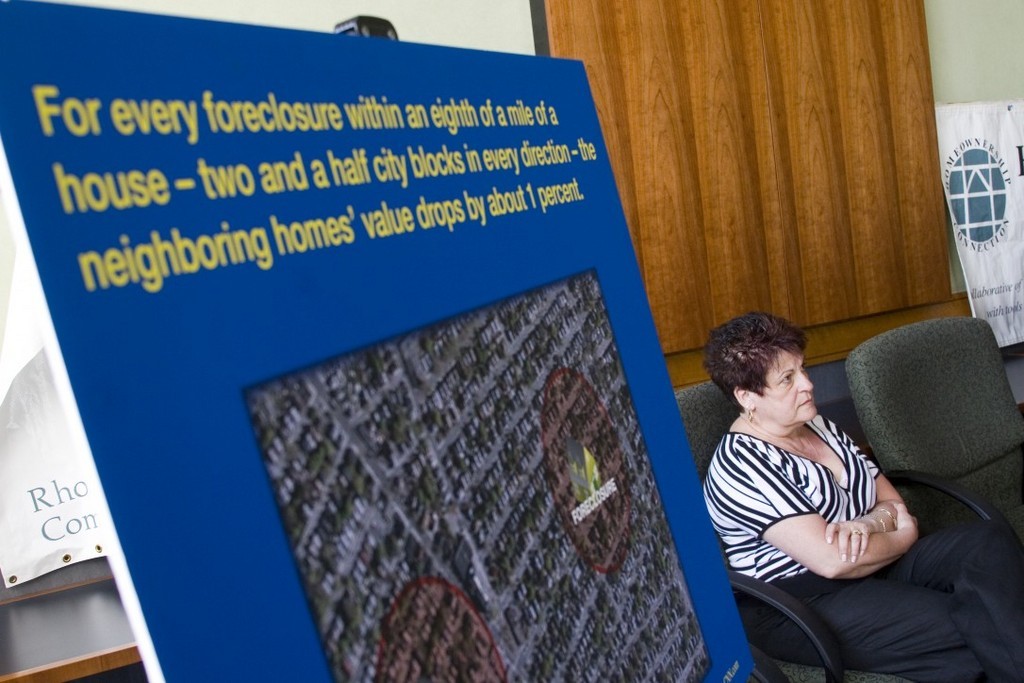
Reed unveiled his Homeownership Protection and Enhancement Act on May 14 at a press conference that included local affordable housing advocates and even someone who fought off foreclosure caused by an adjustable-rate home loan.
According to the Mortgage Bankers Association’s National Delinquency Survey, lenders foreclosed on 0.59 percent of mortgages in Rhode Island in the fourth quarter of 2006, compared with a 0.57-percent rate in Massachusetts and the nation.
As of Dec. 31, the total share of loans in foreclosure across the country was 1.19 percent, while Rhode Island’s rate stood at 1.01 percent and Massachusetts 1.03 percent.
The HOPE Act, proposed a week ago without co-sponsors (U.S. Sen. Sheldon Whitehouse signed on as a co-sponsor late last week), would specifically provide:
n $50 million for the creation and operation of homeownership protection centers, which would provide borrowers with services like financial assessments and counseling;
n $260 million in federal funding to states that are operating homeownership protection centers to offer loans and grants to qualified families;
n $300 million in funding for HUD-approved counseling agencies; and
n $5 million to start a federal database on defaults and foreclosures.
Reed, a senior member of the U.S. Senate Committee on Banking, Housing and Urban Affairs, said many Americans with adjustable-rate mortgages are worried right now because their rates are going to go through the roof, and their incomes cannot handle it – but they are only beginning to realize their problems.
“We have an obligation to these people to provide some kind of appropriate response – not basically forgiving it, but giving them financial counseling, giving them temporary support, getting incentives so that they can work out with the lender appropriate loans so that they can stay in their homes and pay them back,” he said.
Richard Godfrey, the executive director of Rhode Island Housing, said the legislation is a great help because it hits three areas: counseling, data and dollars. Godfrey said independent advice is important help for any borrower, because a borrower is an amateur, and bankers and brokers are professionals.
Brenda Clement, executive director of the Housing Network of Rhode Island, said the database would identify patterns and trends among lenders – for instance, if they are targeting certain populations, such as the elderly or minority groups.
“You are able to focus your efforts on who needs the education, who needs the outreach, a little bit more effectively,” she said after the press conference.
The foreclosure issue hits close to home for Eleanor Martin. Last June, Martin was looking to refinance her North Providence house and called a broker who had advertised on the radio.
Martin was hoping for a fixed-rate loan, but the company persuaded her to take an adjustable-rate mortgage for which the payments would have tripled within two to three years. With help from the Housing Network of Rhode Island, she was able to negotiate a path to a fixed-rate mortgage, but she hasn’t forgotten how close she came to losing her home.
Martin is suing the brokerage – and thus would not name it. “They’ve got to be stopped, and I’m gonna stop them,” she said.